uninvolved
adjective uninvolved
ˌʌnɪnˈvɑːlvd
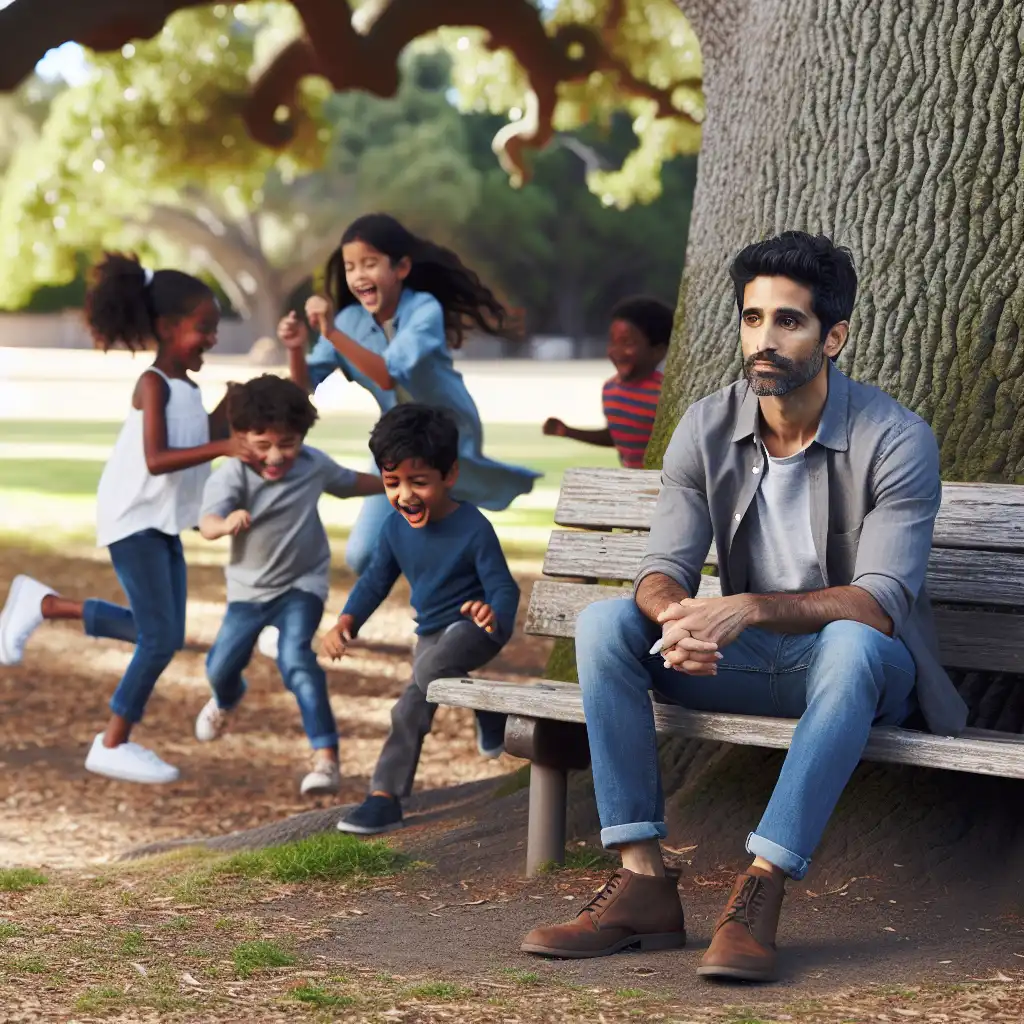
Not taking part in something or not showing any interest in it.
He remained uninvolved in his children's lives after the divorce.
uninvolved
ˌʌnɪnˈvɑːlvd
Loading…
ˌʌnɪnˈvɑːlvd
Not taking part in something or not showing any interest in it.
He remained uninvolved in his children's lives after the divorce.

ˌʌnɪnˈvɑːlvd
Not connected or concerned with someone or something.
The police were uninvolved in the incident.

ˌʌnɪnˈvɑːlvd
Not changed or affected by something.
The house remained uninvolved in the forest fire.
Audio could not be loaded. Please try again later.
The word 'uninvolved' is generally used to describe someone who is not taking part in a situation or activity. It can be used to describe someone who is not interested, not engaged, or not participating in something. For example, if there is a group working on a project and one person is not contributing or helping, they can be described as uninvolved. Similarly, if there is an argument or disagreement and someone is staying out of it and not taking either side, they could be described as uninvolved. It is important to note that 'uninvolved' has a slightly negative connotation and can imply a lack of responsibility or effort.
Detach means to separate something or someone from a larger thing or group. For example, if you detach a leaf from a tree, you take it off the branch it was attached to.
It can also mean to separate yourself emotionally from a situation, like detaching yourself from the outcome of a game you're watching.
Detach refers to separating something, while uninvolved refers to not being involved in something. They can both be used in various contexts, but the main difference is that detach implies a physical or emotional separation, while uninvolved implies a lack of engagement or impact.
Open word: Detach →Disinterested describes someone who is impartial or unbiased and doesn't have a personal stake in a situation.
For example, a judge is expected to be disinterested in a court case, meaning they don't favor one side over another.
Disinterested refers to someone's feelings or opinions towards a situation, while uninvolved refers to someone's level of engagement or participation in a situation.
Open word: Disinterested →Impartial means unbiased, fair, and not taking sides. It refers to a person who doesn't support or oppose an idea or person and judges based on the facts or evidence presented.
Both words are applicable in different situations. Impartiality is important in decision-making, like trials, debates, and reviews, where neutrality and objectivity are required.
Example: An impartial judge must listen to both sides of an argument and make a decision based on the law and evidence presented, while an uninvolved bystander may choose not to intervene in a fight between strangers because it's not their business.
Open word: Impartial →Neutral refers to a lack of bias or favoritism towards any side in a situation or conflict. It means being impartial and not taking sides.
For example, a referee in a sports match is expected to be neutral and make fair calls for both teams.
Neutral means not favoring one side over the other and being impartial while uninvolved means having no personal stake or interest in a situation or conflict.
Open word: Neutral →Withdrawn, on the other hand, means the act of pulling back or removing oneself from a situation or group of people. It implies a deliberate action to distance oneself.
Uninvolved means not interested or unconcerned, while withdrawn means actively choosing to remove oneself from a situation.
Open word: Withdrawn →Do the green thing -...
Watch on YouTube ↗When I became a father, all that stuff rose up again from the back of my mind. I suddenly realised how uninvolved my father had been in my life.
Battle of the Sexes %\PIPE%...
Watch on YouTube ↗My parents were bookish, very musical, but otherwise uninvolved in the arts or the academic world.
Nature is the...
Watch on YouTube ↗I have the duty to protect my people, hurt my enemy, do the best I can with as few uninvolved casualties as possible - I can't have zero innocent casualties - and at minimum risk to the lives of our soldiers.
It is the uninvolved parent who has to resort to strictness.
The bottom line is this: It is not, in a country that was founded on the values of individual liberty and personal responsibility, the job of the government (read: completely uninvolved taxpayers) to pay for someone else's mistake.
The problem is that you can't really read a script saying, 'Hmmm, I'll just see what this is.' You have to go right into it; you have to get engaged with it, and once you are engaged, you want to do it! It's really difficult to get uninvolved.
First lady has been a thankless position. Eleanor Roosevelt was brilliant and had strong views. She was criticized for her politics and for her appearance. Mrs. Roosevelt was attacked for being too involved in politics. Bess Truman was criticized for being uninvolved in politics.
Often, my liberal Canadian brethren will claim that 'Canada doesn't get involved in foreign affairs or wars overseas. We turn the other cheek.' No. Canada doesn't have the military might to exercise any option other than to remain uninvolved. They aren't turning the other cheek. They're pulling a Sweden.
I think, as directors, they may recognize, more than the rest of the body of filmmakers, exactly what you do as a director, because I think sometimes the conception is if the camera isn't swinging around, and it's not pyrotechnic or worthily melodramatic, then the direction is uninvolved.