festoon
noun festoon
feˈstuːn
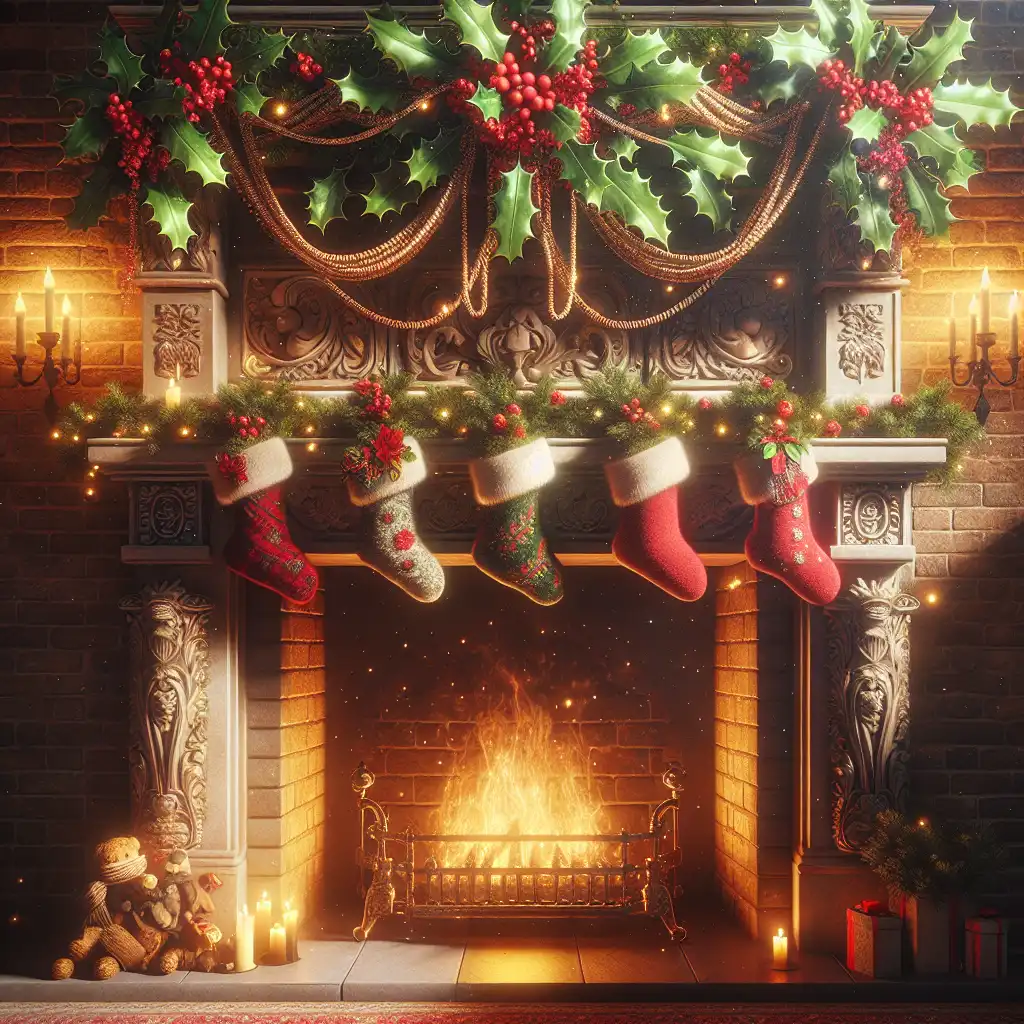
A string or chain of flowers, foliage, ribbon which hang in a curved shape
The room was decorated with festoons of holly and mistletoe for Christmas.
festoon
feˈstuːn
Đang tải…
feˈstuːn
A string or chain of flowers, foliage, ribbon which hang in a curved shape
The room was decorated with festoons of holly and mistletoe for Christmas.
feˈstuːn
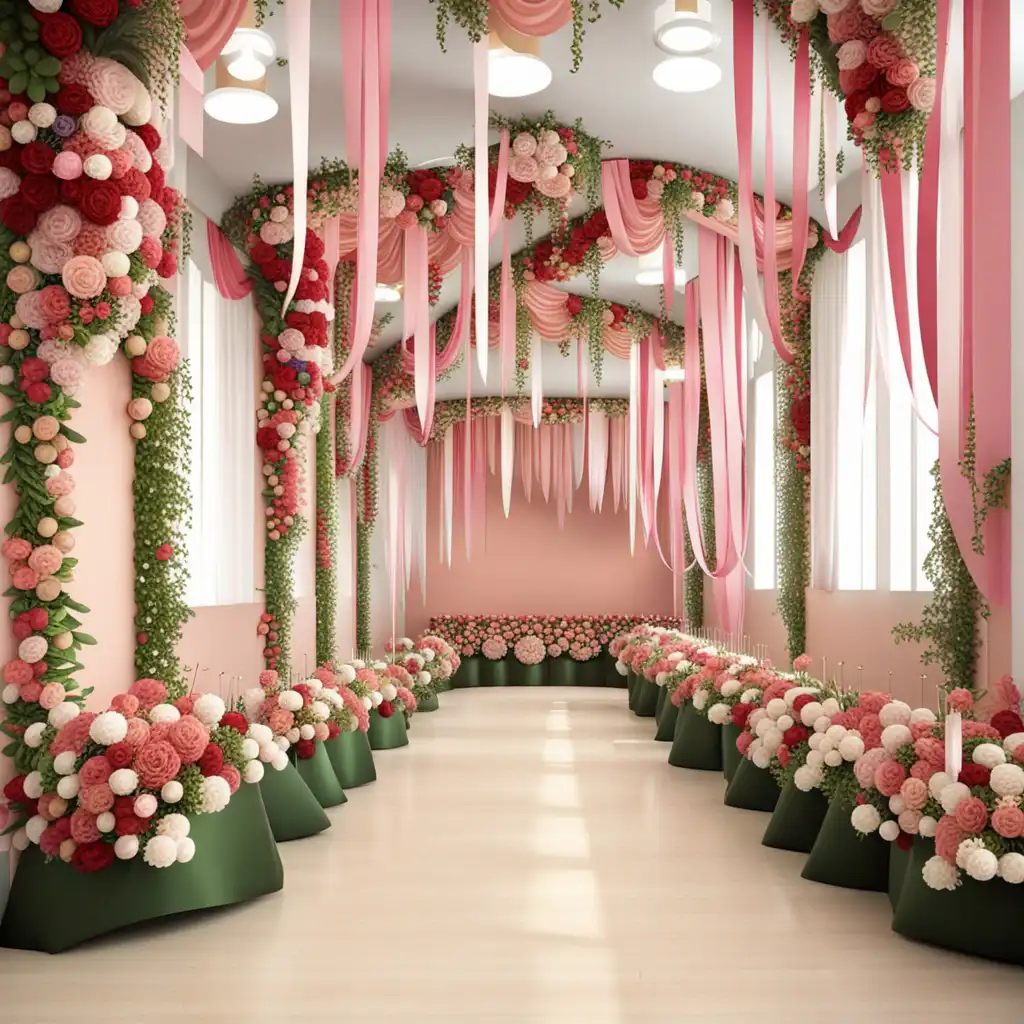
To hang or decorate something with festoons
They festooned the hall with flowers and ribbons for the party.
Không tải được âm thanh. Vui lòng thử lại sau.
The word 'festoon' means to decorate something with ribbons, flowers, or other colorful items in a way that creates a festive, celebratory mood. You can use it when describing things like Christmas trees draped with tinsel and lights, or when talking about the colorful banners and decorations that are hung up during a parade or special event. It can also be used to describe clothing or jewelry that is adorned with decorative items in a similar way. Essentially, 'festoon' is used to describe something that looks very celebratory and decorated in a grand, impressive way.
Both adorn and festoon mean to decorate or embellish something.
Adorn typically means to add something decorative to enhance the appearance of an object or space. For example, you might adorn a room with paintings, flowers, or other decorative objects to make it look more beautiful or elegant.
In brief, both words refer to adding decoration, but adorn is more general, while festoon implies a more deliberate, ornate arrangement of decorations.
Mở từ: Adorn →Decorate means to add beauty or style to something by adding ornaments, colors, or designs. This can be applied to any object or space, such as a room, a cake, a Christmas tree or a wedding hall.
This word is often associated with celebrations, such as Christmas or New Year’s Eve parties, where people decorate their homes with colorful ribbons, baubles, and streamers.
In short, decorating means adding ornamental touches to enhance the appearance of something, while festooning means adorning something specifically with hanging decorations in a looped or curved fashion.
Mở từ: Decorate →Embellish means to add decorative details or ornaments to something in order to make it more attractive or interesting.
It can be applied to anything that one desires to make more visually appealing or aesthetically pleasing. For example, an artist may embellish a painting with intricate details or a writer may embellish a story with descriptive language.
Mở từ: Embellish →Both festoon and garland refer to decorative arrangements of flowers, leaves, or other materials strung together.
A garland, on the other hand, is a decorative arrangement that is usually longer and generally drapes straight down, often used to decorate outdoor spaces, such as trees or poles.
A festoon has a more curved shape and is best used for indoor decoration while a garland is often longer and straighter, and used for outdoor decoration.
Mở từ: Garland →Festoon refers to a long chain or garland made of flowers, leaves, or ribbons that is used to decorate a place, whereas ornament refers to a decorative object used to enhance the appearance of something.
Festoon is applicable to decorate a space for a special occasion or to create a festive ambiance in a room. Ornament is applicable to decorate objects such as a Christmas tree, a piece of jewelry, or a room.
Mở từ: Ornament →The words festoon and swag are both used to describe decorative items that are hung up in a decorative manner.
A swag is a piece of fabric or material that is draped in a curved shape over a surface.
It is often used as a decorative element in interior design. For example, a swag of fabric might be draped over a window or fireplace mantel.
A festoon is a decorative garland or chain of flowers that is hung in a curve, and is typically used for festive occasions, while a swag is a piece of fabric that is draped in a curve over a surface, and is typically used as an interior design element.
Mở từ: Swag →Festoon and trim are both used as decorative elements for something, but they differ in how they are used.
Trim refers to the finishing details that are added to something to give it a polished look. This can include things like adding piping to a pillow or trimming the edges of a jacket with contrasting fabric.
Trims can be made from a variety of materials, including ribbons, lace, and fringe, and they are commonly used in sewing and upholstery.
Festoon is used for adding a festive touch to a space, while trim is used to add a finishing touch to a sewing or upholstery project.
Mở từ: Trim →A wreath is a circular arrangement of flowers, leaves, or other materials that is typically hung on a door or wall as decoration.
It is often used to celebrate holidays or seasons, like Christmas wreaths, or as a symbol of remembrance, as in memorial wreaths.
So, while both festoon and wreath are types of decorations that involve flowers and leaves, they are used in different ways and for different purposes.
A festoon is hung between two points for general decoration, while a wreath is hung on a door or wall for a specific occasion or symbolic purpose.
Mở từ: Wreath →How to use a semicolon -...
Xem trên YouTube ↗I feel like alternative piercings in the ear is this untapped way to festoon yourself. Not many people understand this, but it hurts so good. It's like getting dental work done. It hurts in the right way.
Steve Jurvetson: The joy...
Xem trên YouTube ↗Out in the lonely woods the jasmine burns Its fragrant lamps, and turns Into a royal court with green festoons The banks of dark lagoons.
What is most amusing and can happen only in India is that the most posh and big households that I've seen in Mumbai, the 'big city', will have their balconies and windows festooned with rows of baniyans and tauliyas hanging on them.
In awe, I watched the waxing moon ride across the zenith of the heavens like an ambered chariot towards the ebony void of infinite space wherein the tethered belts of Jupiter and Mars hang, for ever festooned in their orbital majesty. And as I looked at all this I thought... I must put a roof on this toilet.
Foot-binding is said to have been inspired by a tenth-century court dancer named Yao Niang who bound her feet into the shape of a new moon. She entranced Emperor Li Yu by dancing on her toes inside a six-foot golden lotus festooned with ribbons and precious stones.