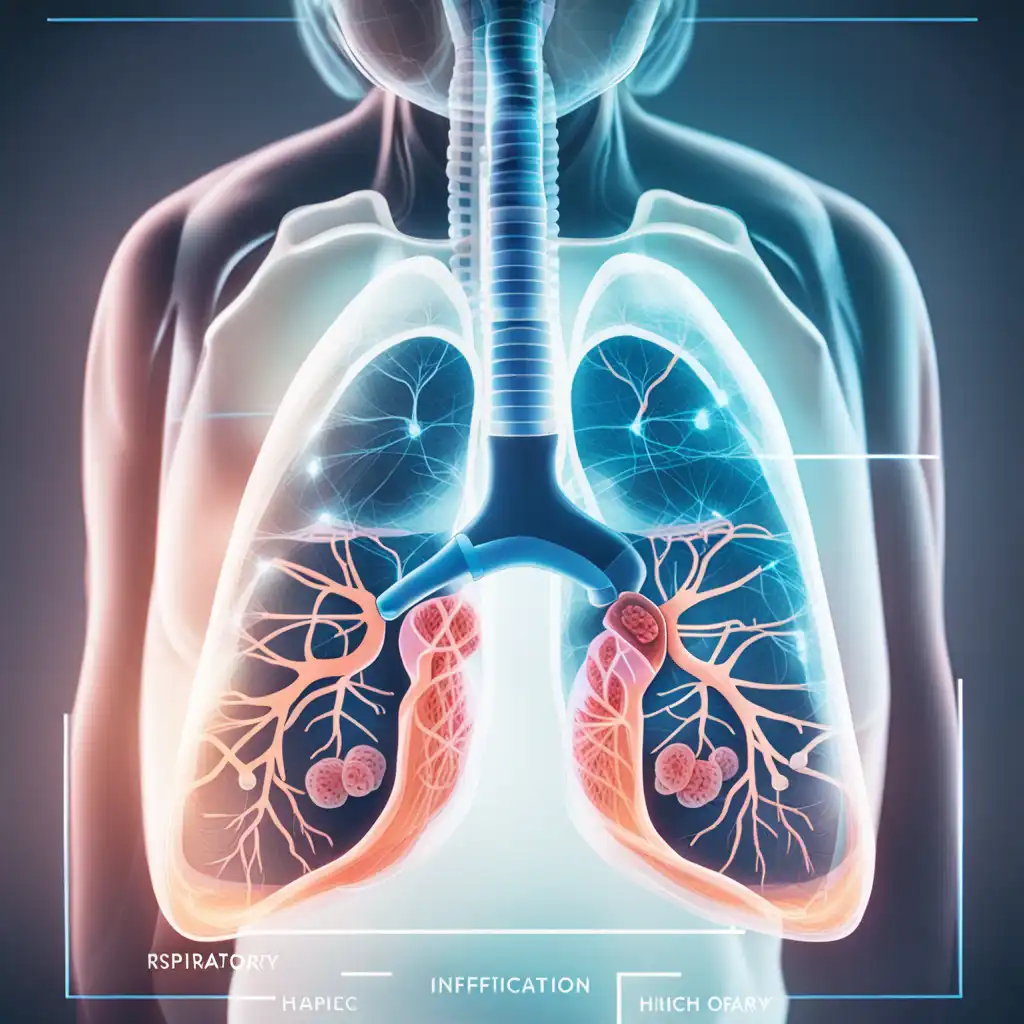
respiratory
adjective respiratory
ˈrespərətɔːri
related to breathing or the organs that help in breathing.
The doctor confirmed it was a respiratory infection.
respiratory
ˈrespərətɔːri
불러오는 중…
ˈrespərətɔːri
related to breathing or the organs that help in breathing.
The doctor confirmed it was a respiratory infection.
오디오를 불러오지 못했어요. 잠시 후 다시 시도해 주세요.
The word 'respiratory' is often used to describe something related to breathing. For example, if someone has a respiratory infection, that means they have an illness that affects their ability to breathe properly. Another example would be a respiratory therapist, who is a healthcare professional that helps people with breathing problems. So the word 'respiratory' is used to talk about anything that has to do with breathing or the respiratory system in the body.
Breathe refers to the act of taking air in and out of the body, while respiratory refers to the system in the body that is responsible for exchanging gases (oxygen and carbon dioxide) and transporting them between the lungs and the rest of the body.
In simpler terms, breathe is what you do when you inhale and exhale, while respiratory refers to the process that involves the lungs and other organs to make that happen effectively.
For example, if someone is having trouble breathing, they may have a respiratory problem, which means that there may be an issue with their lungs or other parts of their respiratory system.
If someone is doing a breathing exercise, they are focusing on the act of taking in air and releasing it, rather than the functioning of their respiratory system as a whole.
단어 열기: Breathe →Bronchial refers specifically to the bronchial tubes in the lungs - the tubes that carry air into and out of the lungs.
It is applicable when we are talking about things related to these tubes, such as bronchial asthma or bronchial infections.
The word respiratory refers to the entire process of breathing, including the lungs, the bronchial tubes, and all other organs and tissues involved in breathing.
Bronchial is a more specific term that refers to a particular part of the respiratory system, while respiratory is a more general term that refers to the entire system as a whole.
단어 열기: Bronchial →Lung refers to an organ in the body that helps us breathe. It's part of the respiratory system, which includes everything involved in breathing - the nose, mouth, windpipe, lungs and more.
Respiratory is a broader term that involves more than just the lungs - it refers to the entire process of breathing, from inhaling air to exchanging oxygen and carbon dioxide in the body.
So, while lung specifically refers to the organ that helps us breathe, respiratory refers to the whole system involved in breathing and related medical conditions.
단어 열기: Lung →Nasal refers to the nose and the nasal passages inside of it, while respiratory refers to the entire respiratory system, including the nose, throat, lungs, and trachea.
Nasal describes things related to the nose, such as nasal drops or nasal sprays, which are used to alleviate congestion in the nasal passages.
In brief, nasal refers to the nose and its passages, while respiratory refers to the entire process of breathing and the organs involved.
단어 열기: Nasal →Oxygenate means to add oxygen to something, while respiratory relates to the process of breathing.
Oxygenate is applicable when talking about adding oxygen to a substance, such as adding oxygen to water in fish tanks to keep fish alive, or adding oxygen to gasoline in engines to promote complete fuel combustion.
단어 열기: Oxygenate →Pulmonary refers specifically to the lungs. For example, pulmonary diseases or pulmonary function tests (which measure lung function).
Pulmonary relates to the lungs specifically, while respiratory refers to the whole breathing process.
단어 열기: Pulmonary →Thoracic refers to the chest, specifically the cavity that contains the heart, lungs, and other vital organs.
So to summarize, respiratory relates to breathing specifically, while thoracic relates to the chest as a whole.
단어 열기: Thoracic →This is the reason organisms can't be simply sparked back to life once they've already died. We can pump air into someone's lungs, but it won't do much good if the many other processes involved in the respiratory cycle are no longer functioning. Similarly the electric shock from a defibrillator
YouTube에서 보기 ↗We have a responsibility to protect public housing residents from the harmful effects of secondhand smoke, especially the elderly and children who suffer from asthma and other respiratory diseases.
I was called down to the ward to see him. His is the little hand. I was called down to the ward to see him by a respiratory physician. He said "Look there's a guy down here. He's got pneumonia, and he looks like he needs intensive care.
YouTube에서 보기 ↗Millions of people with respiratory diseases have relied on oxygen equipment, delivered to their homes, to help them breathe.
Systems come in The respiratory system is a group of passageways and organs that extracts life-giving oxygen from the air we breathe Air enters the body through nasal cavities travels down the throat and is then transported to the lung
YouTube에서 보기 ↗Ebola isn't a respiratory virus. It doesn't spread through the airborne route. So it's not likely to spread like wildfire around the world and kill tens of thousands or hundreds of thousands of people. That's what I think of as the next big one.
virus to a blood-borne virus to a respiratory virus which is our greatest fear and then when a Qualtrough contracted the disease and then we kill her off in the first frame of the movie
YouTube에서 보기 ↗Coughing in the theater is not a respiratory ailment. It is a criticism.
never wakes and few clues are left as to the reason many tribal people believe that snake coils up on the chest of the victim then sucks their breath away as simple as in a way accurate descriptions of respiratory failure
YouTube에서 보기 ↗Laughing is also good for your respiratory system.
Consider this unfortunately familiar scenario. Several months ago a highly infectious sometimes deadly respiratory virus infected humans for the first time. It then proliferated faster than public health measures could contain it.
YouTube에서 보기 ↗I can't put my family at risk. My son already has a respiratory problem. He has asthma.
where we'd simulate what needed to be done. We hardly did anything, and so now here we have a respiratory virus that is sadly fulfilling some of the more negative predictions I made. Last month you said that this might be the big one.
YouTube에서 보기 ↗Trees are our closest relatives. What trees exhale, we inhale; what we exhale, they inhale. They are half our respiratory system.
But mechanical ventilators take over the process, getting oxygen into the body when the respiratory system cannot. These machines can bypass constricted airways, and deliver highly oxygenated air to help damaged lungs diffuse more oxygen.
YouTube에서 보기 ↗You see, your nose is the respiratory front line. It's the warning beacon that invaders have overwhelmed your first response defenders.
and affects the world around us. And yet turbulence is ubiquitous, springing up in virtually any system that has moving fluids. That includes the airflow in your respiratory tract. The blood moving through your arteries. And the coffee in your cup as you stir it.
YouTube에서 보기 ↗Limiting Covid's impact requires us to think differently about confronting respiratory pathogens in the winter.
and respiratory syncytial virus or all leading causes of hospitalization and death in the elderly. And we're hoping that this will then be an annual booster, that you will get just like the flu vaccine.
YouTube에서 보기 ↗Without the EPA and the national pollution safeguards it enforces, more children would have asthma. Our water would be less safe. More chemicals would poison our bodies. And more people would die prematurely from respiratory diseases and heart attacks.