papal
adjective papal
ˈpeɪpl
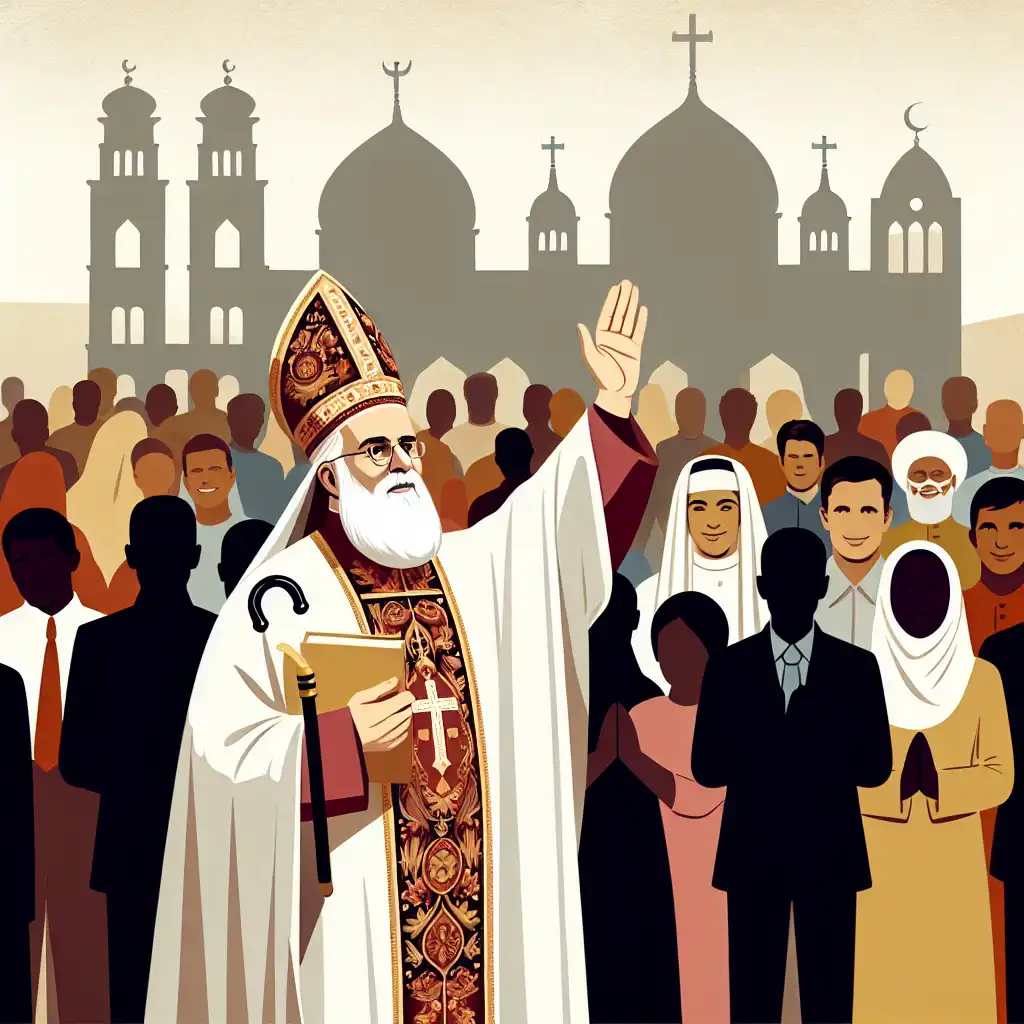
Related to the Pope or the papacy in the Roman Catholic Church.
The papal visit was a significant event for the Catholic community.
papal
ˈpeɪpl
불러오는 중…
ˈpeɪpl
Related to the Pope or the papacy in the Roman Catholic Church.
The papal visit was a significant event for the Catholic community.
오디오를 불러오지 못했어요. 잠시 후 다시 시도해 주세요.
The word 'papal' is related to the Pope, who is the leader of the Roman Catholic Church. It is used to describe anything that is related to the Pope, the Vatican or Catholicism. For example, you might hear the term 'papal blessing' which refers to a special blessing given by the Pope to a person or group. Similarly, 'papal visit' refers to a trip made by the Pope to a specific location. So, the term 'papal' is used in connection with the Roman Catholic Church and its leader, the Pope.
Apostolic refers to the teachings and practices of the apostles of Jesus Christ, who were the first leaders of the early Christian church.
Apostolic would be applicable to all Christian denominations that follow the teachings of the apostles, while papal would be applicable specifically to the Catholic Church and its followers who believe in the authority of the Pope.
단어 열기: Apostolic →Both clerical and papal are related to religion, specifically Christianity, but they have different meanings.
Clerical refers to the administrative or supportive roles within the Church. People in these positions are often referred to as clerics or clergymen/women.
Clerical is a more general term referring to support roles in the Church, while papal is more specific to the authority and leadership of the Pope.
단어 열기: Clerical →Ecclesiastic refers to the church as an institution or its officials, while papal specifically refers to the Pope, who is the leader of the Catholic Church.
Ecclesiastic can describe a wide range of church officials, such as priests, bishops, and deacons, while papal is only used when referring to the Pope himself.
단어 열기: Ecclesiastic →The word Episcopal refers to the type of church that is governed by bishops, who have authority over individual dioceses.
Episcopal churches have a hierarchical structure where bishops have more authority than priests, and they often have a governing board of bishops who oversee a region or country.
Episcopal churches are common in Anglican, Lutheran, and Methodist denominations.
Episcopal refers to a type of church that is governed by bishops, while papal refers to the supreme authority of the Pope in the Roman Catholic Church.
단어 열기: Episcopal →Hierarchical refers to a system or organization that is structured in a hierarchy, with individuals or groups ranked according to their level of authority or importance.
Hierarchical refers to a general type of organizational structure, while papal is a more specific term related to the authority of the Pope within the Catholic Church.
단어 열기: Hierarchical →Pontifical refers more broadly to things related to the Church's hierarchy or clergy. For example, a pontifical procession is a religious procession led by a bishop, and a pontifical mass is a mass celebrated by a bishop or other high-ranking clergy member.
Papal is specifically related to the Pope, while pontifical is more broadly related to the Church's hierarchy and clergy.
단어 열기: Pontifical →Papal refers to something related to the Pope or the office of the Pope, which is the leader of the Roman Catholic Church.
The word Roman can have different meanings, but in this context, it generally refers to something relating to the city of Rome or ancient Rome.
For example, Roman architecture refers to the style of buildings and structures that were developed in ancient Rome.
Both words can be applicable in different ways. For instance, if you were discussing the history of the Roman Catholic Church, you might use the word papal to describe the various Popes who have held the position.
If you were studying the architecture of ancient Rome, you would use the word Roman to describe the buildings and structures.
Papal refers to the office of the Pope and the Roman Catholic Church, while Roman refers to ancient Rome and its culture.
단어 열기: Roman →because they only unified to put it loosely they haven't really defined a hundred and fifty years ago but because they had such a long history of these small papal States and little kingdoms everything stayed very
YouTube에서 보기 ↗The great majority of the nobility and gentry of England clung to the doctrine and ceremonies of the ancient church, and yet were united in determination to oppose the papal claims.
When greeting Pope Benedict a few years ago, I was meant to kiss the papal ring but I head-butted his hand instead. He just laughed at me.
For black Catholics, the papal visit is a time of anticipation but also a time of reflection on their difficult - but important - place within the Catholic Church in America.
The whole world feels that it knows Francis, not so much because he follows Francis of Assisi but because he is always himself. We have seen him pay his own hotel bill and heard that Francis called Buenos Aires for a pair of ordinary black shoes, like John XXIII, who preferred stout peasant shoes to the traditional papal footwear.
The British monarchy has the political and constitutional task of subtracting from the government and governors of Britain the papal and kingly airs that in America, because we have no such institution, unfortunately adhere to the president.
In my stunted career as a scholar, I'd read promissory notes, papal bulls and guidelines for Inquisitorial interrogation. Dante, too. Boccaccio... But after 1400? Nihil.
I didn't really start writing about the church in earnest until the mid-2000s, so I wasn't present for or a participant in a lot of the John Paul II-era debates about papal authority.
As for antichrist occupying the papal chair, it is evident that a pope living contrary to Christ, like any other perverted person, is called, by common consent, antichrist.
Twerking takes its place in a long line of dance moves deemed immoral, even apocalyptic. The waltz was called sinful because it demanded dangerously close contact between dance partners. In 1914, the tango earned a papal denunciation for being 'damaging to the soul.
I didn't want to go into the papal bureaucracy, so I thought of doing a postdoctoral thesis, which they call a 'Habilitation' in German universities, on alchemy in the work of Albert the Great.