headscarf
noun headscarf
ˈhedskɑːrf
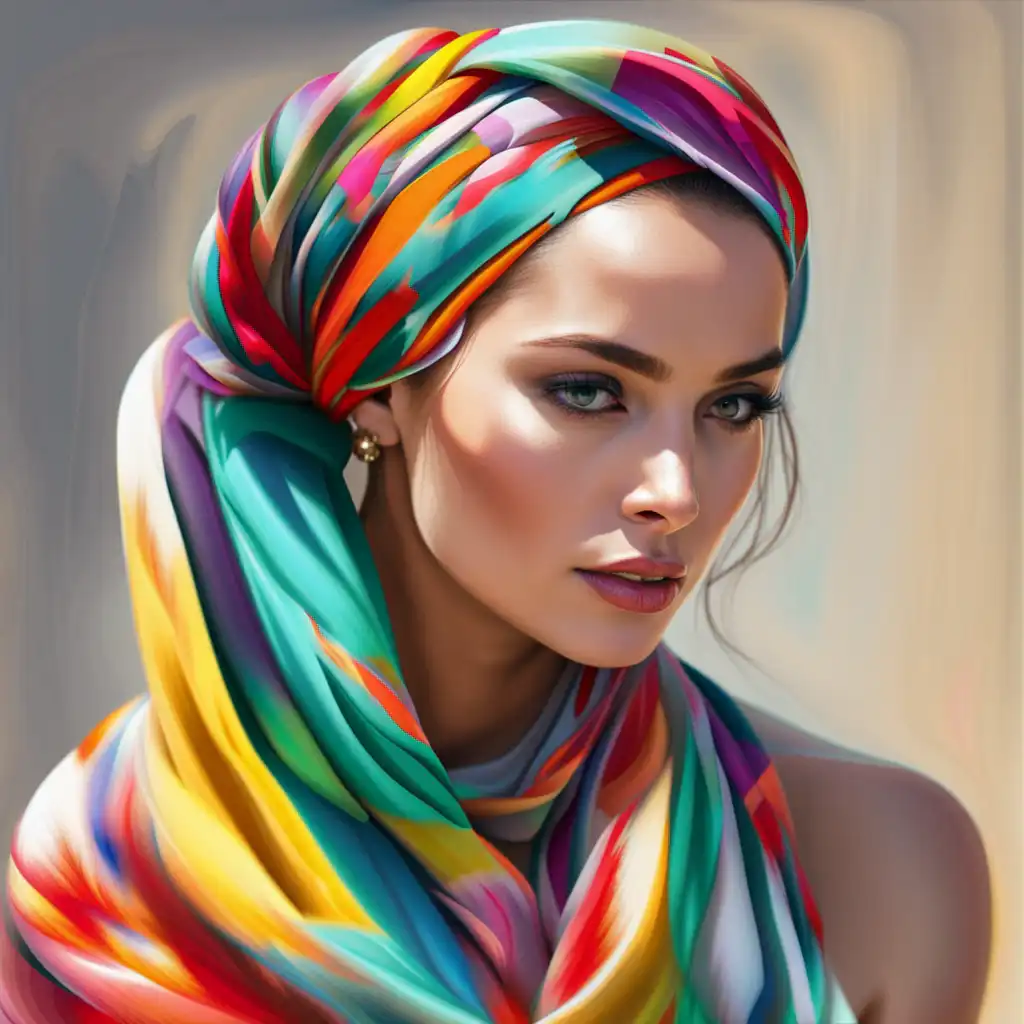
A piece of fabric that is worn around the head, often for religious or fashion reasons.
She wore a colorful headscarf to cover her hair.
headscarf
ˈhedskɑːrf
Đang tải…
ˈhedskɑːrf
A piece of fabric that is worn around the head, often for religious or fashion reasons.
She wore a colorful headscarf to cover her hair.
ˈhedskɑːrf
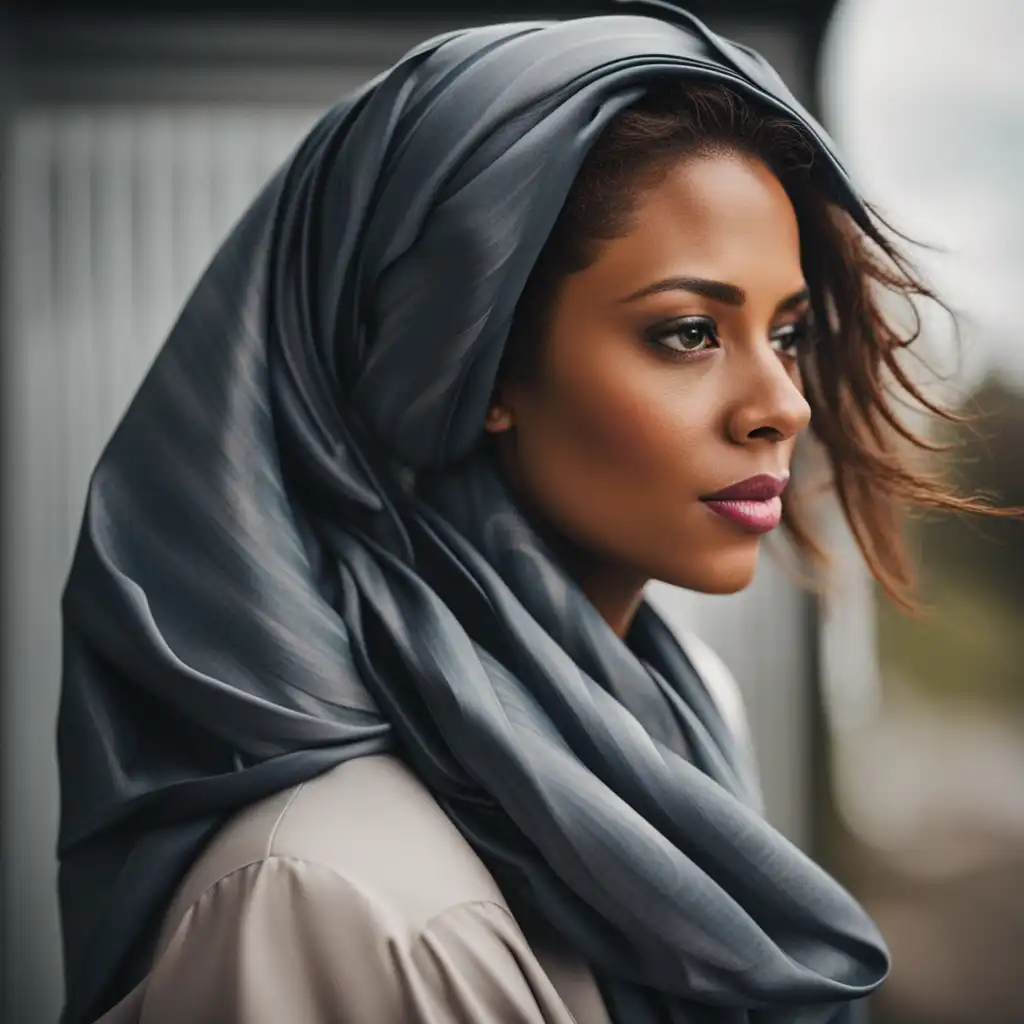
A piece of fabric that is worn around the head to protect the hair from dust, dirt or wind.
She wrapped a headscarf around her hair before going out in the storm.
Không tải được âm thanh. Vui lòng thử lại sau.
A headscarf is a piece of cloth that covers the head and hair. It can be worn by women for religious, cultural, or practical reasons. You might see women wearing headscarves at a mosque, church or temple as a sign of respect, or to keep their hair out of their face when doing work. The word 'headscarf' is typically used in a formal or neutral setting.
A bandana is a square piece of cloth that is often worn around the neck or head. It typically has a paisley or floral pattern and is made from cotton or silk.
Bandanas are popular among cowboys, rockers, and bikers.
A bandana is a specific type of cloth that is mainly worn as a fashionable accessory, while a headscarf can refer to any type of cloth that is worn to cover the head for practical or cultural reasons.
Mở từ: Bandana →A headband is a narrow strip of fabric or plastic that is worn across the forehead to keep hair from falling into the face.
A headband is a narrow strip worn on the forehead to keep hair in place, while a headscarf is a larger piece of fabric worn over the head for religious or cultural reasons or as a fashion item.
Mở từ: Headband →Hijab is an Arabic word that refers to a head covering specifically worn by Muslim women as a religious practice. It covers the head, hair, and neck, but not the face.
Mở từ: Hijab →A kerchief is a smaller square or triangular cloth that is usually tied around the neck for fashion or practical purposes.
A headscarf is a larger piece of fabric worn for religious or cultural reasons, while a kerchief is a smaller piece of cloth usually worn for practical or fashion purposes.
Mở từ: Kerchief →A shawl is a piece of fabric worn around the shoulders or upper body, and is meant to provide warmth or style.
It can be made of wool or silk and is worn as an accessory to complement an outfit. A headscarf is worn to cover the head, while a shawl is worn around the shoulders or as an accessory.
Mở từ: Shawl →A turban is a head covering made of a long strip of cloth that is wrapped around the head multiple times. It is commonly worn by men from various cultures for religious, cultural or ceremonial purposes.
While a headscarf is typically worn by women and covers the head and neck, turban is associated with men and often covers the entire head, including the hair.
However, both headscarves and turbans may be worn by both men and women depending on their cultural or personal preferences.
Mở từ: Turban →A veil is a piece of fabric that covers the face (partially or fully) and is often worn in addition to a headscarf.
A veil can have religious and cultural significance, as well as serve as a symbol of modesty or privacy.
Both headscarves and veils are worn by women in different parts of the world and have different meanings and applications depending on the culture and religion.
Mở từ: Veil →A headscarf and a wrap are both pieces of clothing that can be worn on the head, but they are slightly different in their appearance and usage.
A wrap is a larger piece of fabric that can be wrapped around the head and neck in a variety of ways.
Wraps can be made of many different fabrics and textures, from thick woolen scarves to light, airy shawls.
Wraps can be worn for both practical and fashionable reasons, and are often used to keep warm in cold temperatures or to add a stylish touch to an outfit.
The difference between a headscarf and a wrap is that a headscarf is a smaller, more structured piece of fabric worn for cultural or modesty reasons, while a wrap is a larger, more versatile item that can be worn for both practical and fashion purposes.
Mở từ: Wrap →Hope and justice for...
Xem trên YouTube ↗I wear a lot of hair extensions because I'm doing a lot of shoots and things like that. But for me, a good edge control is really important, and then a headscarf at night.
I am here to confuse you...
Xem trên YouTube ↗I love my headscarf. I wear my head wrap every day with my hoop earrings.
Heading Into an Ambush %\PIPE%...
Xem trên YouTube ↗Shopping for hijabs has always been fun for me. I was so excited to begin wearing a headscarf. I had always looked up to my mother as she wore hers, and I was eager to emulate her beauty and the wonderful things she represented.
I've never gotten any complaints about my headscarf from a man. You can be sexy with a head wrap!
I gave up everything and nearly became a farmer, walking around in headscarf and wellies for 10 years to find my confidence again.
In comics, we're all weird together. I can go to a comics convention and not stand out, even though I'm the only woman in a headscarf there, because the guy next to me has a beard and a Sailor Moon costume.
Even as she approaches 90, the Queen is sometimes glimpsed with her headscarf tied firmly under her chin riding her favourite hack, Emma - one of the fell ponies she breeds.
At the same time women are putting on the headscarf, they are also going to work, to education, increasingly vocal in the media - and this is the confusing thing about Muslim women in the West,. They are becoming Westernized at the same time as they are adopting their religious identity more strongly.
My family is very feminist, and they consider that Islam is not a super feminist religion, which I know people can argue about. But that's - anyway that's how I was brought up, so it would be odd for me to suddenly just up and start wearing a headscarf.
Some Muslim lobby groups have argued that Christian groups already have public funding for their schools and services so they should too. In response, there are now Hindu and Sikh organisations demanding their own concessions lest they feel left out. The demand to wear the headscarf one day spurs the demand to wear the crucifix the next.