
plague
noun plague
pleɪɡ
A dangerous disease that spread quickly and kills a lot of people
The Black Plague killed millions of people in Europe.
plague
pleɪɡ
불러오는 중…
pleɪɡ
A dangerous disease that spread quickly and kills a lot of people
The Black Plague killed millions of people in Europe.

pleɪɡ
A very troublesome or annoying thing or person
Email spam is a plague that affects many people's inboxes.

pleɪɡ
To cause lots of problems or difficulties
The company has been plagued by financial issues this year.
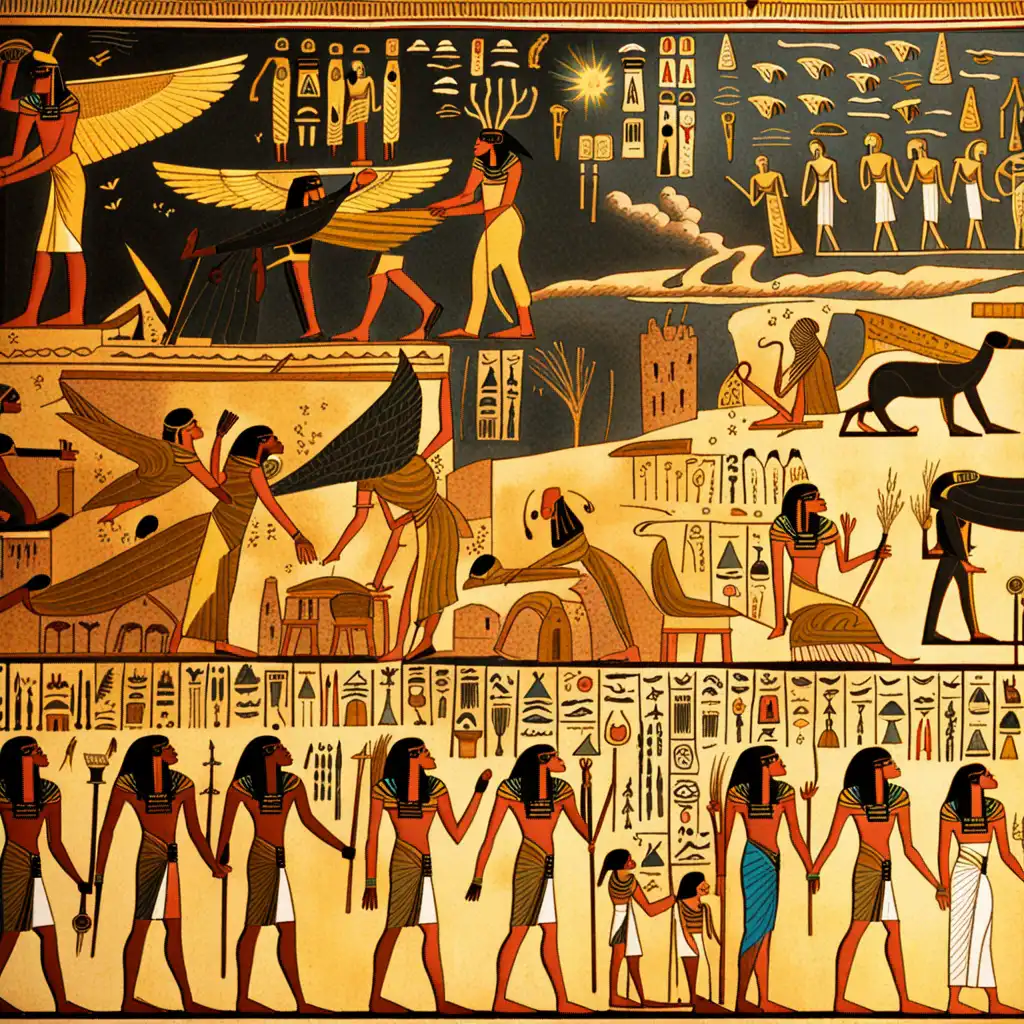
pleɪɡ
A punishment from God
In the Bible, the Egyptians were given ten plagues.
오디오를 불러오지 못했어요. 잠시 후 다시 시도해 주세요.
The word "plague" refers to a very serious and contagious disease that can spread quickly and cause a lot of harm. It can affect humans and animals alike. Plague used to be a common disease in the past but it is now very rare. In contemporary times, the word "plague" is often used metaphorically to describe anything that is widespread and harmful, such as a "plague of locusts" or a "plague of corruption". So, the word "plague" can be used to describe a serious and harmful disease or a widespread and damaging phenomenon.
Affliction and plague are both words that refer to very serious and difficult circumstances.
Affliction usually refers to a personal struggle or hardship that someone is dealing with, such as a health condition or emotional turmoil.
To summarize, affliction is a personal struggle or hardship, while plague is a widespread outbreak of disease or illness.
단어 열기: Affliction →Blight refers to a disease or something that damages crops, plants or trees.
It is often associated with epidemics or outbreaks. Blight is applicable in the context of agriculture, while plague is applicable in the context of public health.
단어 열기: Blight →Contagion is the spread of a disease from one person to another through touch, air, or other means of contact.
Contagion is a general term for the spread of any disease, while plague refers specifically to a contagious disease caused by a bacteria.
단어 열기: Contagion →Curse refers to a spoken wish of harm or misfortune on someone or something.
It can be used in a lot of different situations, such as someone wishing a curse on a thief who stole their phone.
So, in short, curse is intentional harm or misfortune, while plague is usually unintentional widespread harm caused by a disease.
단어 열기: Curse →Both epidemic and plague describe the spread of a disease, but they are used in slightly different ways.
An epidemic is an outbreak of a disease that affects many people in a community or region at the same time.
It can be caused by a virus, bacteria, or other pathogens. For example, the flu can cause an epidemic in a school or a city.
A plague is a specific type of epidemic that refers to an infectious disease that spreads rapidly and causes high mortality rates.
Epidemic is a broader term that describes the spread of a disease, while plague refers to a particular type of epidemic that is highly deadly.
단어 열기: Epidemic →Outbreak is generally used to describe the sudden appearance of a disease in a particular location or population, whereas a plague usually refers to a more widespread and severe epidemic affecting a large geographical area.
Outbreaks are typically contained and managed through public health measures such as quarantines, while plagues often require more drastic measures such as mass vaccinations and public health campaigns.
Outbreak is a more localized event, and plague is a larger-scale epidemic.
단어 열기: Outbreak →Pandemic and plague are terms used to describe diseases, but they have different meanings.
A pandemic is a term used to describe a disease that has spread across a large region, or even worldwide. It refers to the geographic spread of a disease and how many people are affected.
For example, COVID-19 is currently considered a pandemic because it has spread across the world and infected millions of people.
Pandemic refers to the widespread spread of a disease, while plague is a specific type of infectious disease caused by a certain bacterium.
단어 열기: Pandemic →Pestilence refers to any contagious, infectious, or epidemic disease that causes massive numbers of deaths.
It can refer to any contagious disease, but not all pestilences are plagues.
A plague is a specific type of pestilence that is caused by the bacterium Yersinia pestis and manifests as the sudden onset of fever, chills, weakness, and the appearance of painful buboes.
Pestilence is a broader term for any contagious or infectious disease, while plague refers specifically to a certain type of pestilence caused by Yersinia pestis.
단어 열기: Pestilence →Both plague and scourge refer to something that brings great harm or suffering, but they have slightly different connotations.
A scourge is something that causes great suffering or damage but does not necessarily involve disease. For example, war or famine can be considered a scourge.
A scourge can also refer to a person or group that causes harm or destruction, such as a dictator or terrorist organization.
A plague is a specific type of highly infectious disease that spreads rapidly, while a scourge is a broader term that refers to something that causes great harm or suffering, including but not limited to diseases.
단어 열기: Scourge →weakening feudalism and eventually leading to political reforms. But the plague also had an important biological impact. The sudden death of so many of the most frail and vulnerable people left behind a population with a significantly different gene pool, including genes that may have helped survivors resist the disease.
YouTube에서 보기 ↗If you lose a big fight, it will worry you all of your life. It will plague you - until you get your revenge.
today it is often traumatic, because it threatens our sense of self. So my patient Fernando he's plagued. He goes "I thought I knew my life. I thought I knew who you were who we were as a couple who I was.
YouTube에서 보기 ↗I know that life is full of lessons to be learned, and my children will have to learn their own, but I hope I have broken the cycle of shame and fear that plagued my childhood.
based on cloves a strong antiseptic oil and on orous which is a perfect fixative and that he held in his mouth and suggested other people hold in their mouth as a preventive against the plague it's possible that it might even have been helpful because clove is a strong antiseptic oil and it may have actually
YouTube에서 보기 ↗AIDS was allowed to happen. It is a plague that need not have happened. It is a plague that could have been contained from the very beginning.
life in the kelp is as full of drama as in any other forest but the cast is less familiar an army of sea urchins is mounting an attack the urchin plague
YouTube에서 보기 ↗As for AIDS, it's a plague. We are human, we get plagues. They come along every so often, kill off two thirds of the population; in the next generation it's a quarter; after that it's a childhood disease.
peers avoiding me like the plague in a meeting with the chair of my department I was told that I needed a team you're not going to survive here without a team he said the only problem was no one wanted me on their team there was no
YouTube에서 보기 ↗If you told me as a ten-year-old kid, loving tennis as I did, that I'd be plagued by injuries and have to finish early I'd still have chosen this life.
The virus is contained for now, but unless you can destroy it, the vents will soon open and unleash a deadly airborne plague. Without hesitation you grab your HazMat suit and get ready to save the world.
YouTube에서 보기 ↗The very wealthy have little need for state-provided education or health care... They have even less reason to support health insurance for everyone or to worry about the low quality of public schools that plagues much of the country.
He used his scientific expertise to pioneer new agricultural methods on his family's tobacco farm. His fascination with the natural world also led to a study on the plague life cycle of locusts.
YouTube에서 보기 ↗The pressure on women to be thin is like a plague. I have gone through my life, like a lot of women, rating my experiences on the basis of, 'Was I thin at that time or fat?' And it doesn't seem to let up.
First humans are essential to the smallpox lifecycle, so breaking the chain of human to human transmission causes the virus to die out. In contrast many other pathogens like ebola or the bubonic plague,
YouTube에서 보기 ↗Unfortunately, Lifeline, known in some circles as the 'Obamaphone' program, is plagued by waste, fraud, and abuse.
What also aided in the transmission of the disease was the lack of medical knowledge. For most of human history, the cause of illnesses germs was unknown, making sicknesses like the plague a mystery. This lack of knowledge drove the spread of disease
YouTube에서 보기 ↗The Middle East is obviously an issue that has plagued the region for centuries.
and moved inside the walls surrounding their city and port, now provisioned by a superior fleet and extensive maritime empire. The cramped conditions have taken a toll and a recent plague wiped out a third of the population. But city life goes on.
YouTube에서 보기 ↗Opinion has caused more trouble on this little earth than plagues or earthquakes.