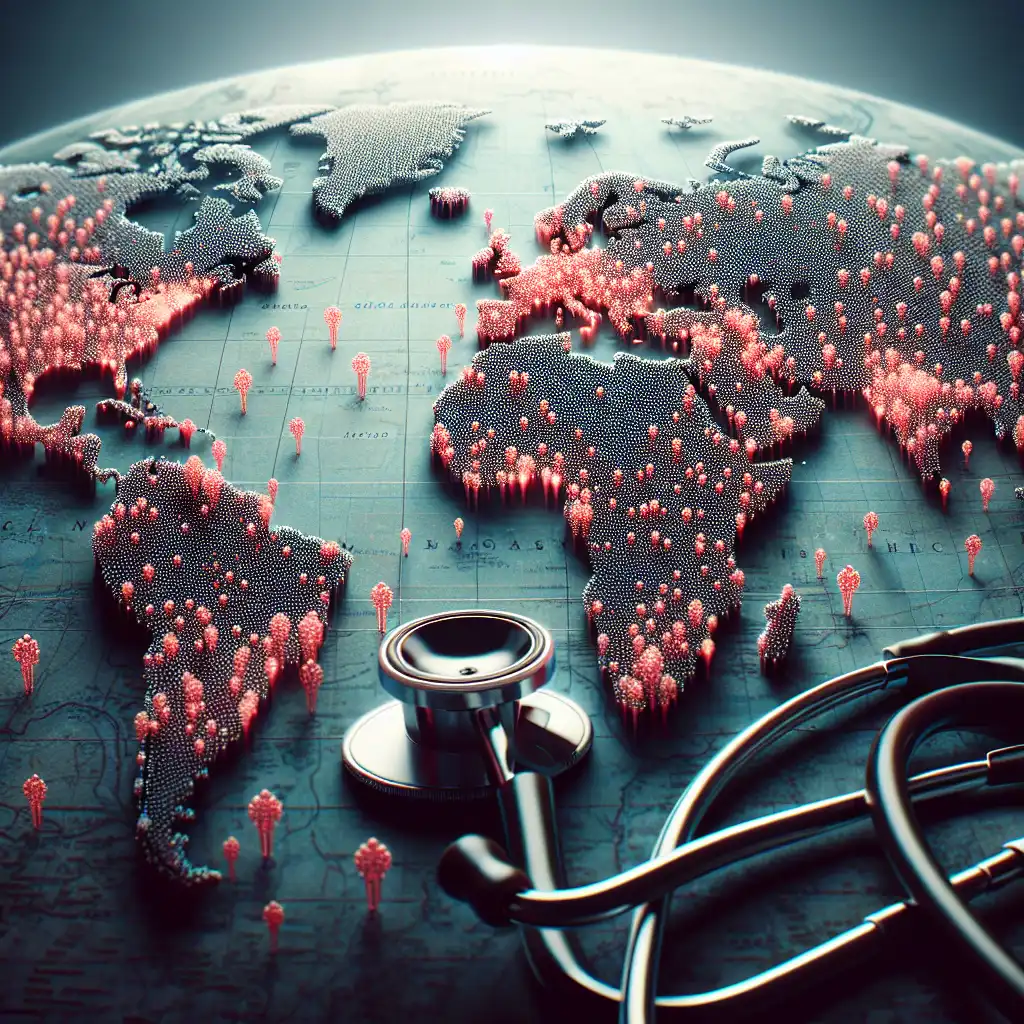
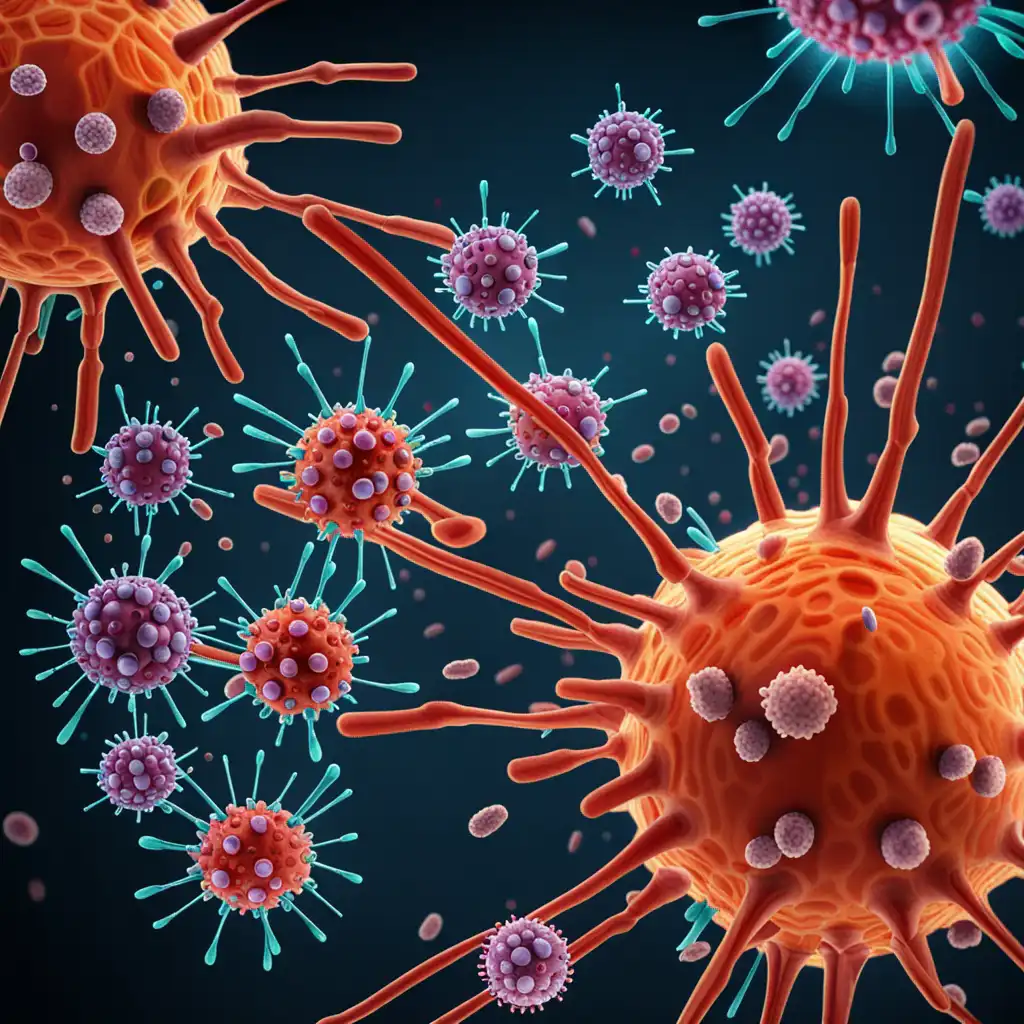
The word 'epidemic' is used to describe a situation where a disease spreads quickly and affects many people in a certain region or population. This can happen when a virus or bacteria is easily transmitted from person to person. For example, COVID-19 is an epidemic that has affected many countries around the world. It's important to use this word carefully and accurately, as it can have serious implications for public health and safety.
Contagion refers to the spreading of a disease or illness from person to person through direct or indirect contact.
In simpler terms, contagion is how a disease spreads, while an epidemic is the result of that spread. Contagion is applicable when discussing the transmission and prevention of a disease, while an epidemic is applicable when discussing the scope and magnitude of a disease outbreak.
An outbreak refers to the sudden and unexpected occurrence of a disease in a population, in a limited region or community, and is not widespread globally.
For example, if a few people in a school or community get sick with a particular virus, it might be an outbreak.
An epidemic refers to the rapid spread of infectious diseases to a large number of people in a population or area. It is a more serious situation than an outbreak, as it can cause significant harm to communities and even countries, and has the potential to cause death.
An outbreak is a small-scale event that is more localized, while an epidemic is much larger and can affect a larger population.
A pandemic is a type of epidemic that occurs on a global scale. It is when a disease spreads across several countries or continents, affecting a large number of people worldwide.
Pandemics are often caused by new and highly infectious diseases, such as COVID-19.
An epidemic is a disease outbreak that affects a particular region or community, whereas a pandemic is a global outbreak that affects people worldwide.
Pestilence is a deadly and infectious disease that affects a large number of people in a specific area, often resulting in widespread illness and death.
Pestilence is a more severe form of an epidemic. For example, the Black Death in the Middle Ages was a pestilence that killed millions of people across Europe.
An epidemic is a widespread occurrence of a disease in a community, while a pestilence is a more severe and deadly form of an epidemic that affects a large number of people in a specific region.
processed it and put that plasma back in people to protect them. But that was never tried. So there was a lot that was missing. And these things are really a global failure. The WHO is funded to monitor epidemics but not to do these things I talked about.
government power, and global epidemics. So why bother with all this pessimism? Because at their heart dystopias are cautionary tales, not about some particular government or technology, but the very idea that humanity can be molded into an ideal shape.
Nations don't have friends; they have interests. The best motivation for a state to act if it is remote from an epidemic is if its own security is at risk.
centers for disease control and Atlanta they release the results of a study which shows that the lifestyle of some male homosexuals has triggered an epidemic of a rare form of cancer in the
Cancer touches every family in one way or another. As other diseases are brought under control, cancer is set to become the number one killer, and is already in epidemic proportions worldwide.
and tools the results is an epidemic that isn't getting nearly enough attention now over the next few days we're going to hear about some of humanity's most important and complex issues and whether your issue is climate change world hunger education or
As more and more people adopt an urban lifestyle and cities continue to swell, not only does the risk of urban epidemics increase - something we haven't seen much of for decades - but the need for larger emergency stockpiles can increase, too.
you get very small numbers eventually you'll get inbreeding if a big disease epidemic strikes it can wipe out the population very quickly throughout Africa many chimps have become isolated in national parks now that all these
Twenty years ago, when I spoke about women getting harassed by politicians, people said I was getting personal. Today, the climate has changed. It has become an epidemic. It's happening in every place.
than your body has human cells, many of these bacteria are harmless or even beneficial, helping digestion and immunity. But there are a few bad apples that can cause harmful infections, from minor inconveniences to deadly epidemics.
This epidemic of student demands for 'safe places' to protect against threatening words and ideas would make a great science fiction film, but unbelievably, events seem to be outpacing the political imagination.
research to discover the genetic consequences of the Black Death has the potential to be hugely beneficial. Today the threat of an epidemic on the scale of the Black Death has been largely eliminated thanks to antibiotics. But the bubonic plague continues to kill a few thousand people worldwide every year,
When the AIDS epidemic broke, because I happened to be a science nerd and knew a lot about viruses and a lot about that virus at the time, I felt a moral obligation to go out and try to stem the fear and get out and explain to people what the disease was and how it worked.
No matter the cause obesity is an escalating global epidemic. It substantially raises the probability of diseases, like diabetes, heart disease, stroke, high blood pressure, and cancer.
You can find episodes like the flu epidemic or war times when mortality rates go up, but sustained increases in mortality for any major group in any society are really quite rare. It's an indication that something is very wrong.
you're at greater risk of being struck by lightning than ever being sent to jail for that crime. And so the epidemic of everyday violence it just rages on. And it devastates our efforts to try to help billions of people
or viral host jumps, have the potential to produce deadly epidemics. So how can pathogens from one species infect another, and what makes host jumps so dangerous? Viruses are a type of organic parasite infecting nearly all forms of life.