panorama
noun panorama
ˌpænəˈræmə
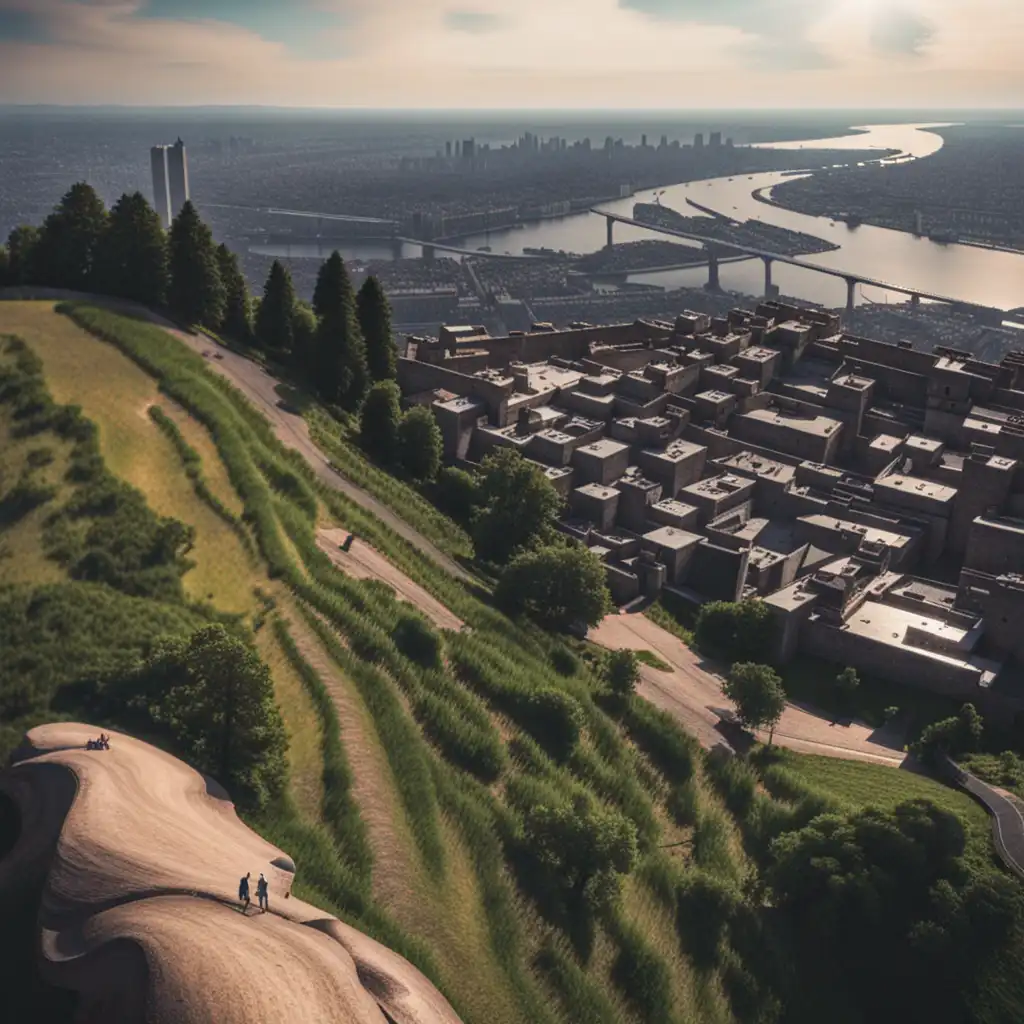
A wide view of a physical space, especially a landscape
From the top of the hill, there was a stunning panorama of the city below.
panorama
ˌpænəˈræmə
불러오는 중…
ˌpænəˈræmə
A wide view of a physical space, especially a landscape
From the top of the hill, there was a stunning panorama of the city below.
ˌpænəˈræmə
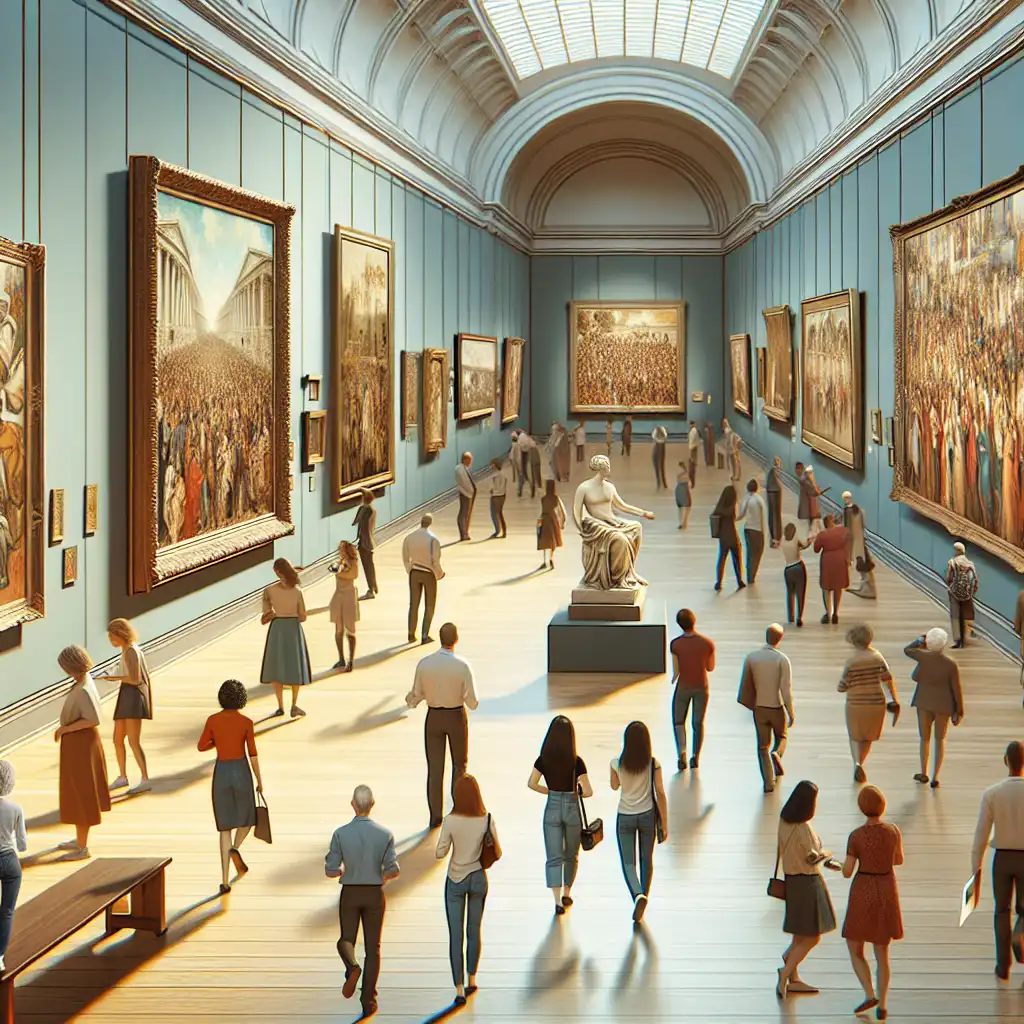
A thorough presentation of a subject
The museum's exhibition offers a panorama of art history.
ˌpænəˈræmə
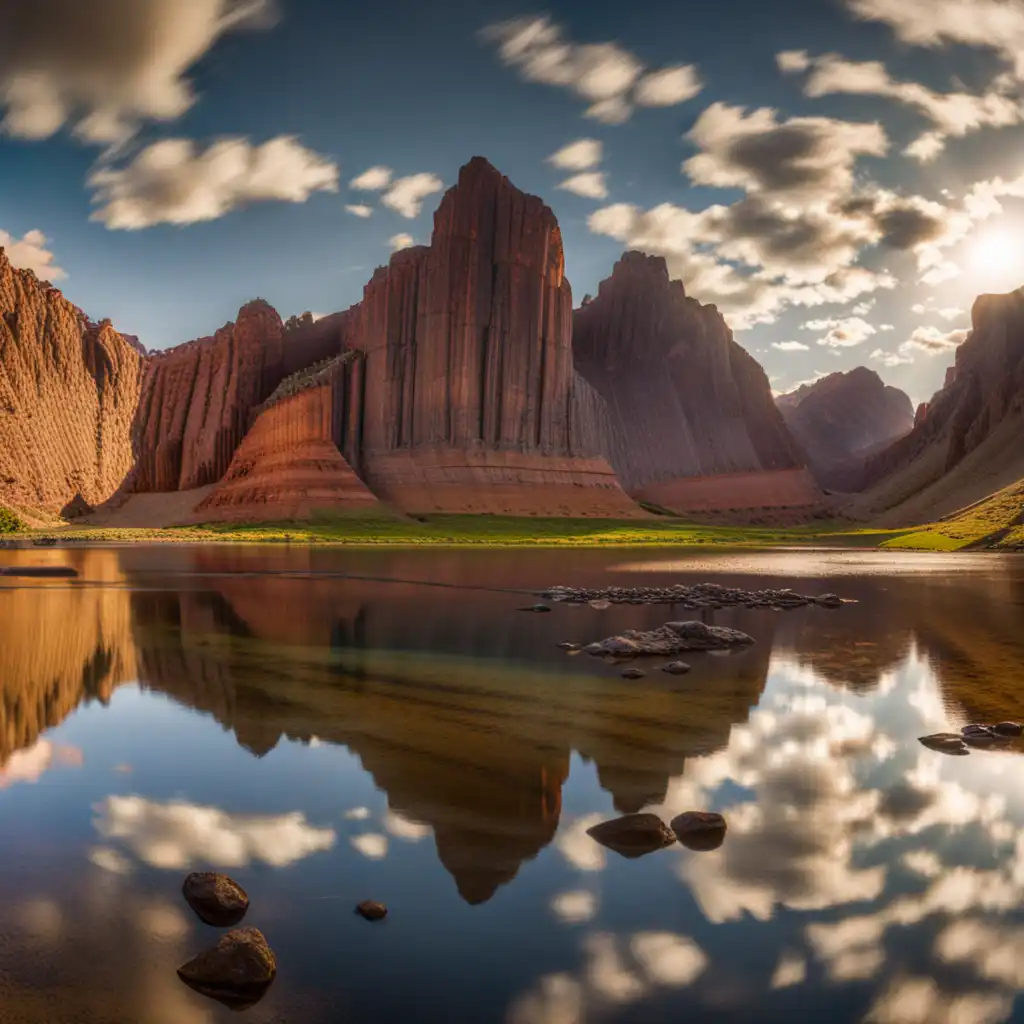
A type of wide photograph or drawing
Let's take a panorama photo to capture the entire scene.
오디오를 불러오지 못했어요. 잠시 후 다시 시도해 주세요.
The word "panorama" is used to describe a wide view of a landscape, cityscape or any other surroundings that one sees from a particular point or location. For example, if you go to the top of a mountain and look around, you may see a panorama of the entire valley below. Similarly, if you stand on a rooftop in a city, you may see a panorama of the skyline. Essentially, panorama refers to a wide view that one observes from a certain location.
Both horizon and panorama are related to sight and vision, but they have different meanings.
Horizon refers to the line that separates the earth from the sky as seen from a particular point.
So, while horizon refers specifically to the line at which the earth and sky meet in the distance, panorama is a more general term that refers to the entire view that you can see.
For example, you might say that you can see the horizon from the beach, but you would use the term panorama to describe a breathtaking view of the Grand Canyon or the New York City skyline.
단어 열기: Horizon →Both landscape and panorama refer to a wide view of a scenic area or environment.
However, landscape generally refers to the physical features and layout of an area, while panorama refers to a wider view that encompasses multiple landscapes in one view.
For example, if someone is talking about the landscape of a mountain range, they might be referring to the terrain, rock formations, and vegetation in that particular area.
Landscape is a more specific term that refers to a particular area or environment, while panorama is a broader term that can encompass multiple landscapes or a wider view of a particular area.
단어 열기: Landscape →A prospect refers to a potential or likely future event or opportunity.
Panorama describes a scenic view while prospect describes a potential opportunity or view. Panorama is mostly used in photography or sightseeing while prospect is used in business or personal development contexts.
단어 열기: Prospect →A scene refers to a smaller and more specific view or setting, often depicting a particular moment or event.
Scenes are applicable when you want to focus on a particular detail or moment within a larger setting, such as a beach scene or a street corner.
Overall, panoramas give a sense of the bigger picture, while scenes focus on the specific details.
단어 열기: Scene →Scenery refers to the natural features of a particular location or landscape.
Panorama refers to a comprehensive view of a location, whereas scenery describes the natural beauty of a place. Both words are applicable depending on the context and emphasis of the description needed.
단어 열기: Scenery →Panorama and sweep are words that describe different ways of seeing or capturing a view.
Panorama refers to a wide, sweeping view of an entire scene or landscape. It often involves a 180-degree or 360-degree view and provides a complete, immersive experience of the environment.
Sweep refers to a more focused view of a specific area or object. It usually involves moving a camera, binoculars, or a person's head from side to side to capture a wider image.
Sweeping is often used in surveillance or reconnaissance, where it is necessary to scan an area quickly and efficiently.
Panorama is used to show a wide view of an entire landscape or scene, while sweep is used to capture a focused view of a specific area or object by moving from side to side.
단어 열기: Sweep →Tableau usually refers to a still life or a grouping of people presented in a still, living picture. It's like a snapshot that captures a moment in time, often depicting actors who are frozen in a scene and not moving.
Panorama describes a wide, sweeping expanse of nature, while tableau describes a motionless picture, painting or scene with people.
단어 열기: Tableau →A panorama is a wide and all-encompassing view. It usually refers to a view that is so wide that it requires turning your head to take it all in.
A panorama can be a view of a landscape, cityscape, or any other view that is very wide. Panoramas are typically taken using special photography techniques or stitching together multiple images.
A view can refer to any perspective or vantage point from which something can be seen.
It can be a narrow view or a wide view, and it can be of anything from a sunset to a piece of artwork.
A panorama is a specific type of view that is very wide and all-encompassing, whereas a view can refer to any perspective from which something can be seen.
단어 열기: View →Both panorama and vista refer to a view of a surrounding area or landscape.
Vista refers to a specific view or perspective of a landscape, usually captured by looking through a frame or opening such as a window or an archway.
If you are looking out of a window in a city skyscraper and admiring the specific view of the city skyline, you are experiencing a vista.
Panorama describes a more expansive, sweeping view, while vista tends to refer to a more specific and often more defined view.
단어 열기: Vista →The forgotten art of the...
YouTube에서 보기 ↗But it is true that sometimes an enveloping darkness aids one to clearer vision; as in a panorama building, for example, where the obscurity about the entrance prepares one better for the climax, and gives the scene depicted a more real and vivid appearance.
Remembering John Glenn:...
YouTube에서 보기 ↗With his gigantic personality, my grandfather burst onto the great political panorama of that era made up only of little men with little ideas.
Photosynth 2: Exploring...
YouTube에서 보기 ↗We can't just have mainstream behavior on television in a free society, we have to make sure we see the whole panorama of human behavior.
A day in the life of an...
YouTube에서 보기 ↗Any historian worth their salt should be aware of wars, conflicts, catastrophes. They happen. This is part of the panorama.
Water on Mars? %\PIPE%...
YouTube에서 보기 ↗Certain people have certain ways of focusing on things, and some arrange their lens to a pinhole in order to focus only on their goal. Others have a giant lens, and they take in the whole panorama. I was that pinhole kind of person.
David Doubilet &...
YouTube에서 보기 ↗There are mountains, plains, deserts with panoramas that take your breath away.
Mapping Patagonia %\PIPE% Best...
YouTube에서 보기 ↗In the beginning, the cubists broke up form without even knowing they were doing it. Probably the compulsion to show multiple sides of an object forced us to break the object up - or, even better, to project a panorama that unfolded different facets of the same object.
The Call of Everest %\PIPE%...
YouTube에서 보기 ↗Literature that keeps employing new linguistic and formal modes of expression to draft a panorama of society as a whole while at the same time exposing it, tearing the masks from its face - for me that would be deserving of an award.
How (and why) Russia...
YouTube에서 보기 ↗In writing 'A Portrait of Athens' I have attempted - rather impressionistically - to give a panorama of its present. But I have also brought in its past because I sincerely think that there is a continuity.
New insights on poverty...
YouTube에서 보기 ↗Both 'The Wire' and 'Queer as Folk' had a big scope. They were panoramas, telling ambitious stories about two cities, Baltimore and Manchester, for the first time.