marauder
noun marauder
məˈrɔːdər
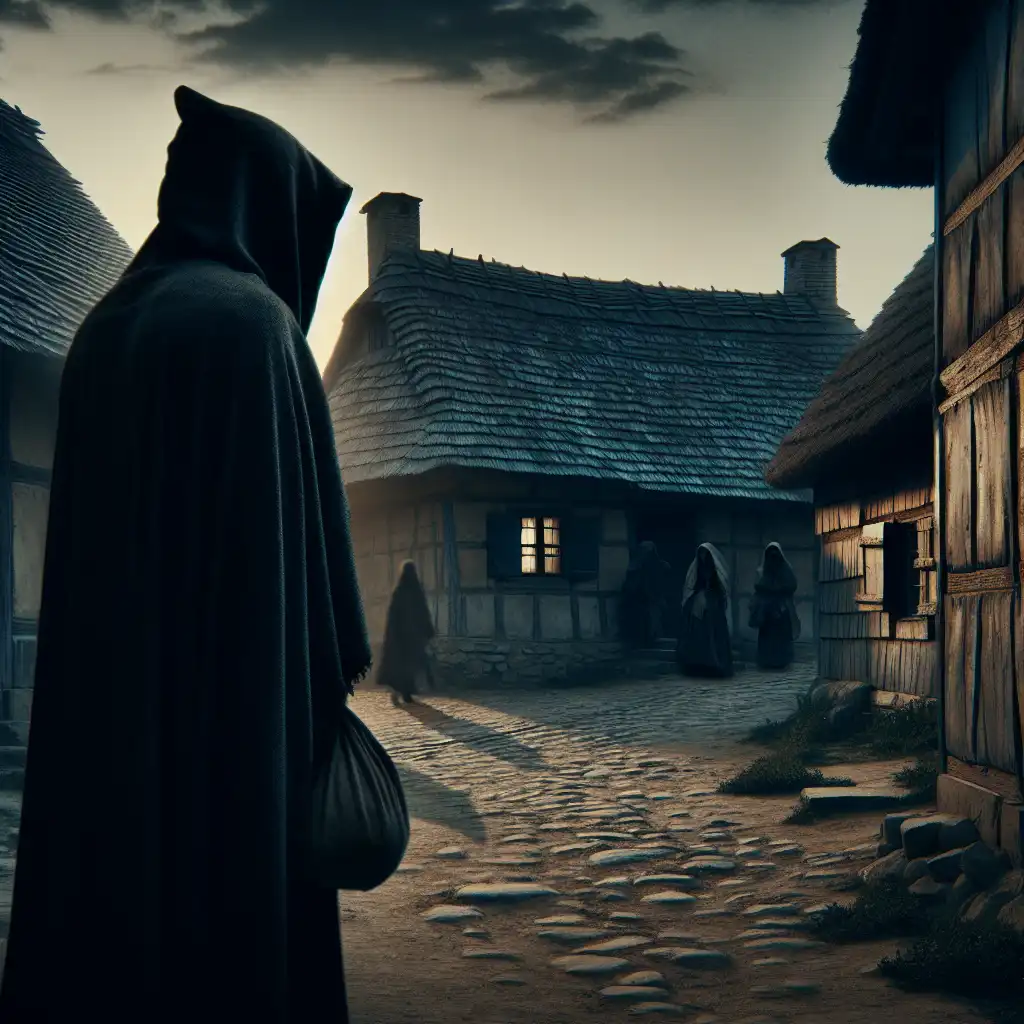
A person who searches for something to steal or people to attack
The villagers lived in constant fear of attacks by marauders.
marauder
məˈrɔːdər
読み込み中…
məˈrɔːdər
A person who searches for something to steal or people to attack
The villagers lived in constant fear of attacks by marauders.

məˈrɔːdər
In computing, a person who infiltrates a computer system to tamper with data
The company's data was compromised by a marauder who bypassed their security.
音声を読み込めませんでした。しばらくしてからもう一度お試しください。
The word "marauder" refers to someone who travels or moves around with the intention of stealing, attacking or causing harm to others. It can be used to describe someone who is a thief, robber, or pirate. It is often used in a negative manner to describe a person who causes trouble or damage. For example, "The town was attacked by a group of marauders who stole everything they could find," or "The football team was described as marauders on the field, constantly attacking and overpowering their opponents."
Bandit and marauder are both words used to describe criminals who rob or plunder.
A bandit often refers to a person who steals from individuals or small groups of people. They tend to operate in isolated areas like deserts, forests or mountains, and often target travellers or small villages.
A bandit is usually armed and uses force or intimidation to carry out their crimes.
A bandit is a solitary thief who steals from individuals or small groups, while a marauder is a group of armed criminals who attack and plunder towns and cities.
単語を開く: Bandit →Both brigand and marauder refer to people who engage in illegal or violent activities, but there are some differences between the two words.
A brigand is a person who is part of a band of robbers or thieves who usually attack travelers in remote places. They are often seen as desperate or violent criminals who use force to get what they want.
Brigands commonly operate in rural or mountainous areas of developing countries where security is lax.
A marauder is typically someone who roams around in search of victims to attack or plunder. While a brigand is usually part of a larger group, a marauder can act alone or in small groups.
A brigand is a specific type of criminal while a marauder is a more general term used to describe anyone who goes on a rampage or raid.
単語を開く: Brigand →A freebooter typically refers to a pirate or privateer who operates with the backing of a government or nation, and their attacks are often sanctioned acts of aggression.
A marauder is someone who engages in unauthorized raids or attacks, often as a renegade or thief. So, freebooters are more commonly found in historical or military contexts, while marauders are often used to describe criminals or rebels.
単語を開く: Freebooter →A highwayman is an individual who robs travelers on the road or highway, typically using a weapon. This term is usually used to refer to a specific historical period in which such activities were common, specifically in the 18th and early 19th centuries.
A highwayman specifically refers to a person who robs travelers on a road or highway, while a marauder is a more general term for someone who engages in similar behavior in other contexts.
単語を開く: Highwayman →- Looter typically refers to someone who steals things from stores or buildings during a riot, natural disaster, or other chaotic event.
Looter refers to stealing during a chaotic event, while marauder refers to organized stealing from people or communities while traveling around in a group.
単語を開く: Looter →Both marauder and pillager refer to a person who attacks and steals from others, often in a violent manner.
However, marauder typically implies that the person is a lone attacker, while pillager implies that the person is part of a larger group or army.
Marauder might be used to describe a lone bandit who robs travelers on a remote road, while pillager might be used to describe a horde of Vikings who attack a village and steal everything they can.
In general, both words are used to describe someone who takes something from someone else by force, but marauder implies the act is committed by one person while pillager suggests it is done by a group of people.
単語を開く: Pillager →A pirate is someone who attacks and steals from others while on a ship.
They may also be bandits who attack travelers on roads or raid villages. Pirates operate on the high seas, where they can attack and rob ships.
In short, marauders are land-based attackers and pirates are sea-based attackers.
単語を開く: Pirate →Both marauder and plunderer describe someone who takes something by force, but there are some differences in their applications.
Plunderer, on the other hand, is someone who takes goods or valuables by force, but it could be done in a variety of ways, such as robbery or stealing.
Think of it like a thief who steals from a store. So, while both words describe someone who takes something by force, marauder typically applies to a group attacking an area, while plunderer applies more to an individual taking valuable items.
単語を開く: Plunderer →Both marauder and raider are used to describe someone who attacks and steals from others.
However, marauder implies a sense of wandering or roaming, while raider is often used in the context of planned and organized attacks.
A group of soldiers who plan and execute a surprise attack on an enemy camp would be referred to as raiders.
In simpler terms, marauder suggests an individual or group who attacks randomly, while raider implies a more deliberate and strategic approach to stealing or attacking.
単語を開く: Raider →Living Off the Land %\PIPE%...
YouTube で見る ↗I can understand the Chinese Wall: it was built as a defense against marauders. But a wall such as that in Berlin, built to prevent people from seeking freedom, is almost beyond comprehension.
A brief history of...
YouTube で見る ↗From Mahmud Ghazni to Ahmed Shah Abdali, Punjab was hit by marauders so many times that we have learnt to laugh even at death.
What Churchill described as the twin marauders of war and tyranny have been almost entirely banished from our continent. Today, hundreds of millions dwell in freedom, from the Baltic to the Adriatic, from the Western Approaches to the Aegean.