promenade
noun promenade
ˌprɑːməˈneɪd
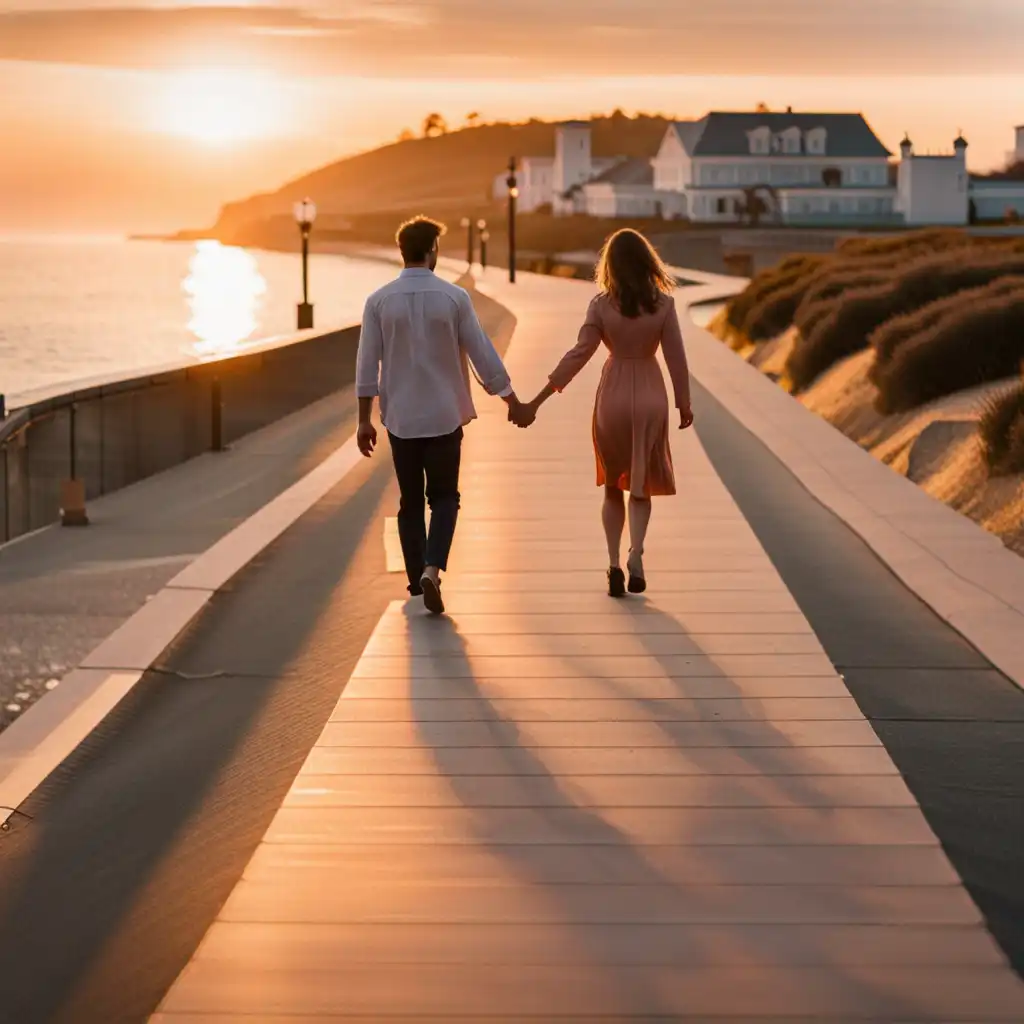
A public place for walking, generally a wide path or sidewalk along the seaside.
The couple enjoyed a romantic walk along the promenade.
promenade
ˌprɑːməˈneɪd
読み込み中…
ˌprɑːməˈneɪd
A public place for walking, generally a wide path or sidewalk along the seaside.
The couple enjoyed a romantic walk along the promenade.

ˌprɑːməˈneɪd
To walk in a leisurely way, especially in a public place for pleasure.
On Sundays, she likes to promenade along the beach.

ˌprɑːməˈneɪd
A slow, formal walk in dancing, where the couple walks together.
The dancers impressed the audience with a graceful promenade.
音声を読み込めませんでした。しばらくしてからもう一度お試しください。
The word 'promenade' refers to a public walkway or path, usually found near a body of water like a beach or lake. People use this path to take a leisurely walk and enjoy the scenery. Promenades may also be found in parks, gardens or city centers. It can also refer to a formal dance where participants walk together in a set pattern.
Amble usually means to walk slowly and leisurely, while the word promenade usually means to walk along a public place designed for walking, such as a boardwalk or a scenic path.
An amble can be done anywhere, from your backyard to a park, and it does not usually have a specific destination or purpose, but rather is just a relaxing stroll.
単語を開く: Amble →March refers to a rhythmic walking movement used in military and ceremonial situations, such as in a parade or a marching band.
Promenade refers to a leisurely stroll or walk taken for pleasure, such as along a boardwalk or in a park. March is typically used in more formal and structured settings, while promenade is used in more casual and relaxing settings.
単語を開く: March →A parade is a public procession where people march, ride or drive in formation to celebrate an occasion or event.
A parade is an event where people march and celebrate something, while a promenade is a place where people can take a relaxing walk and enjoy the surroundings.
単語を開く: Parade →Ramble usually refers to a more casual and aimless walk, often taken in a natural setting like a forest or countryside.
A ramble is often taken for the purpose of exploring and experiencing nature, with less of a focus on socializing or being seen by others.
Promenade is more associated with leisurely walks in public spaces where people can be seen, while ramble is more associated with relaxed walks in natural settings for the purpose of exploring nature.
単語を開く: Ramble →Promenade and saunter are both walking activities that involve leisurely and relaxed movement.
Saunter refers to a slow, relaxed walk that is taken without a specific goal or destination in mind.
Saunter is often used to indicate a type of walk that is casual and aimless, e.g., "We sauntered along the beach, enjoying the sunset.".
Promenade is more formal and purposeful, while saunter is more casual and aimless. The choice of one over the other depends on the situation and the desired outcome of the walk.
単語を開く: Saunter →Both promenade and stroll refer to a leisurely walk, but they differ in terms of location and purpose.
A stroll can happen anywhere and often has no particular destination or purpose.
A promenade is a leisurely walk in a specific public area for the purpose of socializing or taking in the surroundings, while a stroll is a more casual and laid-back walk with no specific destination or purpose.
単語を開く: Stroll →Promenade means to walk leisurely or stroll, often for pleasure or exercise, while strut means to walk with confidence and pride, often to show off or impress others.
Strut is applicable when you want to show off your confidence or impress someone, for example, when you are walking on a fashion show ramp.
単語を開く: Strut →Promenade typically refers to a leisurely walk taken for pleasure, often in a public place like a park or along a promenade.
It can also refer to a dance, where couples walk together in a set pattern. Walk, on the other hand, is a more general term that simply means to move forward on foot.
It can be used in a recreational context, but it can also refer to mundane activities like walking to work or walking to the store.
So, in short, promenade is a more specific form of walking that is done for enjoyment, while walk is a broader term that can refer to any form of walking.
単語を開く: Walk →It's basically decommissioned train tracks that now have become one of the most popular promenades in the city. So we thought, could we design the necessary flood protection for Manhattan
YouTube で見る ↗Coogee is a delightful, slightly old-fashioned suburb; it has parks and gardens and reserves, a good well-kept beach, and an excellent promenade above the beach. It is a suburb for people who appreciate those aspects of life.
For the enjoyment of its passengers, the ship was to feature a flower-lined promenade, a sheltered swimming pool, and bathhouse with heated water, a library filled with books and statues,
YouTube で見る ↗The day of the sun is like the day of a king. It is a promenade in the morning, a sitting on the throne at noon, a pageant in the evening.
You get way better from playing to the passing public. You learn how to entertain. But it took me a good three years out on the promenade to figure that out. You also learn what makes them stop dead in their tracks and what doesn't.
Liberal democracies like ours seem, for the most part, to have learned how to avoid meticulously planned mass-casualty plots with the complexity and scale of 9/11. But they don't know how to keep their citizens safe at night clubs and concerts, in supermarkets, on beachfront promenades, from truck drivers.