conflagration
noun conflagration
ˌkɑːnfləˈɡreɪʃn
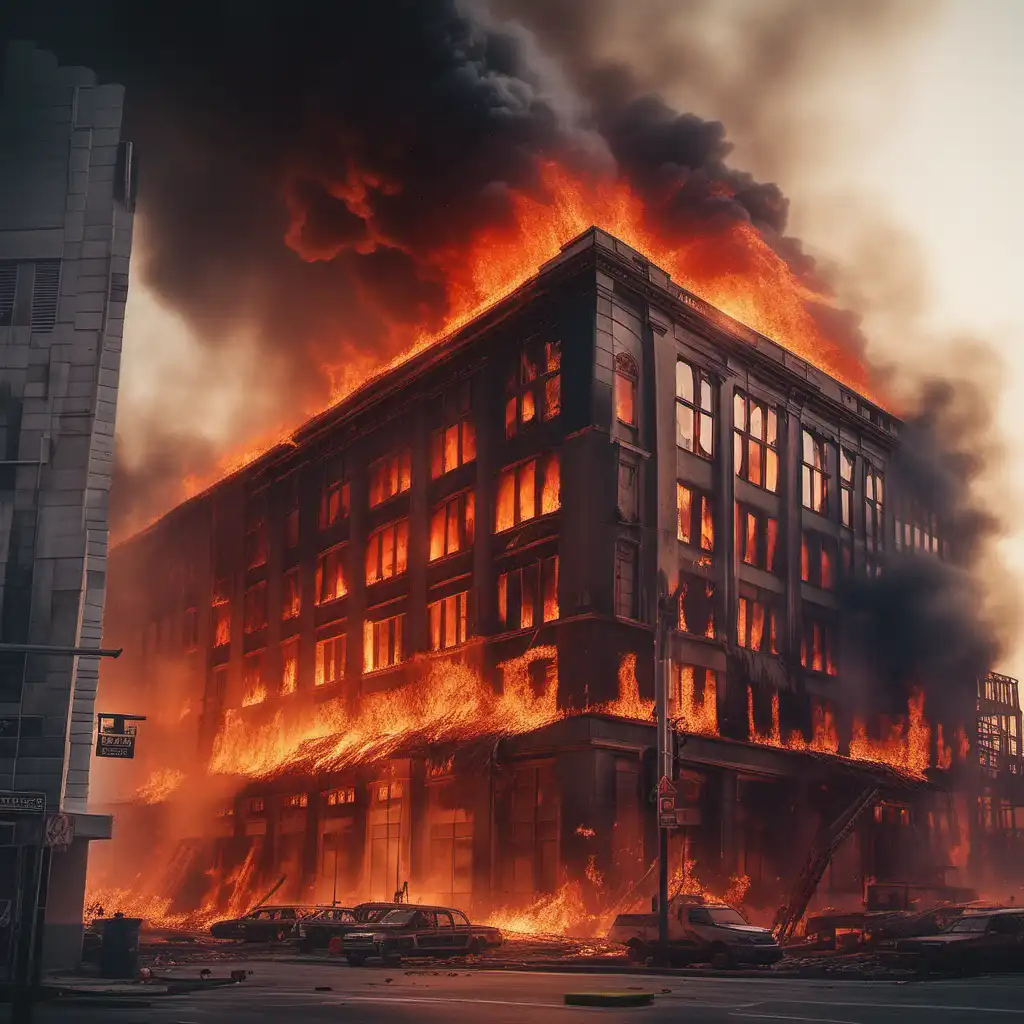
A large destructive fire that causes a lot of damage
The conflagration quickly spread throughout the entire building.
conflagration
ˌkɑːnfləˈɡreɪʃn
Cargando…
ˌkɑːnfləˈɡreɪʃn
A large destructive fire that causes a lot of damage
The conflagration quickly spread throughout the entire building.
ˌkɑːnfləˈɡreɪʃn
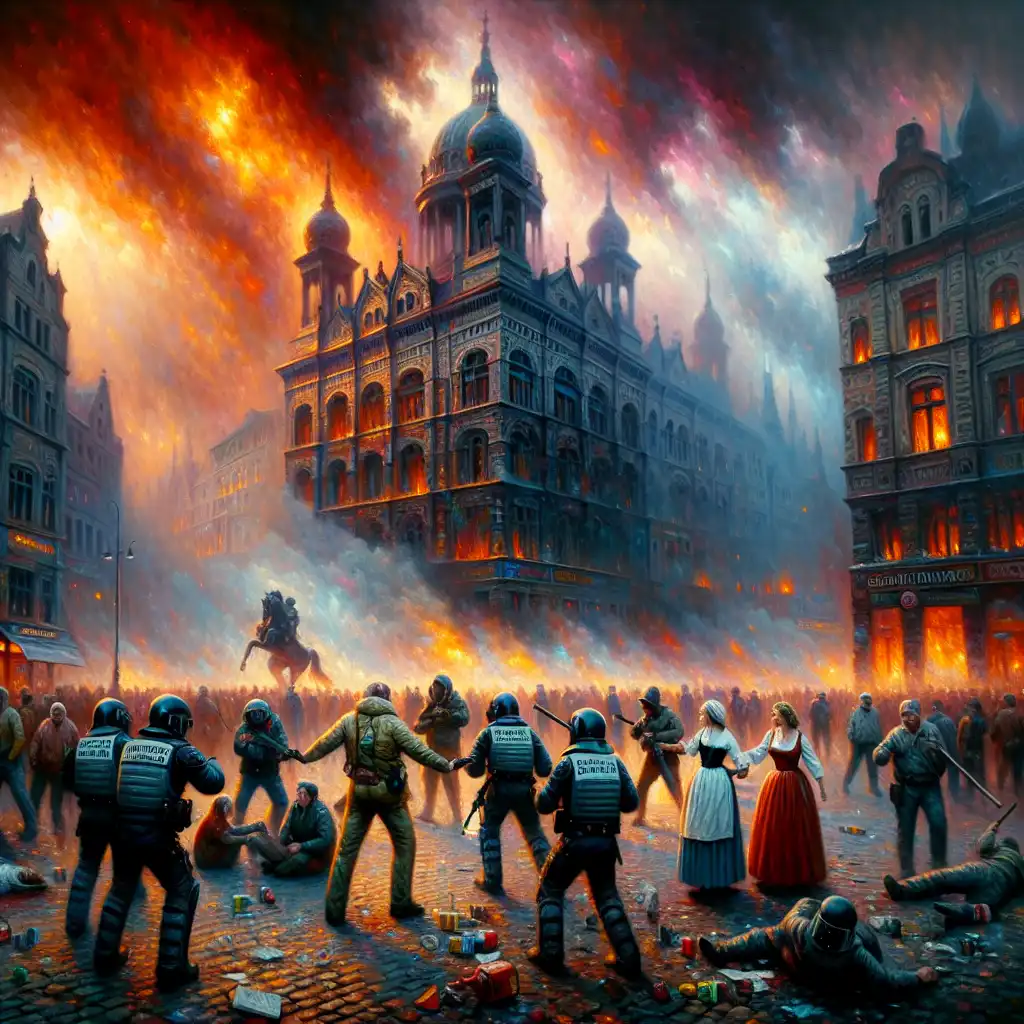
An intense and dangerous situation that is often violent
The city was caught in a conflagration of civil unrest and chaos.
No se pudo cargar el audio. Inténtalo de nuevo más tarde.
The word 'conflagration' is used to describe a very large and destructive fire. You might use it when talking about a wildfire that's spreading quickly and causing a lot of damage, or when describing a building that's completely engulfed in flames. It's a serious word that's usually used in situations where there's a lot of danger and destruction, so it's not something you'd use casually.
Annihilation refers to the complete destruction of something, usually with the intention of eradicating it entirely.
Annihilation means complete destruction, while conflagration refers to a large and destructive fire.
Abrir palabra: Annihilation →Blaze refers to a controlled or moderate fire, while conflagration refers to a large and uncontrollable fire.
A blaze is often used to describe a small fire or flames, such as a candle, fireplace, or campfire.
A blaze is a small fire, while a conflagration is a big and dangerous fire.
Abrir palabra: Blaze →A cataclysm is a sudden and violent event that can cause massive destruction and change the course of history.
A cataclysm is a sudden disaster that can change history, while a conflagration is a large and destructive fire. Cataclysms are associated with natural disasters, while conflagrations can be caused by both natural and human sources.
Abrir palabra: Cataclysm →Conflagration refers to a very large and destructive fire that can spread quickly and cause devastation.
Devastate means to completely destroy or ruin something, such as a city or a community, often due to a catastrophic event like a natural disaster or war.
It can also apply to emotional devastation, such as the grief experienced after a loved one dies.
Conflagration specifically refers to a destructive fire, while devastate is a broader term that can refer to any kind of destruction or ruin.
Abrir palabra: Devastate →Firestorm refers to a more extreme form of fire where heat creates powerful upward winds that drag in more fuel, creating a spiral of flames.
A firestorm is a more severe form of fire compared to conflagration.
Conflagration describes a large-scale fire, while firestorm implies a more intense and destructive event.
Abrir palabra: Firestorm →Holocaust describes a catastrophic event or disaster that results in widespread death and destruction. This term originally referred specifically to the genocide of Jewish people during World War II, but it has since been expanded to describe any event that involves mass destruction and loss of life.
Conflagration describes large fires, while holocaust describes catastrophic and deadly events.
Abrir palabra: Holocaust →Both conflagration and inferno refer to a large, intense fire, but there is a subtle difference in their meanings.
Inferno is typically used to describe a fire that is raging out of control and is devouring everything in its path. It suggests a fire of catastrophic proportions that has the potential to cause irreparable damage or destruction, such as a raging forest fire or a chemical plant explosion.
Conflagration refers to a large, destructive fire, while inferno suggests an unstoppable, catastrophic fire.
Abrir palabra: Inferno →Conflagration and outbreak are two different words used to describe different types of events.
Outbreak, on the other hand, describes the sudden emergence or spread of a disease or illness.
It is often used in the context of a disease that quickly spreads among a population, such as a flu outbreak or an outbreak of a more serious illness like Ebola.
Conflagration describes a large, destructive fire, while outbreak describes the sudden emergence or spread of a disease.
Abrir palabra: Outbreak →Katie Mack: The death of...
Ver en YouTube ↗The most intense conflicts, if overcome, leave behind a sense of security and calm that is not easily disturbed. It is just these intense conflicts and their conflagration which are needed to produce valuable and lasting results.
How to bring classical...
Ver en YouTube ↗Mothers subject their daughters to a level of scrutiny people usually reserve for themselves. A mother's gaze is like a magnifying glass held between the sun's rays and kindling. It concentrates the rays of imperfection on her daughter's yearning for approval. The result can be a conflagration - whoosh.
Surviving a nuclear...
Ver en YouTube ↗You do the hundreds of things that a Christward heart does in the hope that God will put a match to those little sparks to cause it to become a conflagration in a community or in a nation.
Safari Live - Day 348 %\PIPE%...
Ver en YouTube ↗The First World War not only destroyed European civilisation and the empires at its heart; its aftermath led to a second conflagration, the Second World War, which divided the continent until the end of the century.
The world is fine and everything is normal and then, bang, you just get bowled over by the wrathful deities somehow. That happens in very small ways and happens in very large ways when you have a major conflagration in the world. It's another cycle of existence of human beings.
The story of FDR as U.S. Commander in Chief is a heroic war story of a president who had already overcome great adversity in facing polio but who went on to take the reins of our armed forces in the greatest conflagration in human history - on our behalf.