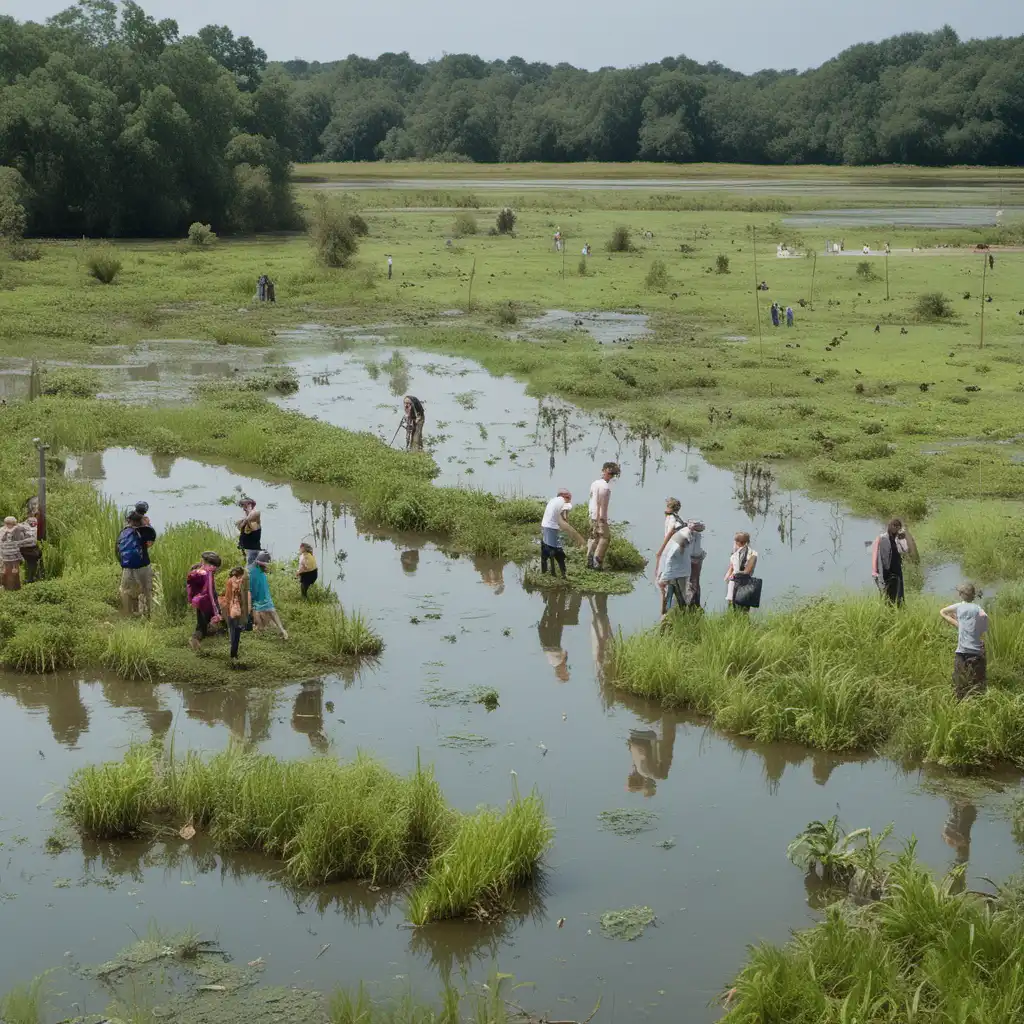
wetland
noun wetland
ˈwetlənd
Land area that is usually soaked with water, like swamps or marshes
We walked across the wetland to observe the various types of plants and insects thriving in it.
wetland
ˈwetlənd
Đang tải…
ˈwetlənd
Land area that is usually soaked with water, like swamps or marshes
We walked across the wetland to observe the various types of plants and insects thriving in it.
Không tải được âm thanh. Vui lòng thử lại sau.
A wetland is an area where the land is wet or covered in water. It is usually filled with plants and animals that can survive in wet environments. Wetlands can be found in many places such as swamps, marshes, and bogs. They provide important habitats for wildlife and help to filter water and prevent flooding. Wetlands are sometimes used for farming or recreation, but it is important to protect them because they are fragile ecosystems that can be easily damaged by human activity.
Bog and wetland are both types of wetlands, but there are some differences between them.
A bog is a type of wetland that is acidic, wet, and receives very little water from the surroundings. Bogs are formed when rainwater or groundwater get trapped in an area, creating a stagnant pool of water.
Over time, dead plant material and other organic matter build up, forming a thick layer of peat. Bogs are typically characterized by their spongy surface, which is often covered in mosses and peat mosses.
Bogs are usually found in cool, damp areas and are important habitats for a variety of plants and animals.
In summary, bogs are a specific type of wetland that are acidic and stagnant, while wetlands are a broader category that encompasses a variety of waterlogged areas.
Mở từ: Bog →Both fen and wetland refer to areas of land that are largely covered by water.
A fen is a type of wetland that is characterized by a neutral to alkaline pH, and is usually fed by groundwater. Fens typically have few trees and shrubs, and are populated by plants like sedges, reeds, and mosses.
Fens are important habitats for rare and endangered species like the sundew and the bog turtle.
Wetlands can include swamps, marshes, bogs, and fens, as well as other types of wet areas like floodplains and estuaries.
In summary, fens are a specific type of wetland that are characterized by a neutral to alkaline pH, and are important habitats for rare and endangered species, while wetlands are a broader category of land that are saturated with water and provide numerous ecosystem services.
Mở từ: Fen →A marsh is a type of wetland that is characterized by low-lying vegetation, such as grasses and reeds, and is often flooded with water from nearby rivers or streams.
Marshes are typically found near the shorelines of bodies of water, such as lakes and oceans, and are important habitats for a variety of plants and animals.
Wetlands can include marshes, swamps, bogs, and fens, and they are found in a variety of landscapes, including forests, grasslands, and coastlines.
A marsh is a specific type of wetland, characterized by low-lying vegetation and proximity to bodies of water, while wetlands are a broader category of habitats that include marshes along with other types of wet or water-saturated areas.
Mở từ: Marsh →Mire and wetland both refer to areas of land that are saturated with water.
Mire generally refers to an area of land that is waterlogged and has a thick, almost muddy soil.
Wetlands can include areas like marshes, bogs, and swamps, as well as areas of land that are periodically flooded, but not necessarily with a thick, muddy soil like you might find in a mire.
In terms of where each one is applicable, mire is often used to describe a specific type of wetland, whereas wetland is a more general term that can refer to a variety of different ecosystems.
If you're talking about a wetland that has a thick, muddy soil, then you could use the term mire. But if you're talking about a wetland more generally, then wetland would be the better term to use.
Mở từ: Mire →A moor is an open area of unwelcoming wild land that is often characterized by poor drainage and is dominated by grasses and low shrubs.
The key difference between the two is that a moor is characterized by its dryness, while a wetland is defined by its waterlogged condition.
In practical terms, this means that moors are more likely to be found at higher elevations and in cooler, drier climates, whereas wetlands are more common in areas with abundant water sources, such as river valleys or near the coast.
Ultimately, both moors and wetlands are important ecosystems that play a vital role in supporting biodiversity, regulating the water cycle, and providing important habitat for a wide range of plant and animal species.
Mở từ: Moor →Quagmire and wetland are related, but have different meanings.
A quagmire is a soft, boggy area of ground that can be difficult or impossible to traverse.
A wetland is a natural ecosystem that provides a range of ecological benefits, while a quagmire is an area of land that can be difficult and dangerous to navigate due to muddy or swampy conditions.
Mở từ: Quagmire →A slough is an area of wet, muddy ground and can refer to a swamp or a muddy or marshy area.
A slough is a specific type of wetland characterized by its muddy and swampy nature, while a wetland encompasses a wider range of ecosystems that are identified by their moist and water-rich environments.
Mở từ: Slough →A swamp is a type of wetland that is characterized by having an abundance of trees and woody plants.
It is usually covered with water all year round and can be found near rivers and lakes. Swamps are more commonly found in warmer regions and tend to have a high level of biodiversity.
Wetlands can be found in both warm and cold regions and include marshes, bogs, and swamps. They are home to a wide range of plant and animal species and play an essential role in maintaining the water cycle and supporting biodiversity.
In summary, while swamps are a type of wetland that refers to a specific ecosystem with trees and woody plants, wetlands are a larger category that includes various types of habitats that are characterized by water.
Mở từ: Swamp →The Fastest Carnivorous...
Xem trên YouTube ↗Crocodiles are an apex predator and crucial to the ecosystem, keeping waterways and wetlands healthy. Crocodiles eradicate the weak, sick, and injured wildlife, leaving only the healthy to prosper.
UK National Parks in 100...
Xem trên YouTube ↗High Alpine meadows, like their near relatives prairie, desert and certain varieties of wetland, teach us to consider the world from a fresh perspective, to open our eyes and take account of what we have missed, reminding us that, in spite of our emphasis on the visual in everyday speech, we see so very little of the world.
Garth Lenz: The true...
Xem trên YouTube ↗I grew up at this incredibly odd intersection in Los Angeles, where it felt like the black 'hood met black elegance met white gentrification met Latin culture met wetlands.
Why are frogs...
Xem trên YouTube ↗Healthy forests and wetlands stand sentry against the dangers of climate change, absorbing carbon dioxide from the atmosphere and locking it away in plants, root systems and soil.
Rediscovering ourselves...
Xem trên YouTube ↗We see evidence that lakes and forests and wetlands can have different equilibria - so you have a savanna system that may be stable and thriving, but it can also tip over and become an arid steppe if pushed too far by warming, land degradation, and biodiversity loss.
Saving One of the Most...
Xem trên YouTube ↗Natural capital is easy to overlook because it is the pond we swim in. One can live perfectly well without ever giving a thought to the sulfur cycle or wetland functions. Only when the benefits nature provides are disrupted do we take notice.
Animals on the Wetlands...
Xem trên YouTube ↗In a free market and in the absence of planning, developers will flatten every hillside, fill every canyon, obliterate every endangered species, and pave over every wetland they think they can make a buck on.
Oil Spill Threatens...
Xem trên YouTube ↗The turkey oak can grow practically submerged within the wetlands of Mississippi, its leaves soft as a newborn's skin.
The Water Crisis %\PIPE%...
Xem trên YouTube ↗Some types of environmental restoration projects are well-known; restored wetlands, for instance, or coal mine reclamation projects. Recently though, larger dam removal projects have started, a number of them in Washington state.
100 solutions to reverse...
Xem trên YouTube ↗I've spent time in the coastal Carolinas and have seen what small business development has done to maintain the wetlands and reestablish the fisheries and secure jobs for the people that make their living off the water.