boarder
noun boarder
ˈbɔːrdər
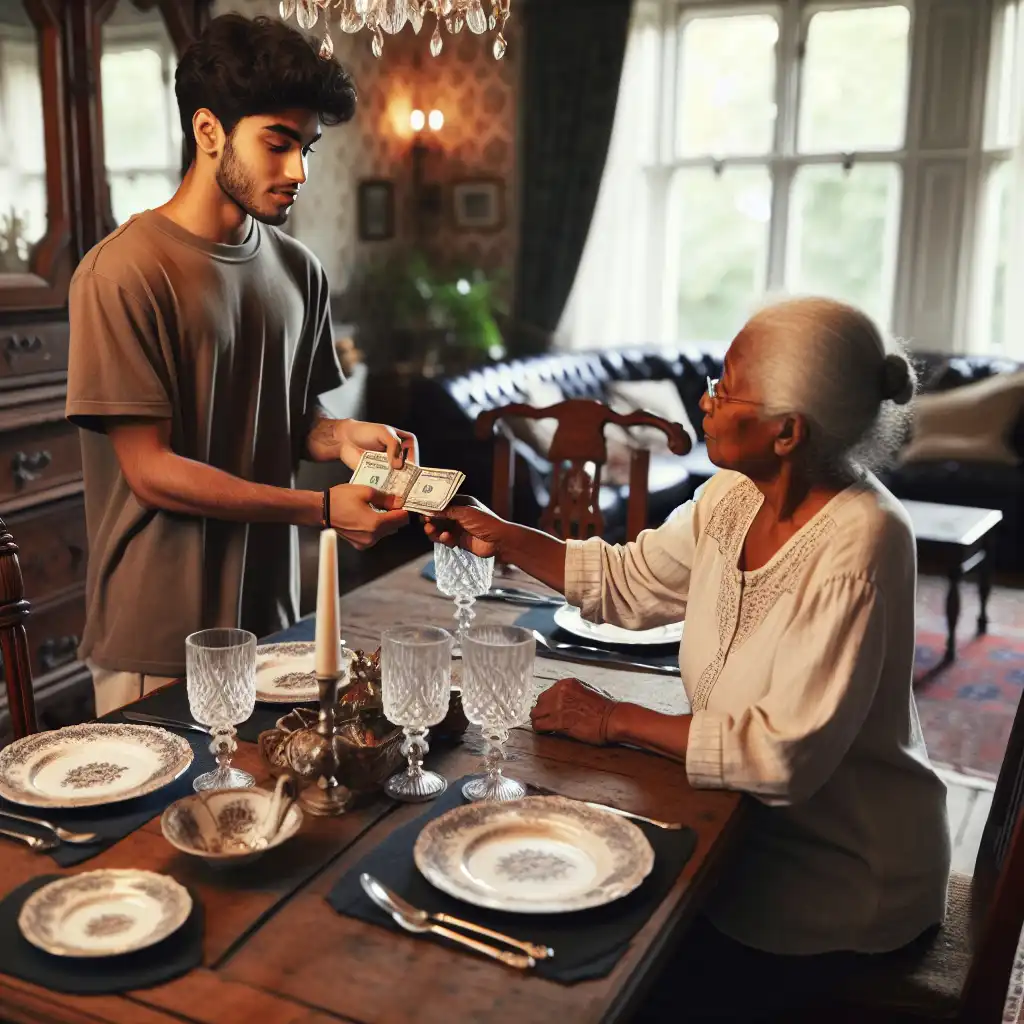
A person who pays to live in someone else's home and also pays for meals.
John is a boarder in Mrs. Smith's house.
boarder
ˈbɔːrdər
読み込み中…
ˈbɔːrdər
A person who pays to live in someone else's home and also pays for meals.
John is a boarder in Mrs. Smith's house.

ˈbɔːrdər
A person who regularly eats meals at a particular place, such as a restaurant or school.
My daughter is a boarder at the local high school, she stays in the dormitory during the week.

ˈbɔːrdər
A person who does a particular kind of boarding sport (like snowboarding, skateboarding)
Mike is an expert snowboarder.
音声を読み込めませんでした。しばらくしてからもう一度お試しください。
The word 'boarder' generally means a person who lives with someone else in their home, usually in exchange for payment. For example, a university student may live with a family who rents out a room to them. In this case, the student is the boarder. This word can also be used to describe someone who goes snowboarding or skateboarding, which means riding on a snowboard or skateboard.
A guest refers to someone who is invited to stay for a shorter period of time, such as a friend or family member visiting for a few days.
Essentially, a boarder is a more permanent resident while a guest is a temporary one.
単語を開く: Guest →A housemate is someone who shares a rental property with other people. They all pay rent and usually live together as equals, sharing common areas such as the kitchen and living room.
Housemates are often people who have chosen to live together and may split bills and chores equally.
A boarder pays rent to live with a family or in someone's home, while a housemate shares a rental property with others and splits rent and responsibilities equally.
単語を開く: Housemate →The words boarder and lodger both refer to someone who lives in someone else's home and pays them for the right to do so.
However, boarder implies that the person is also eating meals provided by the homeowner, while lodger generally does not.
If someone is simply renting a room without any meals included, they would be called a lodger.
単語を開く: Lodger →Occupant refers to a person who inhabits or lives in a specific space, whether it is owned or rented. It could be a homeowner or someone renting an apartment, but it implies a more permanent situation than that of a boarder.
Boarder refers to a temporary tenant while occupant refers to someone who lives in a space either permanently or long-term.
単語を開く: Occupant →Rent refers to a payment made in exchange for temporary use of someone else's property, usually an apartment or a house.
This is a short-term living arrangement, where the renter is not considered a member of the household.
If you live with a family and pay them for food and a place to stay, you are a boarder. If you pay a landlord for a place to stay, but provide your own food and are not part of the household, you are renting.
単語を開く: Rent →A resident is someone who lives in a specific place.
A resident is someone who has a permanent home or has lived in a community for a long time.
Boarder is applicable for short-term stays, while resident is applicable for long-term stays or permanent living situations.
単語を開く: Resident →Both boarder and roomer refer to someone who rents a room in someone else's home, but there is a subtle difference in usage.
Roomer is generally used to describe someone who only pays for a room and does not receive meals. This term is often used to describe people who live in shared housing situations or rent a room in someone else's home but provide their own meals.
The main difference between boarders and roomers lies in whether or not they pay for meals. Boarders pay for both room and meals, while roomers only pay for the room.
単語を開く: Roomer →A tenant is someone who rents an entire property, such as a house or apartment, and has exclusive use of that property.
Tenants are most often applicable in situations where someone needs a permanent residence, such as families or individuals who rent an apartment or house long-term.
単語を開く: Tenant →An honest look at the...
YouTube で見る ↗Summer boarders often left clothes behind, and of what use were they to the landladies, for no rag-and-bone man ever called at their houses. The truth of the matter was that in less than a week I was well dressed from head to foot, all of these things being voluntary offerings, when in quest of eatables.
How Helicopters Fly %\PIPE%...
YouTube で見る ↗Many Americans do not want persons who openly engage in homosexual conduct as partners in their business, as scoutmasters for their children, as teachers in their children's schools, or as boarders in their home. They view this as protecting themselves and their families from a lifestyle that they believe to be immoral and destructive.
I started kite boarding when I was 13. My dad was a kite boarder, and I begged him to teach me until he finally agreed. He made me wait because it can be dangerous.
A modern girls' school, equipped as scores are now equipped throughout the country, was of course not to be found in 1858, when I first became a school boarder, or in 1867, when I ceased to be one.
In 1940 my mum took a job as under-matron at her old school, which had been evacuated from Eastbourne to Windermere; I got a bursary and spent eight years as a boarder. It was a smashing education; I regret being at a single-sex school, but I had a brother, so knew what guys were.