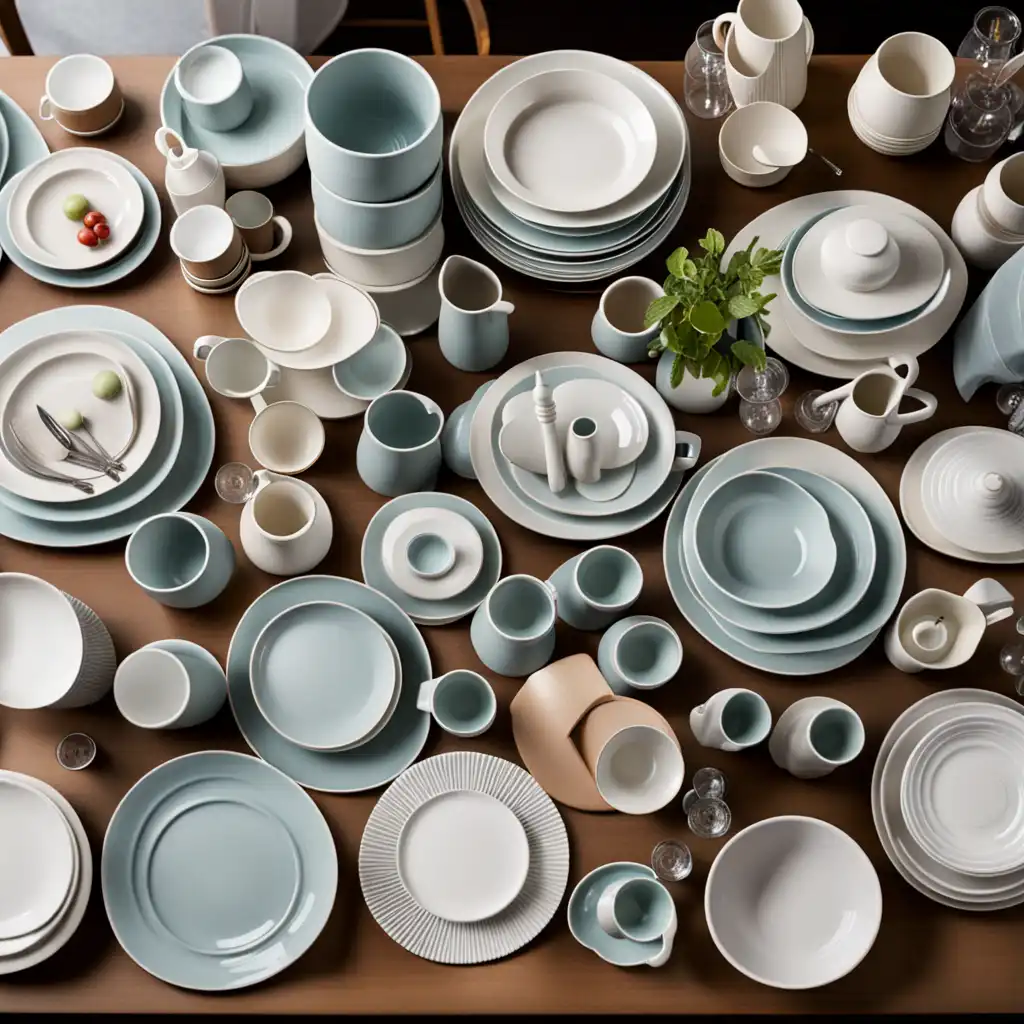
Crockery refers to the dishes, plates, bowls, and other eating and serving utensils made of ceramic material. You would use this word when talking about kitchen supplies or setting a table for a meal. For example, "I need to wash the crockery before our dinner guests arrive" or "Can you help me set the table with the crockery?"
A bowl is a specific type of dish that is round and deep, used for serving soup, cereal, and other foods. Crockery is a general term for all types of dishes, including plates, bowls, cups, saucers, and more.
In other words, a bowl is a specific item of crockery. You could use the word bowl when referencing something specific, like "Please grab me a bowl for my soup." While you would use crockery when referring to a collection of dishes in general, such as "The kitchen was stocked with a variety of crockery for the dinner party.".
Ceramic is a broad term that refers to any material made of clay that has been fired in a kiln to harden it. This includes things like pottery, tiles, and figurines.
Crockery specifically refers to dishes and tableware made of ceramic. So, while all crockery is ceramic, not all ceramics are crockery.
Ceramic can refer to any clay-based material that has been fired, while crockery specifically refers to ceramic dishes and tableware.
Crockery refers to all tableware made of china clay or porcelain, such as plates, cups, and saucers. Dish refers to a particular item used for serving or holding food, such as a bowl, platter, or casserole dish.
Crockery is a broader term used to describe a collection or set of different types of dishes used for eating and serving food.
Dish is more specific, referring to individual items used to serve or hold food.
It can be used in everyday situations, such as when someone asks you to pass them a dish at the dinner table.
Crockery is a collection of dishes used for serving and eating food made of china clay or porcelain, while dishes refer to particular items used to hold or serve food.
Earthenware is a type of ceramic material that is made from clay and other natural substances. It is a specific type of crockery that is made from clay fired at low temperatures, making it porous and more fragile than other types of dishes.
Earthenware is typically used for decorative or everyday use, but not for cooking or serving hot foods as it may crack or break.
Crockery is a broader term that refers to all types of dishes, while earthenware is a type of crockery made from clay that is more delicate and used for specific purposes.
Crockery refers to a set of dishes, cups, and bowls, whereas a plate is a flat dish used for serving or eating food.
Crockery can include plates, but it also encompasses other types of dishes like bowls, cups, and saucers. A set of crockery would typically include multiple plates, bowls, cups, and saucers.
Plates are just one type of dish and are used for serving or eating food. Crockery is applicable in situations where you need a complete set of dishes, while plates are applicable in situations where you're only serving or eating food on a flat surface.
It can be glazed or left unglazed and is generally less expensive and more durable than porcelain.
Porcelain is a specific type of crockery that is made of a more refined and delicate type of clay, fired at a higher temperature than other types of crockery, and often translucent in appearance.
Porcelain is often used for formal occasions or dining, such as fine china for special events, while crockery is more commonly used for everyday dining.
It is often used to describe plates, bowls, and cups that are typically used for serving food. Pottery is a broader term that can refer to any type of clay vessel or object, including decorative items like vases, as well as functional items like planters or mugs.
Pottery can be made from various types of clay and can be decorated using different techniques.
Crockery and stoneware are both types of dishes used for serving food, but they differ in material and durability.
Crockery typically refers to dishes made from ceramic materials that are glazed and fired at a lower temperature. They are more delicate and prone to chipping or breaking than stoneware, but often have more intricate designs and patterns.
Stoneware is made from a denser clay that is fired at a higher temperature, making it stronger and more durable than crockery.
It is often unglazed or has a matte glaze, giving it a more rustic and natural look. Stoneware is appropriate for everyday use and can withstand microwave and dishwasher use.
Crockery is delicate and used for special occasions while stoneware is durable and can be used every day.
Crockery and tableware are both words used to describe dishes, plates, and bowls used for eating and serving food.
However, crockery typically refers to ceramic or earthenware dishes, while tableware can refer to a wider variety of materials, such as glass or metal.
Crockery is often used in more formal settings or for special occasions, while tableware is often used for everyday dining.
In orthodox film-making, you never shoot sequentially - but with improv, obviously every move you make has a knock-on effect; it is a cumulative process. I have improvised, on the non-scripted 'Timecode.' It can become entirely indulgent: actors smashing crockery and competing verbally.
Like most sensible people, you probably lost interest in modern art about the time that Julian Schnabel was painting broken pieces of the crockery that his wife had thrown at him for painting broken pieces of crockery instead of painting the bathroom and hall.
Myths grow all the time. If I was to listen to the number of times I've thrown teacups then we've gone through some crockery in this place. It's completely exaggerated, but I don't like people arguing back with me.
I live in a Moomin house in East London which I fill with blankets and nice crockery and get people round for dinner. When you travel a lot, you feel rootless and adrift - this is my sanctuary, where I can breathe out.