Audio could not be loaded. Please try again later.
How to use
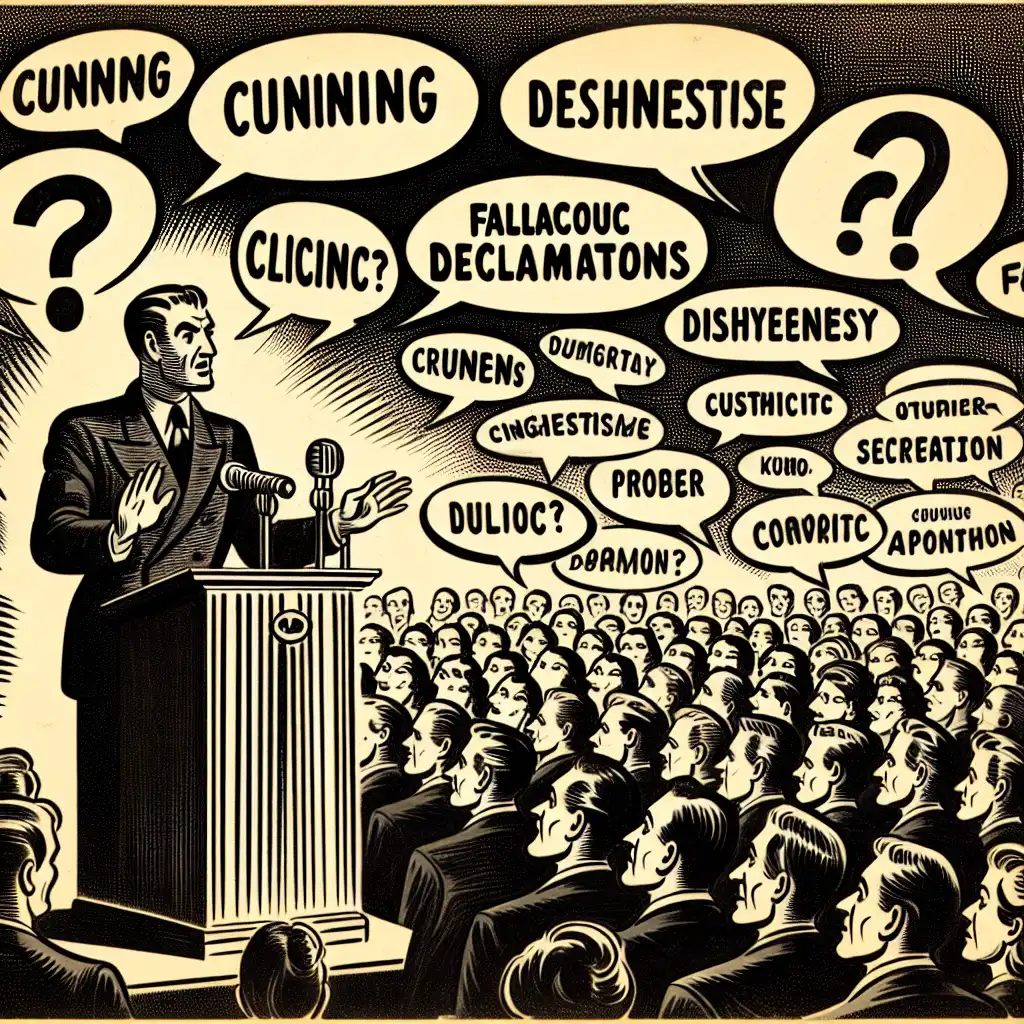
The word 'sophistry' refers to the use of clever but deceitful arguments or reasoning to persuade someone of something that is not true. It is often used in the context of politics, law, or debates. For example, a politician might use sophistry to convince people to support a policy that is not in their best interest. It is important to be aware of sophistry so that you can recognize when someone is using it to manipulate you.
Casuistry refers to the use of clever but flawed reasoning to justify immoral or unethical behavior while sophistry refers to the use of arguments that seem correct but are actually false, especially with the intention of deceiving people.
For example, casuistry might be used by a lawyer to argue that a client shouldn't face consequences for breaking the law because they had a difficult childhood, while sophistry might be used by a politician to argue that their opponent's policies will destroy the country when in reality, they won't have much of an impact.
Casuistry is more focused on justifying individual actions, while sophistry is more focused on manipulating people's beliefs or opinions.
Chicanery means using trickery or deception to achieve a goal. It is applicable when someone is being dishonest or manipulative to gain an advantage in a situation.
Chicanery is about using deceit to achieve a goal, while sophistry is about using false arguments to deceive others.
Deception is the act of intentionally misleading someone or withholding important information from them. It involves deliberately causing someone to believe something that is not true.
The main difference between the two words is that deception involves intentionally lying or withholding information, while sophistry involves using flawed reasoning to mislead people.
Fallacy refers to an argument or belief that is based on an incorrect or unsound reasoning. It is a mistake or flaw in reasoning that can lead to a false conclusion.
For example, the fallacy of ad hominem refers to an argument that attacks the person presenting the argument rather than the argument itself.
Fallacy refers to a mistake in reasoning, while sophistry refers to manipulative reasoning. Fallacy is more about the structure of an argument, while sophistry is more about the intent behind the argument.
Pretence refers to false behavior or pretending to be something one is not. Sophistry refers to the use of clever but false arguments to deceive others.
Pretence is applicable when someone is trying to pretend to be something or someone they are not, while sophistry is applicable when someone is trying to convince others of something using clever but false arguments.
Essentially, pretence is pretending, while sophistry is deceiving through clever arguments.
Quibble refers to a minor disagreement or argument over a trivial matter.
In essence, quibble is applicable when discussing minor points, while sophistry is applicable when someone is trying to deceive or mislead in a discussion.
Subterfuge refers to using deceitful tactics to achieve a goal or avoid something unpleasant. It involves hiding one's true intentions and using tricks or lies to mislead others.
An example of subterfuge would be lying to avoid punishment for breaking a rule.
Sophistry involves using deceptive arguments to mislead others in a discussion, while subterfuge involves using deceitful tactics to achieve a goal or avoid something unpleasant.
Trumpery refers to things that are showy or flashy but ultimately worthless or of low quality.
Sophistry is about deceptive arguments, while trumpery is about shallow, superficial things that are presented as more valuable than they actually are.