shackle
noun shackle
ˈʃækl
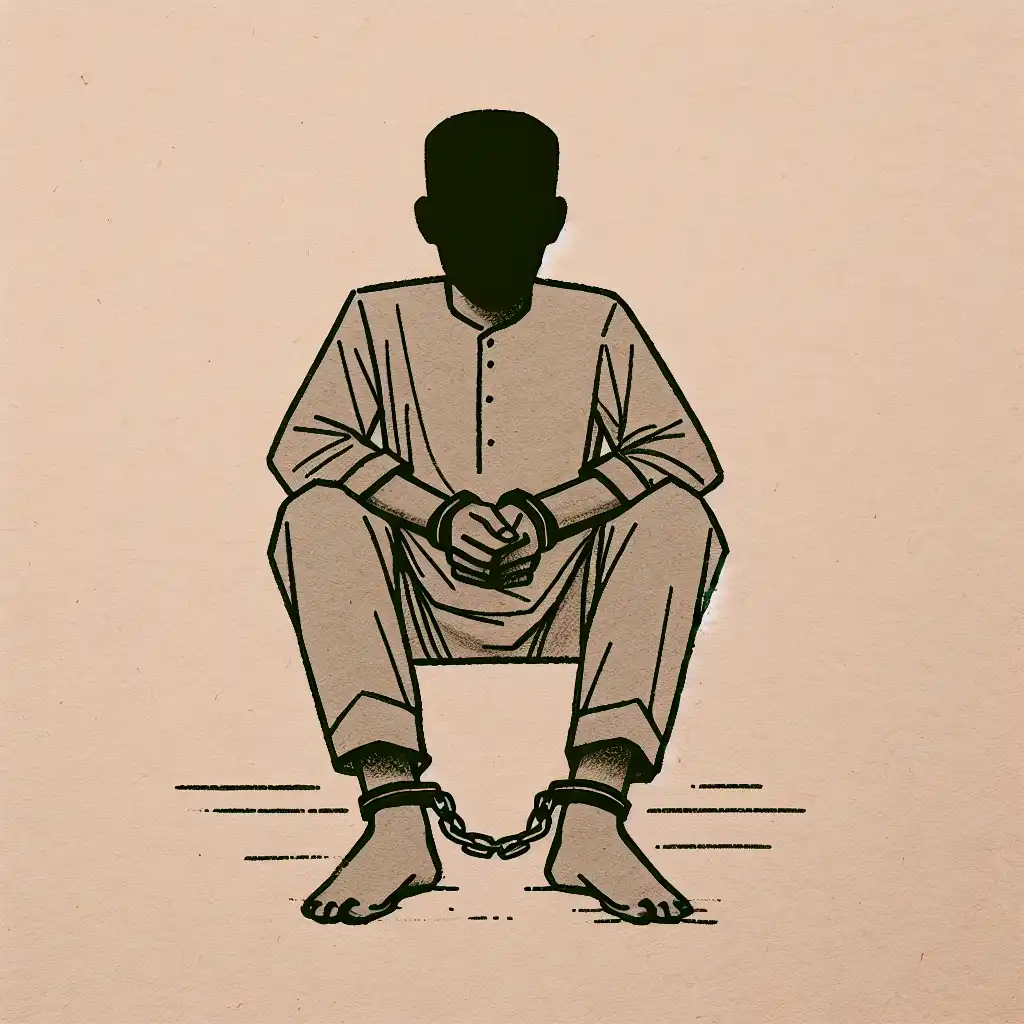
A metal link, usually in a pair, that can be locked around a person's wrists or ankles to limit their movement.
The prisoner was brought in, his feet bound in shackles.
shackle
ˈʃækl
Chargement…
ˈʃækl
A metal link, usually in a pair, that can be locked around a person's wrists or ankles to limit their movement.
The prisoner was brought in, his feet bound in shackles.

ˈʃækl
To put shackles on someone or something to control, prevent or limit their movement or action.
The lack of resources shackled their development projects.
ˈʃækl
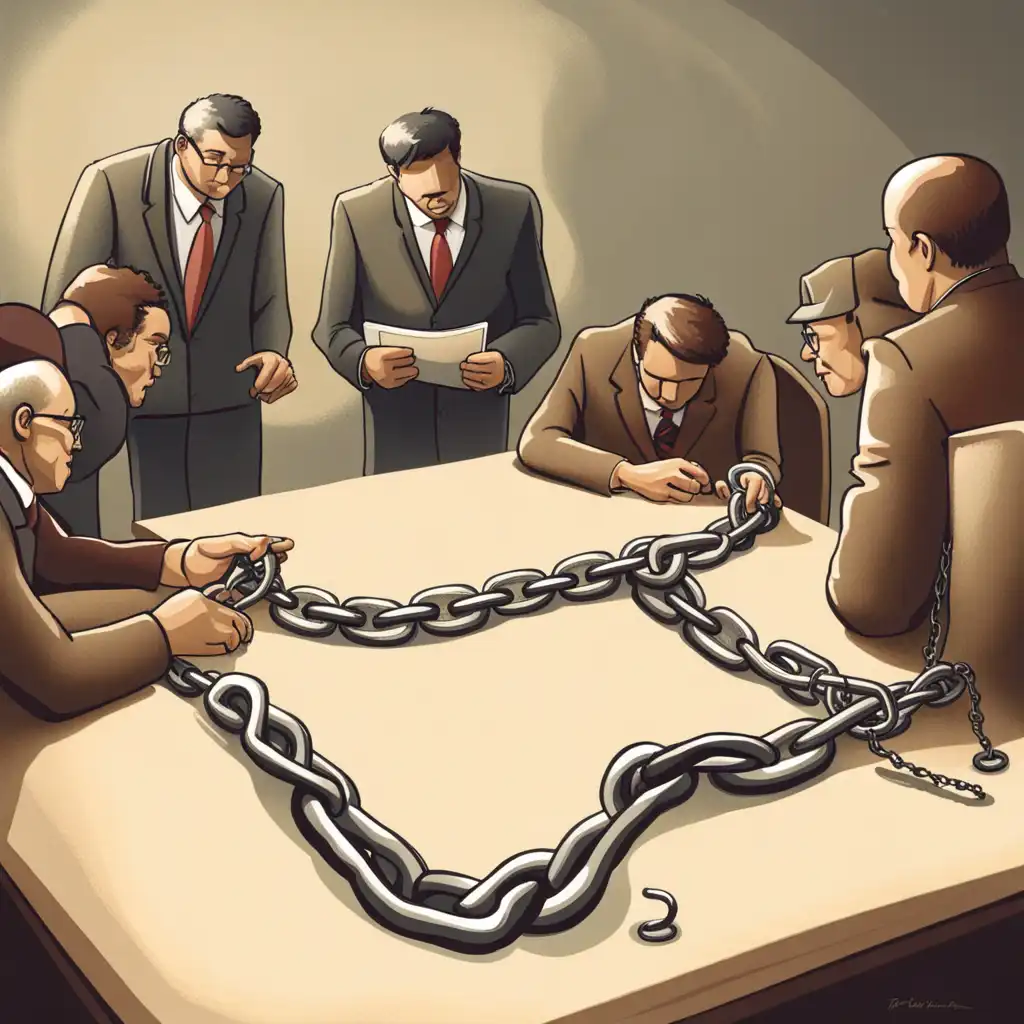
Something that restrains or restricts action or progress.
Bureaucracy was the shackle holding back their innovative ideas.
Impossible de charger l’audio. Réessayez plus tard.
The word 'shackle' is used to mean a tool or a chain used to restrict someone's movement. In general, it refers to anything that is used to confine or limit someone's freedom. It can be used in different contexts, such as a prisoner who is shackled while being transported, a slave who is shackled by their master, or a person who is shackled by their own fears and doubts. The word 'shackle' can also be used figuratively to refer to anything that limits or restrains someone's actions or ambitions.
Both words refer to constraints or restraints, but bondage typically refers to the state of being tied up or restrained for pleasure, sexual or otherwise.
Bondage is typically voluntary and consensual, whereas shackles are usually involuntary and non-consensual, and may indicate a loss of freedom or rights.
Ouvrir le mot: Bondage →Constraint refers to something that limits or restricts someone or something from functioning in a certain way.
So while both words describe limitations or restrictions, constraint is more general and can refer to any kind of limitation, while shackle implies a more severe and physical type of restriction.
Ouvrir le mot: Constraint →Fasten means to secure or attach something using a fastener such as a button, zipper, or buckle. This can be used in many contexts such as fastening a seatbelt in a car or fastening a necklace around your neck.
Fasten is used to secure or attach something while shackle is used to restrain or confine someone or something.
Ouvrir le mot: Fasten →Both fetter and shackle mean to restrain or restrict someone or something. Fetter specifically refers to a chain or shackle for the feet, while shackle can refer to any type of restraint, including handcuffs, chains or ropes.
Fetter is typically used to describe being physically restrained, while shackle can describe physical or even metaphorical restraints.
Ouvrir le mot: Fetter →Both manacle and shackle are synonyms, which means they have similar meanings. When we talk about these words, we are referring to a metal device that locks around a person's wrists or ankles, typically used to restrain them.
Manacle refers to the pair of cuffs that lock together around a person's wrists, like handcuffs. Manacles, in general, tend to be smaller and less cumbersome than shackles.
In summary, shackles are used to restrict movement over a long period, like on long voyages or in prison. Manacles are more often used for short periods, like transporting or detaining someone temporarily.
Ouvrir le mot: Manacle →Restraint refers to any action or device used to limit someone's movements or actions, but it does not necessarily imply a negative connotation.
Restraints can be used in various contexts, such as in hospitals to prevent patients from hurting themselves, whereas shackles are typically used in law enforcement or corrections to physically constrain criminals or prisoners.
Ouvrir le mot: Restraint →Tie refers to any sort of binding or fastening that is used to hold something in place. This can include things like tying a shoelace or fastening a belt.
The main difference between the two words is that shackle implies a stronger, more restrictive form of confinement or restraint, while tie is a more general term for any sort of binding or fastening.
Tie is used in a wider range of situations, while shackle is more specific to situations where confinement or restraint is necessary for safety or security reasons.
Ouvrir le mot: Tie →Both shackle and trammel are used to limit movement or restrict freedom, but they are used in different contexts.
A trammel is a device that restricts movement or limits progress in a particular direction.
In summary, shackles are used to physically restrain or confine someone or something, while trammels are used to restrict movement or limit progress in a particular direction.
Ouvrir le mot: Trammel →The difference between...
Voir sur YouTube ↗Stereotyping of any race or culture is narrow-minded, and I can't wait to help break the shackles.
Sea Bear Ancestors? %\PIPE%...
Voir sur YouTube ↗I think in more ways than one 'Uyir' did a lot good, getting the scope to perform. Things have really fallen in place since then. Breaking free of the shackles has given me the rich option to choose and pick from the range of characters coming my way.
Can we improve prison...
Voir sur YouTube ↗Fantasy enabled me to break the shackles and create a whole new level of 'the world is in danger' stakes.
Brass Shackles %\PIPE%...
Voir sur YouTube ↗I've read stories of slave owners who were very generous. They didn't keep them in shackles, they didn't whip the slaves, they built schools and churches for them, free housing, free food, free everything. It's wrong. No matter how nice you make it look, it's wrong.
The myth of Loki’s...
Voir sur YouTube ↗I was raised Catholic, so guilt shackles you from acting like a complete fool all the time.
Daniel Libeskind's 17...
Voir sur YouTube ↗Well married a person has wings, poorly married shackles.
The Creativity,...
Voir sur YouTube ↗I do come shackled with whatever people think I am.
This is what democracy...
Voir sur YouTube ↗Gender is a shackle.
Best Of Frogs %\PIPE% Top 5 %\PIPE%...
Voir sur YouTube ↗Nobody says you have to be shackled to tradition.
Why Do These Women...
Voir sur YouTube ↗The cold grasp of corruption shackles the District of Columbia.