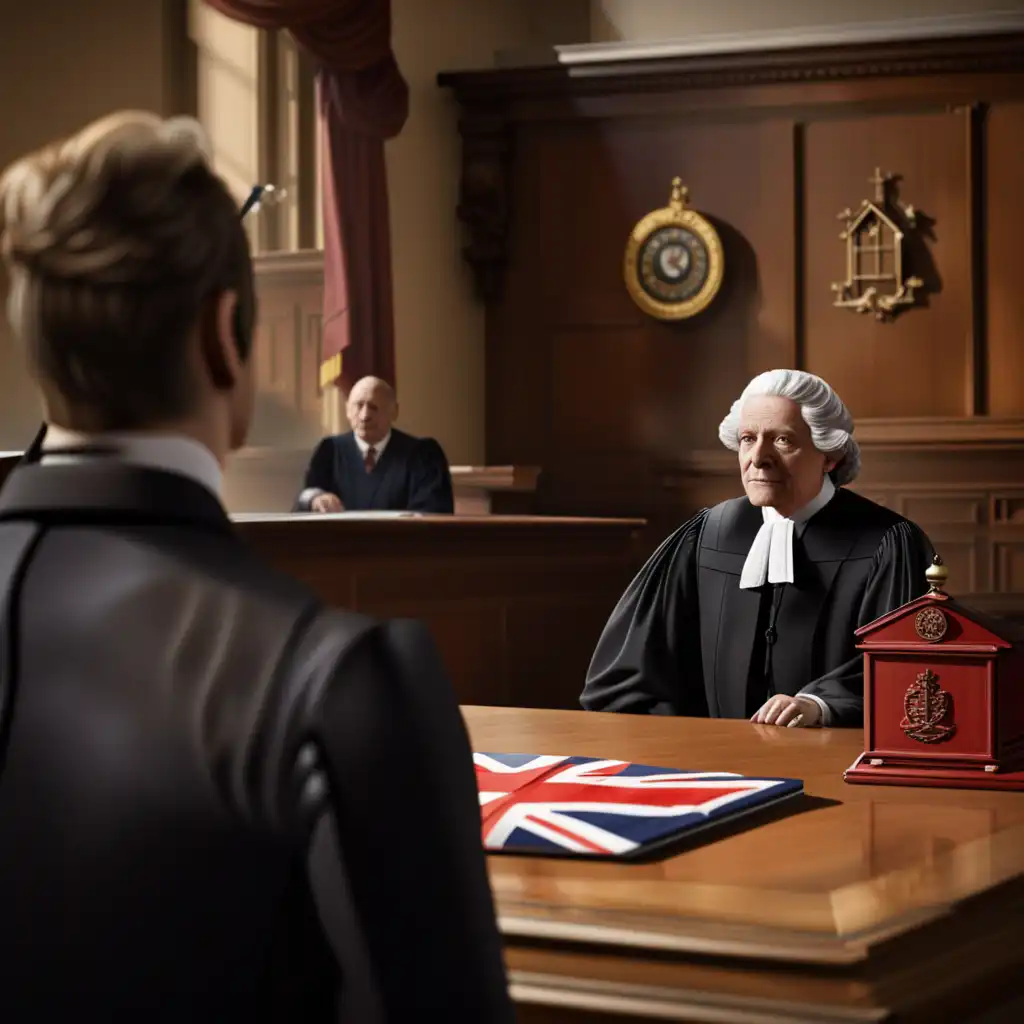
A solicitor is a type of lawyer who helps people with legal problems. They give advice, and sometimes they represent people in court. If you have a legal problem, you might go to a solicitor to get help. They can help you with things like buying a house, writing a will, or going through a divorce. You might also hear people use the word "lawyer" instead of "solicitor" - they mean the same thing.
An advocate is a legal professional who represents clients in court and provides legal advice in matters related to the court.
Advocates are primarily found in countries with a common law legal system, such as the UK and India. They are also known as barristers in some countries.
An advocate is a lawyer who represents clients in court, while a solicitor provides legal advice and prepares legal documents but does not go to court.
Both attorney and solicitor refer to legal professionals who provide advice and represent clients in legal matters.
In the United States, attorney is the commonly used term and refers to a person who is licensed to practice law in a particular state.
Attorneys can represent clients in court and give legal advice on a variety of topics.
In the United Kingdom and other Commonwealth countries, solicitor is the commonly used term. Solicitors provide legal advice and representation to clients, but their roles differ slightly from attorneys in the United States.
Attorney and solicitor refer to legal professionals who provide advice and represent clients, but the terms are used differently in different parts of the world.
In the UK, a barrister is a lawyer who specialises in courtroom advocacy (presenting cases in court), while a solicitor is a legal professional who offers general legal advice and assistance to clients.
Barristers typically work on behalf of solicitors and clients, representing them in court, providing legal opinions, and drafting legal documents.
Both barristers and solicitors are found in the UK’s legal system, but barristers are more visible in the court system, while solicitors may be found working in private practice law firms or employed in-house at organisations.
A counsel is a lawyer who specializes in representing clients in court. They provide legal advice and represent their clients in court proceedings.
Counsel is typically used in reference to barristers in the UK legal system.
A counsel works in court and represents their clients in legal proceedings, while a solicitor is more involved in preparing legal documents and providing advice outside of court.
A lawyer is a general term that refers to a person who practices law. They can represent clients in court, give legal advice, and draft legal documents.
In some countries, such as the United States, a lawyer can also refer to a person who has completed law school and passed the bar exam.
A solicitor is a type of lawyer who specializes in giving legal advice and handling legal matters outside of court. They typically work in private practices and often deal with clients on a daily basis.
A lawyer is a broad term that encompasses all legal professionals, while a solicitor is a specific type of lawyer who specializes in giving legal advice and handling legal matters outside of court.
A notary is a person who is authorized to witness and authenticate legal documents, such as wills or contracts, by verifying the identity of the parties involved and ensuring the document is properly signed and dated.
A notary also prepares affidavits, certifies copies of documents, and administers oaths.
A notary is responsible for verifying the authenticity of legal documents, while a solicitor is a legal professional who advises clients, drafts and reviews legal documents, and represents clients in court.
imprisoned for fraud. I was dishonest and I paid the penalty. Before that I'd been a practicing solicitor for 30 years. I'd had a happy and stable upbringing, a good education, a happy marriage which I'm pleased to say continues. I have two adult sons.
Much of the work legal executives do has to be supervised by a solicitor, irrespective of the experience or ability of the individual. In practice, this is a major disincentive to legal executives setting up their own high street practices. Even when they can do the work, they are still tied to solicitors.
The first thing I wanted to be growing up was a solicitor, because all the people around me needed solicitors! But I never really followed it up. Then I wanted to be a dessert chef because I liked the presentation.
When I worked in the Department of Justice, in the office of the solicitor general, it was my job to argue cases for the United States before the Supreme court. I always found it very moving to stand before the justices and say, 'I speak for my country.
When my father was diagnosed with terminal cancer in 1991, I asked him if he had any regrets, and he said no. I was a burnt-out litigation solicitor in my thirties, hating my life, and his cancer made me re-evaluate it all.