
physiognomy
noun physiognomy
ˌfɪziˈɑːnəmi
The general form or appearance of something or someone, especially the face.
The detective developed a deep understanding of criminals by closely observing their physiognomy.
physiognomy
ˌfɪziˈɑːnəmi
加载中…
ˌfɪziˈɑːnəmi
The general form or appearance of something or someone, especially the face.
The detective developed a deep understanding of criminals by closely observing their physiognomy.
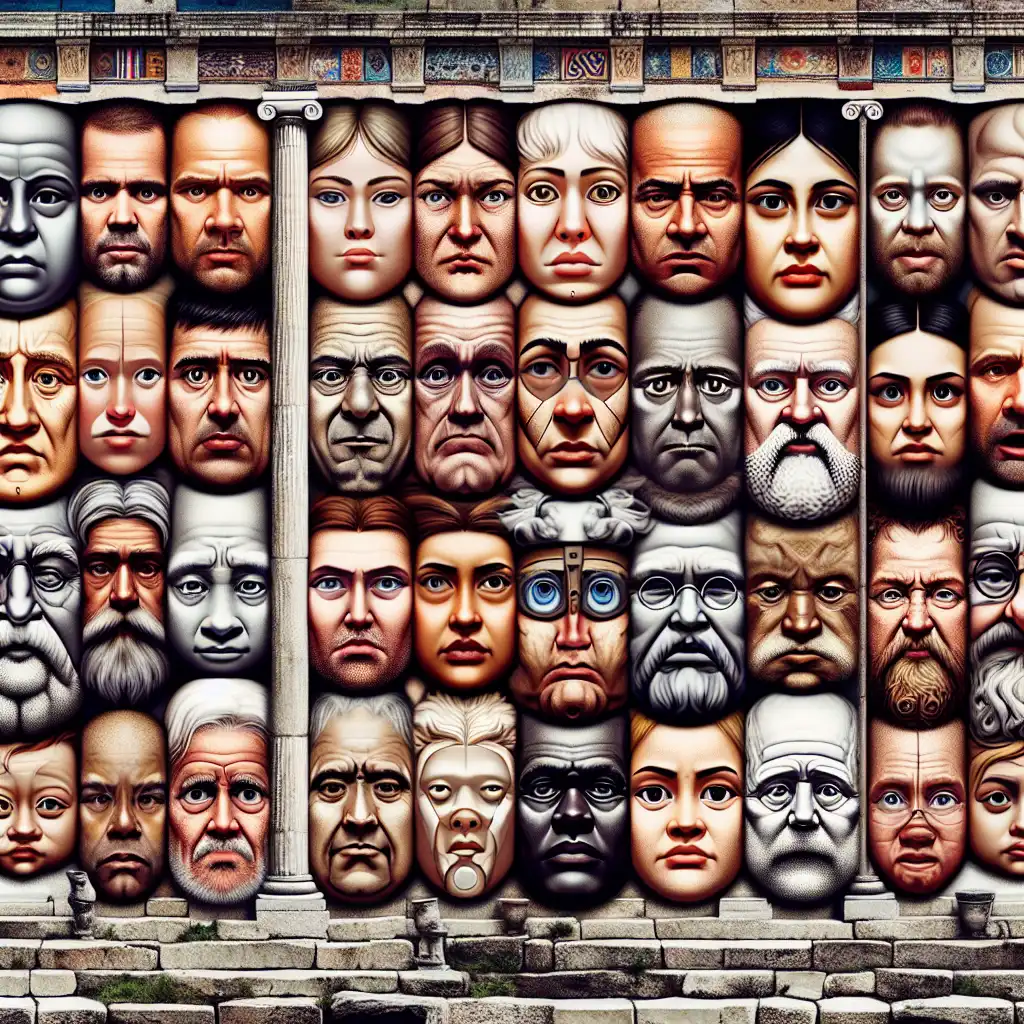
ˌfɪziˈɑːnəmi
The practice of judging character or personality from someone's outer appearance, especially the face.
In ancient times, physiognomy was often used as a way to predict a person's future behavior.

ˌfɪziˈɑːnəmi
The characteristic expression of a type or group of plants or animals.
The physiognomy of the forest changes dramatically between the rainy and dry seasons.
音频无法加载,请稍后再试。
Physiognomy refers to the facial features or expressions of a person. It is often used to describe the way a person's face reveals their character or personality. You might use the word 'physiognomy' when talking about someone's facial expressions, such as a smile or a frown, or when discussing the way someone's face looks or feels, such as the shape of their nose or the texture of their skin. It is a more formal word, often used in academic or literary settings.
Both appearance and physiognomy refer to the way a person looks, but they have slightly different meanings.
Appearance generally refers to a person's overall visual impression, including their physical features, style, and grooming.
For example, if someone says "she has a beautiful appearance," they could be referring to her facial features, hair, and clothing.
It is based on the idea that a person's appearance can give clues about their inner qualities. For example, someone may say "he has a trustworthy physiognomy," meaning that his face gives the impression of honesty and reliability.
Appearance is a broader term that includes overall physical presentation, while physiognomy specifically refers to facial features and perceived character traits.
打开单词: Appearance →Aspect refers to a particular part or feature of something or someone, while physiognomy refers to the overall facial features and expression of a person.
Aspect can be used in different contexts, such as in describing a particular perspective or angle of view, a specific characteristic of an object or situation, or a particular trait or behavior of a person.
For example, one could say "the aspect of the painting that I admire the most is its use of color" or "the aspect of his personality that stood out to me was his kindness".
Overall, while both terms relate to appearance, aspect is a more general term used to describe specific aspects of objects or people, while physiognomy focuses specifically on facial features and their relation to character.
打开单词: Aspect →Countenance refers to a person's facial expression or the way their face looks.
This word is commonly used to describe a person's mood or demeanor based on their facial expression. For example, "She had a worried countenance.".
Countenance is about a person's facial expression, while physiognomy is about a person's facial features and structure used to infer personality traits.
打开单词: Countenance →Expression refers to the way someone communicates their thoughts or feelings through their face, body language, or words.
In simpler terms, expression is about how someone looks or acts in a particular moment, while physiognomy is about the physical features of someone's face that might give clues about their personality or character.
打开单词: Expression →Look refers to the act of directing your gaze towards something or someone. We use look to describe what we see with our eyes.
For example, "I looked at the beautiful sunset."
Look is used for seeing things or people, whereas physiognomy describes facial features and what they might say about a person's personality.
打开单词: Look →Mug is a slang term for a person's face or facial expression.
It is generally used in a casual or informal setting. For example, "He has a happy mug" means that the person's face looks happy.
Mug is a casual slang term for a person's face, while physiognomy is a formal term related to the study of facial features and character traits.
打开单词: Mug →A profile refers to a description of a person's characteristics, attributes, or history, usually written or presented in a summary format.
This can refer to a social media profile, a job candidate's professional profile, or a criminal profile.
Physiognomy is not an appropriate or accepted practice for assessing a person's character or personality. Profiles, however, are used widely in various contexts to provide a quick summary of a person's background or traits.
打开单词: Profile →Physiognomy refers to the study of facial features and their relation to character traits, while visage simply refers to a person's facial appearance.
Physiognomy is applicable when analyzing a person's character based on their physical features, while visage is applicable in general descriptions of a person's appearance.
Essentially, physiognomy focuses on the relationship between a person's character and their face, while visage just describes what a person's face looks like.
打开单词: Visage →Joyce Poole: The...
在 YouTube 上观看 ↗You're either sexy or you're not. I'm very self-conscious about my physiognomy.
People think how a sugar basin has no physiognomy, no soul. But it changes every day.
Their elegant shape, showy colours, and slow, sailing mode of flight, make them very attractive objects, and their numbers are so great that they form quite a feature in the physiognomy of the forest, compensating for the scarcity of flowers.
If we want to make a statement about a man's nature on the basis of his physiognomy, we must take everything into account; it is in his distress that a man is tested, for then his nature is revealed.
It is one of the sternest judgments confronting a human being after death that insofar as he is himself evil, he can see only what resembles himself because he can reproduce in his own being only the physiognomy of other evil people.