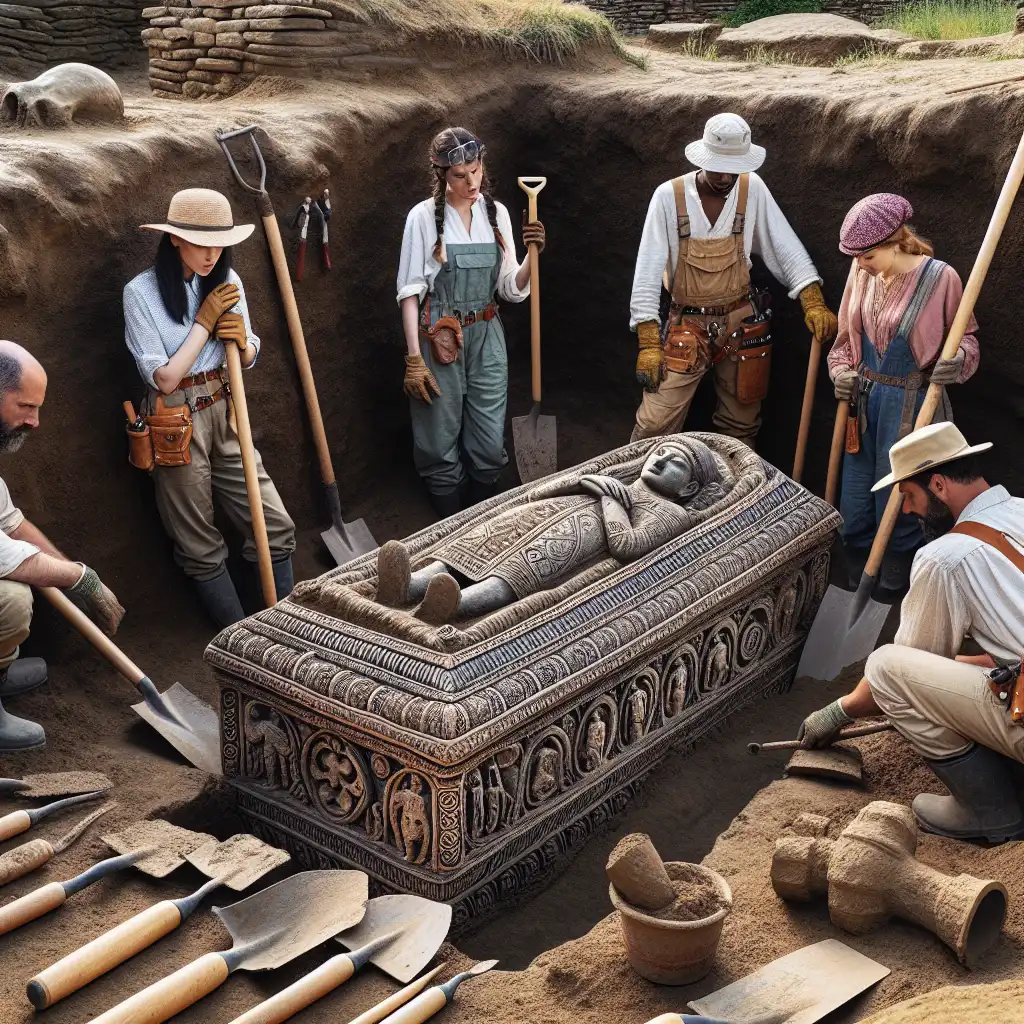
sarcophagus
noun sarcophagus
sɑːrˈkɑːfəɡəs
A stone container for a dead body, often decorated and usually used in ancient times.
The archaeologists discovered an ancient sarcophagus in the dig site.
sarcophagus
sɑːrˈkɑːfəɡəs
Chargement…
sɑːrˈkɑːfəɡəs
A stone container for a dead body, often decorated and usually used in ancient times.
The archaeologists discovered an ancient sarcophagus in the dig site.
Impossible de charger l’audio. Réessayez plus tard.
A sarcophagus is a type of box or container that is used to hold the remains of a dead person. It is usually made of stone or other hard materials and can be decorated with carvings or other designs. Sarcophagi were commonly used in ancient Egypt and in other cultures throughout history. Today, they are often found in museums or archaeological sites, where they provide clues about the beliefs and customs of the people who created them. If you are learning English, you might come across this word when reading about history, archaeology or art.
A casket is a rectangular box that is used to hold a deceased person’s body for burial or cremation.
A casket is a rectangular box used for burying or cremating a body, while a sarcophagus is a decorative stone coffin used in ancient civilizations to entomb the bodies of important individuals.
Ouvrir le mot: Casket →Catacombs are underground burial places consisting of tunnels with niches for tombs. They were used by early Christians and Romans to bury their dead.
Catacombs are an underground burial place while a sarcophagus is a type of coffin.
Ouvrir le mot: Catacombs →A coffin and a sarcophagus are both containers used to hold the remains of a deceased person, but they have different origins and cultural associations.
A coffin is a rectangular box-shaped container that is generally made of wood or metal and is often covered with fabric or decorative embellishments.
It is typically used in Western cultures and has been used for centuries. Coffins are often used for burials or funerals, and the deceased is typically placed lying down with their arms crossed over their chest.
Unlike coffins, sarcophagi were often placed in tombs, rather than directly buried in the ground.
Overall, while both coffins and sarcophagi serve the same basic function of containing the remains of the deceased, they have different origins, cultural associations, and uses.
Ouvrir le mot: Coffin →A crypt is a small room typically found beneath a church or a mausoleum used for burying the dead.
It is usually made of stone or concrete and has a few small openings for air circulation. Some crypts can be accessed by stairs while others are located underground.
A crypt is a small room for burying the dead while a sarcophagus is a decorated coffin-like container for burying human remains.
Ouvrir le mot: Crypt →A mausoleum is a structure that houses the remains of deceased persons above ground.
Mausoleums are often used as a final resting place for a family or a wealthy person.
A mausoleum is a building that contains a burial chamber, while a sarcophagus is a stone coffin that is placed within a mausoleum or other structure.
Ouvrir le mot: Mausoleum →A tomb is a general term for any burial site or structure that contains a person's remains.
It can include sarcophagi, but can also refer to other types of burial chambers or structures, such as tombs carved into rock or underground vaults.
Tombs can be found in many different cultures and time periods, and may have varying degrees of complexity or decoration.
A sarcophagus is a specific type of container used for burials in certain ancient civilizations, while a tomb is a broader term encompassing any type of burial site or structure.
Ouvrir le mot: Tomb →A vault refers to a structure used for storage or protection, usually made of concrete or brick.
It can also refer to a room or chamber used for burial purposes, such as a burial vault in a cemetery.
A sarcophagus is specifically a coffin or container for human remains, while a vault is a more general term that can refer to any kind of structure used for storage or protection.
Ouvrir le mot: Vault →sarcophagus on Egypt's behalf people can think that the best moment in the life of an archeologist is actually to discover something but for me the best thing is to return something to Egypt I say this everyone
Voir sur YouTube ↗massaged it with a waxy mixture that included cedar oil, and then wrapped it in linen. Finally they placed the mummy in a series of nested coffins and sometimes even a stone sarcophagus.
Voir sur YouTube ↗He'd stop by every once in a while to chat. And one day he brought over a slate carving, and it was this image. The image carved into the sarcophagus lid of the Maya king Pakal
Voir sur YouTube ↗tomb the archaeologists finally reached the open sarcophagus suddenly it got very silent and was talking anymore and I was feeling very strange I had a lot of respect for for the grave we were standing in
Voir sur YouTube ↗is shown is another kind of it looks like grapes there but it's not some other kind of fruiting tree and the ancestors all around the sarcophagus are shown with different kinds of food plants in this idea of sustenance and and the continuity of life and an
Voir sur YouTube ↗has so much historical accuracy we did research on how a tomb would look how sarcophagus would look every single texture and every single thing was so authentic that's resonant through the entire series as an actor it really keeps you in the world amazing thought has gone into creating
Voir sur YouTube ↗You can see it's fairly deep. They knew exactly where to go. The big question then is "Were these tombs intact?" How can we really know if when we get there they're empty? You can see where I'm standing on the left-hand side, you can see bits of human bone, little bits from sarcophagi broken pottery.
Voir sur YouTube ↗Mysteries of Sarcophagus, a stone coffin typically adorned with decorative carvings or inscriptions. The history of the word sarcophagus
Voir sur YouTube ↗sarcophagus about 2600 years old the top of another mummy sarcophagus a burial shroud from inside a mummy sarcophagus and finally there is a mummified hand which was collected from a sci-fi studio
Voir sur YouTube ↗iconography but but done later yes and so would this have come from what is now modern-day Iraq would be no war what is this piece fragmental Dana no far from a sarcophagus yes there's another grave
Voir sur YouTube ↗