tentacle
noun tentacle
ˈtentəkl
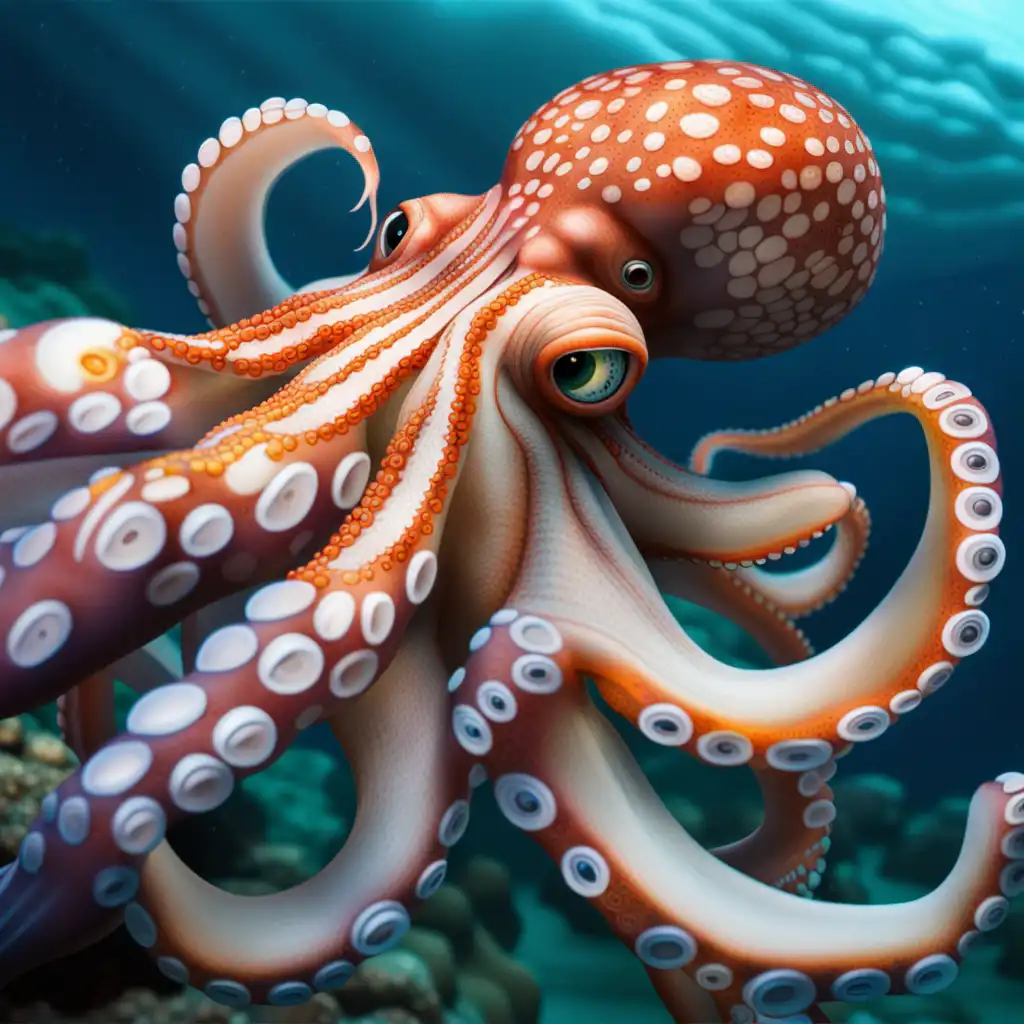
A long thin part of the body of a sea creature, usually used for feeling things, holding onto things, or moving
An octopus has eight tentacles.
tentacle
ˈtentəkl
読み込み中…
ˈtentəkl
A long thin part of the body of a sea creature, usually used for feeling things, holding onto things, or moving
An octopus has eight tentacles.

ˈtentəkl
A part or influence that spreads out and reaches many places
The tentacles of the city's transportation system reach into all of its outer suburbs.
音声を読み込めませんでした。しばらくしてからもう一度お試しください。
Tentacle is a word used to describe a long, thin, flexible arm or leg-like structure that some animals have. Examples of animals with tentacles include jellyfish, octopuses, and squids. These tentacles are often used for grasping or capturing prey, or for feeling and sensing the surrounding environment. The word tentacle can also be used metaphorically to describe something that extends, reaches, or has a grasping or probing quality, such as a company's network of subsidiaries or a politician's influence.
Antenna and tentacle are both appendages or extensions from an animal's body, but they are different in structure, function, and where they are found.
Antennae are sensory organs found on the heads of insects, crustaceans, and some other animals. They come in pairs and are usually segmented with tiny hairs or receptors that detect smell, sound, touch, and other stimuli in the environment.
Antennae help animals navigate their surroundings, find food, detect predators, and communicate with others of their species.
In summary, antennae are sensory organs found on the heads of terrestrial animals, while tentacles are flexible arms found on aquatic animals that are used for movement and capturing prey.
単語を開く: Antenna →Appendage refers to any projecting part of the body, such as an arm or a leg, that is mainly used for movement or manipulation of objects.
For example, a crab uses its appendages, such as its legs and claws, for movement and for catching food. In contrast, an octopus has eight tentacles that it uses for grasping and holding onto objects or prey.
An appendage is a more general term, applied to any body part that extends from an organism that is used for a specific purpose, such as movement or manipulation.
単語を開く: Appendage →Arm typically refers to a body part that humans and many animals have, which has a bony joint at the top and moves at the elbow.
In short, arms are found in animals that have a joint at the shoulder and an elbow, and are used for holding and manipulating objects.
単語を開く: Arm →Branch typically refers to a woody extension from a tree or plant, while tentacle indicates a slender, flexible appendage, usually found in animals like octopuses, squids, or jellyfish.
Branches grow on trees and plants to support leaves, flowers, and fruits, while tentacles are used for movement, sensing, and grasping in aquatic animals.
In general, branches are used to support and strengthen a plant's structure, while tentacles are used for locomotion, defense, and capturing prey.
単語を開く: Branch →Extension refers to something that extends or stretches out from a point of attachment, while tentacle refers specifically to a long and slender appendage that is used for gripping, holding, or sensing.
An extension can be any part of an object that stretches out, while tentacles are typically found on animals, such as octopuses and jellyfish.
In summary, extensions are more generic and can be used for various purposes, while tentacles are a specific type of extension that is usually found only in certain animals.
単語を開く: Extension →Feeler usually describes a sensory organ in insects and other invertebrates, while tentacle is typically used to describe a flexible, elongated appendage in animals such as octopuses and jellyfish.
Feelers are used for touch, taste, and smell, while tentacles are used for a variety of functions including movement, grasping prey, and detecting prey.
In essence, feelers are found in insects and other invertebrates, while tentacles are found in animals such as octopuses and jellyfish.
単語を開く: Feeler →Limp typically refers to something that is lacking stiffness, strength or firmness, whereas tentacle refers to a long flexible and slender appendage that is typically found on certain animals such as octopuses or jellyfish.
Limp can describe a variety of objects or materials, such as a limp noodle, a limp handshake or even a limp balloon.
Limp is a more general term used to describe lack of firmness or strength, while tentacle is a term used to describe a specific long and slender appendage of certain animals.
単語を開く: Limp →Protrusion refers to something that sticks out or extends beyond a surface, whereas tentacle refers to a long, slender, flexible arm-like structure typically found on marine animals, like an octopus.
Protrusion is a more general term and can refer to any part of an object or living thing that extends outward. For example, a bump on a tree trunk is a protrusion, as is a herniated disc in the spine.
Protrusions can be on any surface or object, including humans and animals.
Protrusion is a general term referring to things that stick out, while tentacle is a specific term referring to flexible, arm-like structures found on certain animals.
単語を開く: Protrusion →Tendrils are thin, curly, and usually green plant stems that help vines climb or support them. Tendrils are used by plants to climb by wrapping around other objects such as a stake or neighboring plant.
Overall, tendrils are applicable in plant growth, while tentacles are applicable in animal movement and predation.
単語を開く: Tendril →How does a jellyfish...
YouTube で見る ↗There are so many possibilities of life out there that an alien doesn't have to have green, long tentacles. They can be very similar to us.
The Deadly Portuguese...
YouTube で見る ↗My initial desire to blog came from something that's always been my approach to investing - I'm a nerd, and I love to play with the technology, and part of my approach has really been to understand things both at a user level and at a reasonably deep tentacle level.
"Dumbo," Other Deep-Sea...
YouTube で見る ↗Even people who aren't engaged on the actual battlefield - the effects of war reach out like tentacles into families, into economies, into the changing geography, into politics. It shakes up everything.
Never ever give up %\PIPE%...
YouTube で見る ↗To act with a tennis ball and imagine it's a tentacle, or if you're in some kind of wilderness film and you go, 'Okay, we can't have a grizzly bear here, but imagine when you step over the rock there there's a grizzly bear.' I don't know. They're tough moments.
Beyond the edge of the...
YouTube で見る ↗I don't like slugs and tentacles and calamari or anything. Actually, tentacles made me turn into a vegetarian in high school. I'm not anymore, but in high school, we were dissecting squid.
Why the octopus brain is...
YouTube で見る ↗I have deliberately stung myself with a small section of box jelly tentacle, and it felt like being burned by a steam iron. Larger stings can lead to cardiac arrest, and mind-blowing pain.
What's Hiding in the...
YouTube で見る ↗From lying about climate change, to undermining programs that make up our social safety net, to opposing laws that reduce gun violence, to fighting marriage equality, the Kochs' tentacles infiltrate all parts of America's public debates.
Seven Superpowered...
YouTube で見る ↗We've already seen the federal government stretch their regulatory tentacles into our homes and determine what kind of light bulbs we have to use.
Fish With Transparent...
YouTube で見る ↗Once the tentacles of redistributionism wrap themselves tightly around every part of the economy - and around our psyches - they can never be unwound.
Deep ocean mysteries and...
YouTube で見る ↗The giant squid is the perfect embodiment of a sea monster: it is huge, it has tentacles, it has big eyes, and it is absolutely frightening-looking. But, most important, it is real. Unlike the Loch Ness monster, we know it's out there.