marmalade
noun marmalade
ˈmɑːrməleɪd
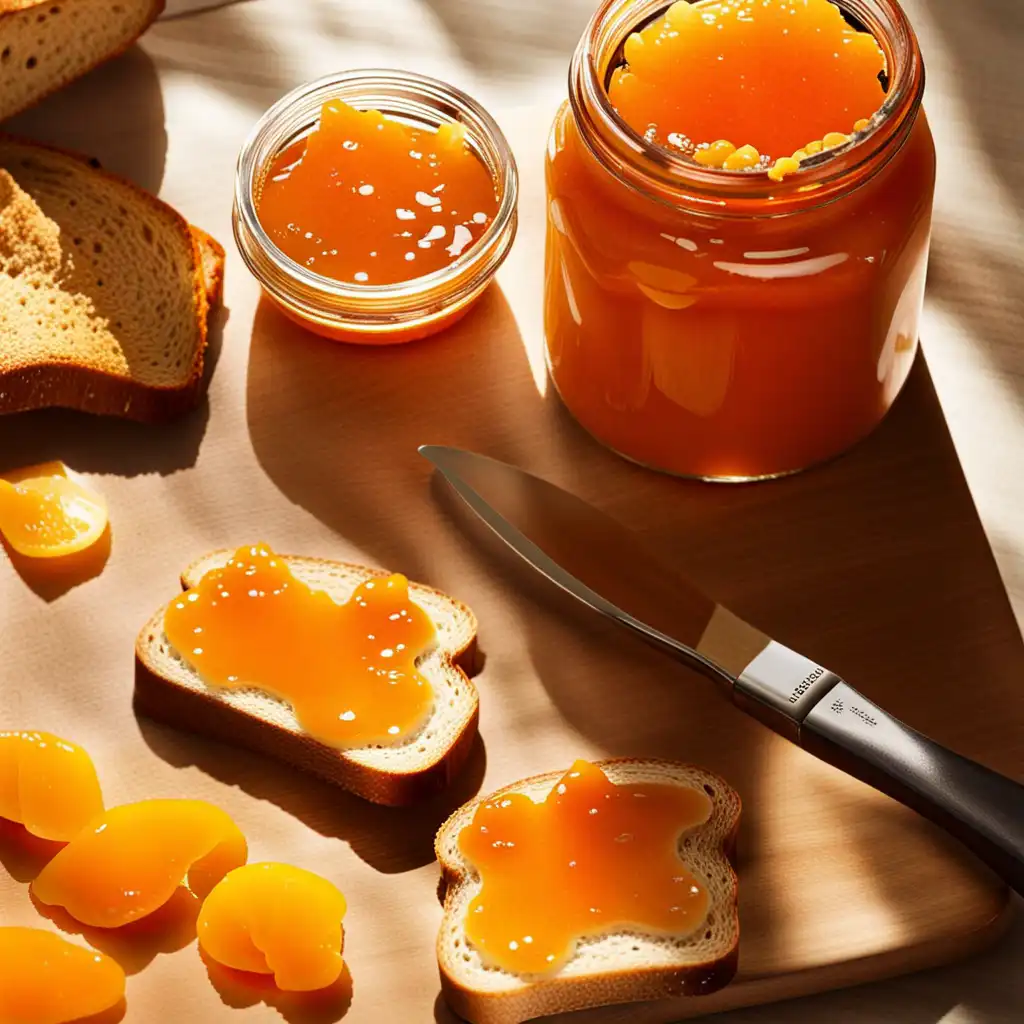
A type of sweet food made from oranges, lemons, or other fruits that is used as a spread on bread
I spread some marmalade on my toast for breakfast.
marmalade
ˈmɑːrməleɪd
Chargement…
ˈmɑːrməleɪd
A type of sweet food made from oranges, lemons, or other fruits that is used as a spread on bread
I spread some marmalade on my toast for breakfast.
Impossible de charger l’audio. Réessayez plus tard.
Marmalade is a type of spread made from citrus fruit, such as oranges or lemons. It is similar to jam, but usually has a slightly bitter taste due to the use of the fruit's peel. Marmalade is often eaten on toast or used as a filling for cakes and pastries. It is also sometimes used as an ingredient in savory dishes, such as glazed meats or sauces.When ordering breakfast in a restaurant or buying groceries, it's common to hear and see the word "marmalade" used in reference to a citrus fruit spread.
Conserve refers to preserving something, such as food or resources, to prevent waste or depletion. It is applicable in situations where one wants to maintain or sustain something for future use or enjoyment.
Conserve means to preserve or save something, while marmalade refers to a specific type of sweet spread.
Ouvrir le mot: Conserve →Jam and marmalade are both sweet spreads that are made from fruit, but there are some key differences between them:
- Jam is typically made by cooking fruit with sugar until it thickens and becomes spreadable. The result is a thick and smooth spread that is usually free of large chunks of fruit.
Jam can be made from a variety of fruits including strawberries, raspberries, and apricots.
- Marmalade is a type of jam that is made specifically from citrus fruits like oranges, lemons, and grapefruits. Marmalade includes small pieces of fruit peel, which gives it a slightly bitter taste and a chunky texture.
Both jam and marmalade can be used as spreads on bread or toast, but marmalade is typically more popular as a topping for scones or biscuits.
Depending on the type of fruit used, jams or marmalades can also be used in baking or cooking to add flavor to dishes.
Ouvrir le mot: Jam →Jelly and marmalade are both spreads made out of fruit, but there are a few key differences.
Jelly is made by cooking fruit juice with sugar and pectin (a naturally occurring substance that helps the jelly set). The end result is a clear, spreadable gel that's usually quite sweet.
Some common jellies include grape jelly and apple jelly.
Marmalade is made by cooking fruit and the peel together with sugar and water. The end result is a spread that's thicker and chunkier than jelly, and often has a slightly bitter taste due to the inclusion of the citrus peel.
Both jelly and marmalade can be spread on toast, muffins, or scones, but they each have their own best uses. Jelly is great for adding sweetness to dishes without overwhelming the other flavors, while marmalade is a good choice for people who like a more complex flavor profile, and for pairing with savory items like cheese or cured meats.
Ouvrir le mot: Jelly →Marmalade and preserve are both types of fruit spreads, but they are made differently and have different characteristics.
Preserve can be made from a variety of fruits. It typically includes only the fruit and some sugar, and it is cooked down to a thick, smooth consistency.
Preserves may have a slightly chunky texture but are generally smoother than marmalade.
It is also used in some baking recipes. Preserves are more versatile, and can be used in any recipe that calls for a fruit spread, such as in a peanut butter and jelly sandwich or as a topping for yogurt or ice cream.
Ouvrir le mot: Preserve →Spread refers to any type of food that can be spread on bread, crackers or other food items.
Marmalade is typically used as a breakfast condiment and is spread on toast or muffins. It is also used as an ingredient in cakes and desserts.
Spread can be used in a variety of ways including as a sandwich filling, as a dip for vegetables or as a topping for pancakes or waffles.
Marmalade is a specific type of fruit preserve made from citrus fruits and is typically used at breakfast time, while spread refers to any type of food that can be spread and is versatile enough to be used in a variety of ways.
Ouvrir le mot: Spread →During a color consultation, I like to reference food as a visual. Hot fudge and orange marmalade paint a clearer picture and helps prevent end results that leave you feeling unsatisfied.
I'm not afraid to call a wine that tastes like Skittles or green peppers mixed with orange marmalade. I'll say, 'It tastes like chicken.' I mean, that's not what people think of when they think of wine, but that's what it tastes like to me and it hits home.
I'm not the best at getting myself breakfast, but if I do, I'll normally have toast and marmalade.
Wit ought to be a glorious treat like caviar; never spread it about like marmalade.
On Saturday, I don't want to be woken up until at least nine: I like a bit of a lie-in, a cup of tea, toast and marmalade, and the newspaper.
I remember being with my mum eating marmalade on toast watching 'Inspector Gadget,' 'Sharky and George,' 'The Pink Panther,' and 'Thundercats,' stuff like that. Those were the days - no idea how brutal the world is.