mouldy
adjective mouldy
ˈməʊldi
加载中…


音频无法加载,请稍后再试。
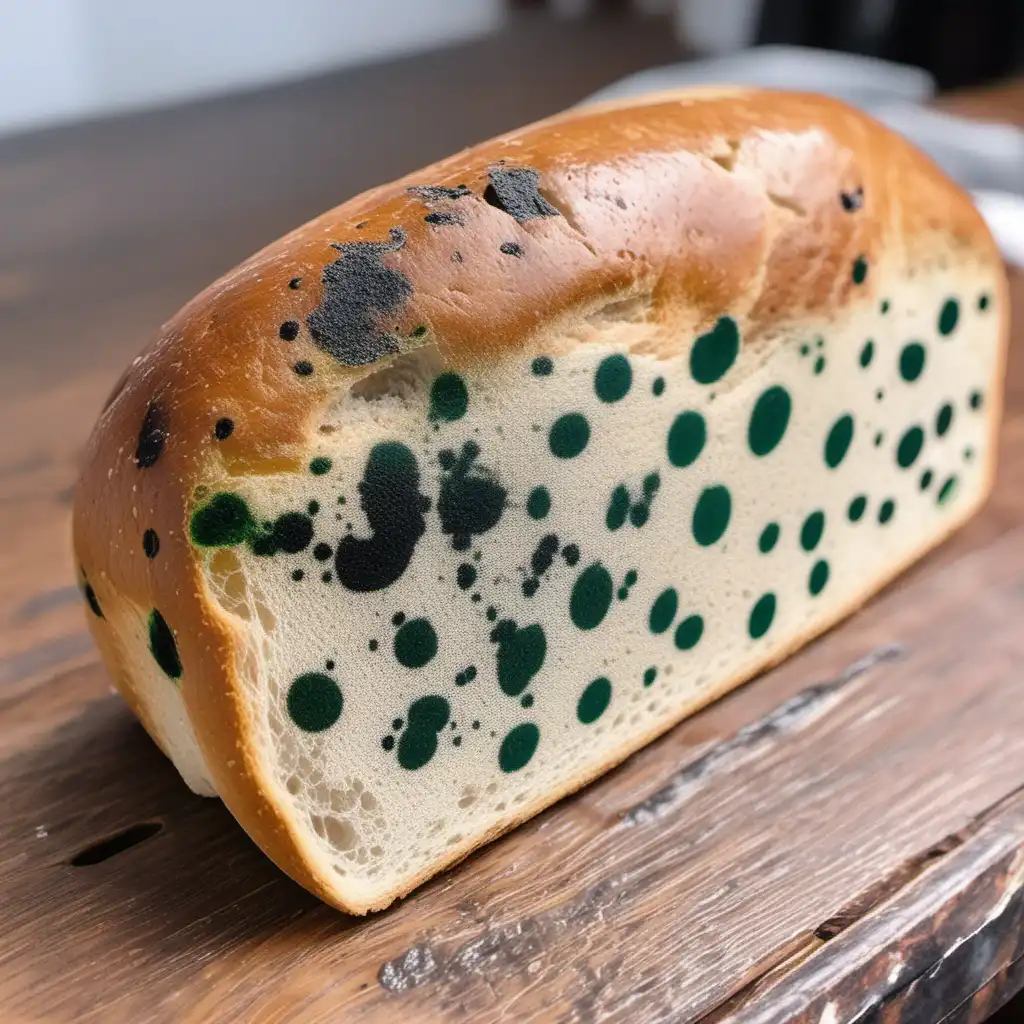
The word 'mouldy' refers to something that has grown fungus or a type of mold on it, and is no longer fresh or edible. It can be used to describe food that has been left out for too long, or clothing or furniture that has been stored in a damp or humid place. It is important to avoid eating anything that is moldy as it can make you sick.
Decay refers to the natural breakdown or disintegration of organic matter over time, due to factors such as exposure to air, water, and bacteria.
Decay refers to a general process of organic breakdown, while mouldy specifically pertains to the growth of fungi on organic matter.
打开单词: Decay →Deteriorate means to become worse or less valuable over time.
Deteriorate means something is becoming worse over time, while mouldy refers to something being affected specifically by mold.
打开单词: Deteriorate →Fungoid refers to something that resembles or has characteristics of a fungus, such as a mushroom.
Fungoid is applicable when describing something with fungus-like qualities, while mouldy is applicable when describing something covered in mould.
打开单词: Fungoid →Both words refer to a type of fungal growth, but mildewed specifically refers to a type of fungus that grows on damp fabric, paper, or leather.
Mouldy generally refers to any type of fungus that grows on organic matter, such as food or wood. Mildewed would be applicable when talking about clothes or books that have been left in a damp environment, while mouldy would be applicable when talking about spoiled food or rotting wood.
打开单词: Mildewed →Both mouldy and musty describe a smell that is unpleasant and often associated with dampness.
Musty generally describes a smell that is stale, damp and maybe a bit dusty, but not necessarily due to the presence of mould.
For example, a basement or a cellar that has been closed off for a long time might have a musty smell.
Mouldy implies the presence of mould, while musty is a more general sense of a damp and stale smell.
打开单词: Musty →Rotten refers to something that has decayed or decomposed, becoming soft and smelly. This is typically used to describe food or items that have been left to spoil or deteriorate over time.
Mouldy describes something that has fungus growing on it, while rotten describes something that has decayed and become smelly.
打开单词: Rotten →Spoil refers to something that has gone bad or rotten due to various factors, such as exposure to air or temperature changes.
Mouldy is a more specific term than spoil and refers specifically to the presence of mould, while spoil is a more general term that can apply to a range of different situations where something has gone bad or become unusable.
打开单词: Spoil →It is applicable to food items such as bread, cheese, and fruits. Stale refers to something that has lost its freshness and quality over time.
Mouldy describes something that has gone bad due to contamination, while stale describes something that has lost its original characteristics due to time or exposure.
打开单词: Stale →Advocating for gender...
在 YouTube 上观看 ↗If they can make penicillin out of mouldy bread, they can sure make something out of you.
I've always hated the idea of carrying grudges and resentments around like a load of mouldy suitcases.
I shout at the radio when someone starts talking over the end of a song. Shut up! I don't want to hear that the DJ has just found a mouldy sandwich in the corner of the studio. Nor do I like it when the magic of something you're watching is shattered by an advert for Argos.
I was around 15 when I first wanted to compete in an Olympics. I even remember the first time I got to wear a GB kit as a junior. I've even kept it. It's in my mum's loft somewhere, probably gone mouldy by now.
I plan to live to be 98, so I'll be the guy at Dundas and Yonge flogging a box of mouldy novels.