rill
noun rill
rɪl
Chargement…
rɪl
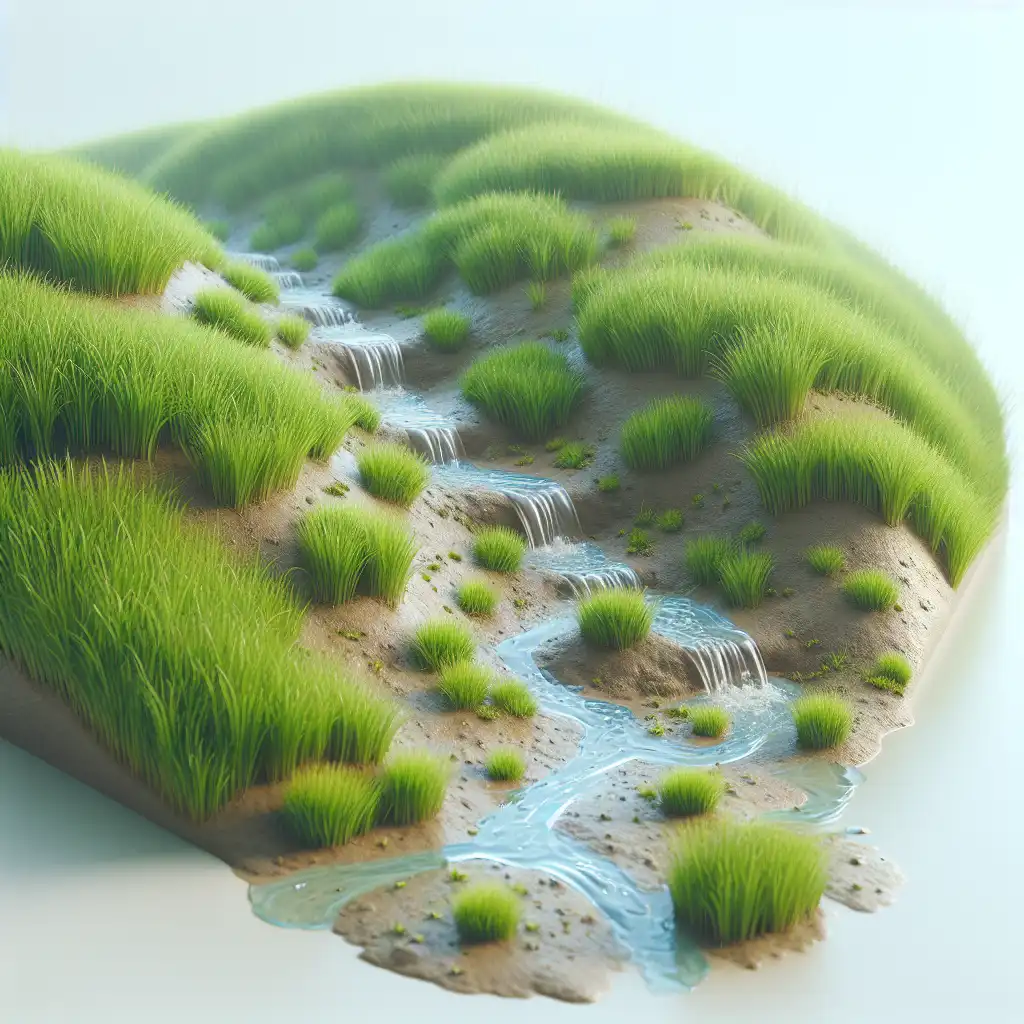
Small furrow or groove
Rainwater flowed down the rills in the hillside.
Impossible de charger l’audio. Réessayez plus tard.
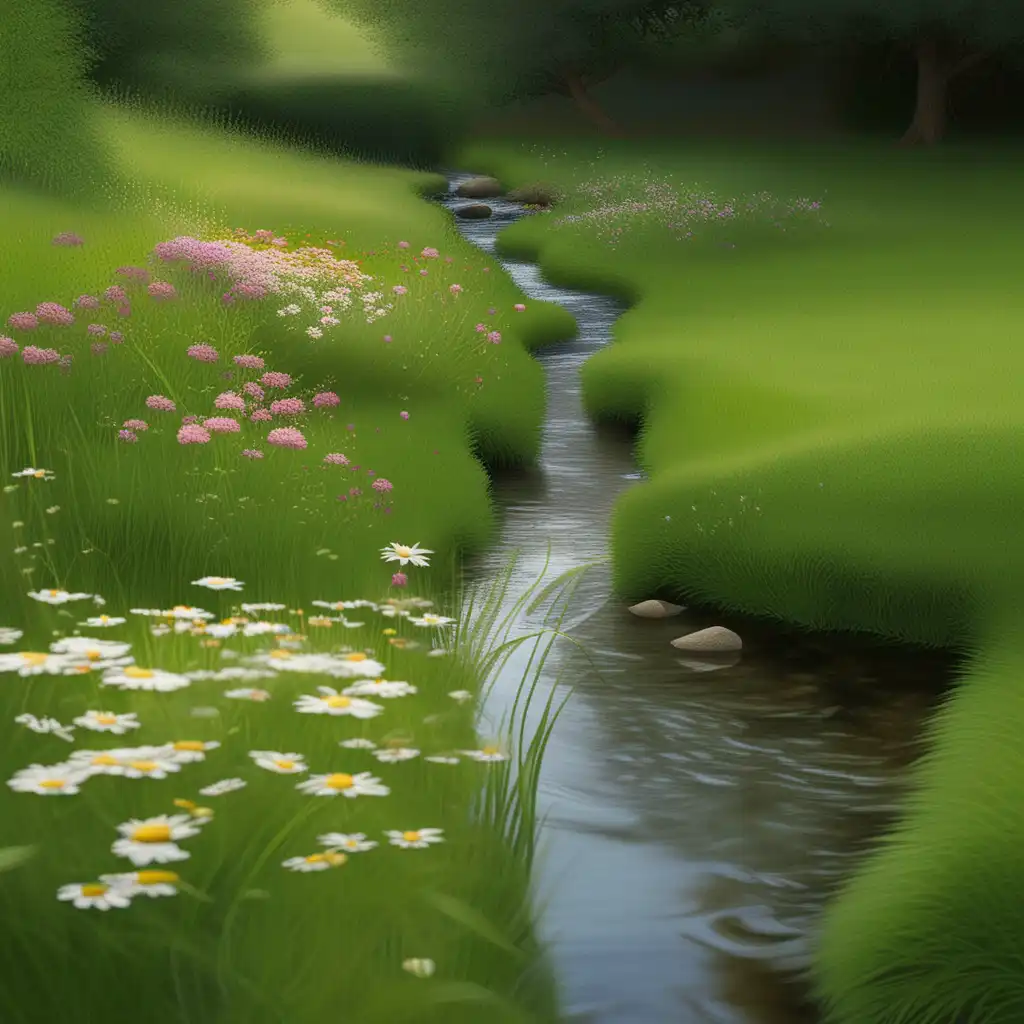
A rill is a small, narrow stream of water that is usually found in nature, like in a forest or on a hillside. You can also use the word to describe the little channels of water that form in your backyard after a heavy rain. It's a simple word that is most often used when talking about nature or landscapes.
A brook is a small freshwater stream that is wider and deeper than a rill. The water in a brook can be quite fast-moving and can sometimes have large rocks or even small waterfalls.
Brooks are usually found in hilly or mountainous areas.
The main difference between a brook and a rill is their size and speed of flow. Brooks are larger and faster-moving, while rills are smaller and more gentle.
Ouvrir le mot: Brook →A channel refers to a larger and deeper path or course of water, such as a river or a canal.
It is usually broader and carries more water than a rill, which refers to a small, narrow, and shallow channel or stream of water, often created by rainwater runoff.
A rill is usually found in gardens or small-scale landscapes, whereas a channel can refer to natural or man-made waterways, such as those used for transportation or irrigation.
Ouvrir le mot: Channel →Both creek and rill refer to small bodies of water, but there is a subtle difference in their usage.
A creek is a small stream or river that is often considered a tributary of a larger body of water, such as a river or a lake.
They can range in size from small trickles to large, rushing streams. Creeks are commonly found in forested areas or in rural environments.
A rill is a small, shallow channel of water that runs through gardens or fields. They are typically created by rainwater runoff and are too small to be considered a creek or stream.
The main difference between a creek and a rill is the size and location of the water body. Creeks are larger, natural bodies of water that are typically found in rural areas, while rills are smaller, man-made features that are often found in gardens or fields.
Ouvrir le mot: Creek →A gully is a larger channel or trench that is formed by water erosion.
It is typically deeper and wider than a rill and can be seen as a small valley or depression in the ground. Gullies are usually formed over a longer period of time and can be caused by heavy rain or runoff.
It is typically seen as a small groove or furrow in the ground and can be created by raindrops or small streams. Rills are usually shorter in length and less deep than gullies.
Both gullies and rills are common in areas with sloping terrain and can be found in many different types of environments, including forests, agricultural fields and natural landscapes.
Rills are often found near gullies, and they can sometimes merge to form larger channels.
Ouvrir le mot: Gully →Both words refer to small streams of water, but rill usually refers to a small stream that is the result of rain, while rivulet can refer to any small stream, such as a stream that flows through a forest or a small stream that flows into a larger river.
Rill describes a smaller and more temporary stream, while rivulet describes a more permanent and larger stream.
Ouvrir le mot: Rivulet →Both rill and runnel refer to a small stream or brook. The main difference between the two is that rill is typically used to describe a small, shallow stream that usually dries up during the summer months, while runnel describes a slightly larger stream that may have a more consistent flow even during dry spells.
A rill is a small and shallow stream, whereas a runnel is a slightly larger stream with a more consistent flow.
Ouvrir le mot: Runnel →A stream is a larger and deeper body of running water that flows continuously throughout the year.
The main difference between the two is their size and depth, and their permanence. Rills are smaller and shallower, and may not always be present, whereas streams are larger and deeper, and are always flowing.
In terms of usage, rill is typically used to describe a very small or temporary water body, while stream is used for larger, more prominent, and longer-lasting waterways.
Ouvrir le mot: Stream →A tributary is a stream or river that flows into a larger body of water, such as a lake, river or ocean. It is formed by the convergence of smaller streams or rivers and can carry a significant amount of water.
A rill is a small, shallow stream that flows downhill while a tributary is a larger stream that flows into a bigger body of water.
A rill is applicable in a hilly or sloping landscape, while a tributary is found in river or lake systems.
Ouvrir le mot: Tributary →