
monopoly
noun monopoly
məˈnɑːpəli
An exclusive control over a good or service in a particular market, or a control that makes such a control possible.
A single company had a monopoly over the oil industry.
monopoly
məˈnɑːpəli
Loading…
məˈnɑːpəli
An exclusive control over a good or service in a particular market, or a control that makes such a control possible.
A single company had a monopoly over the oil industry.

məˈnɑːpəli
A board game in which players engage in simulated property and financial transactions with the aim of becoming financially successful.
We spent the whole night playing monopoly.
məˈnɑːpəli
An exclusive privilege to carry on a business, traffic, or service, granted by a government.
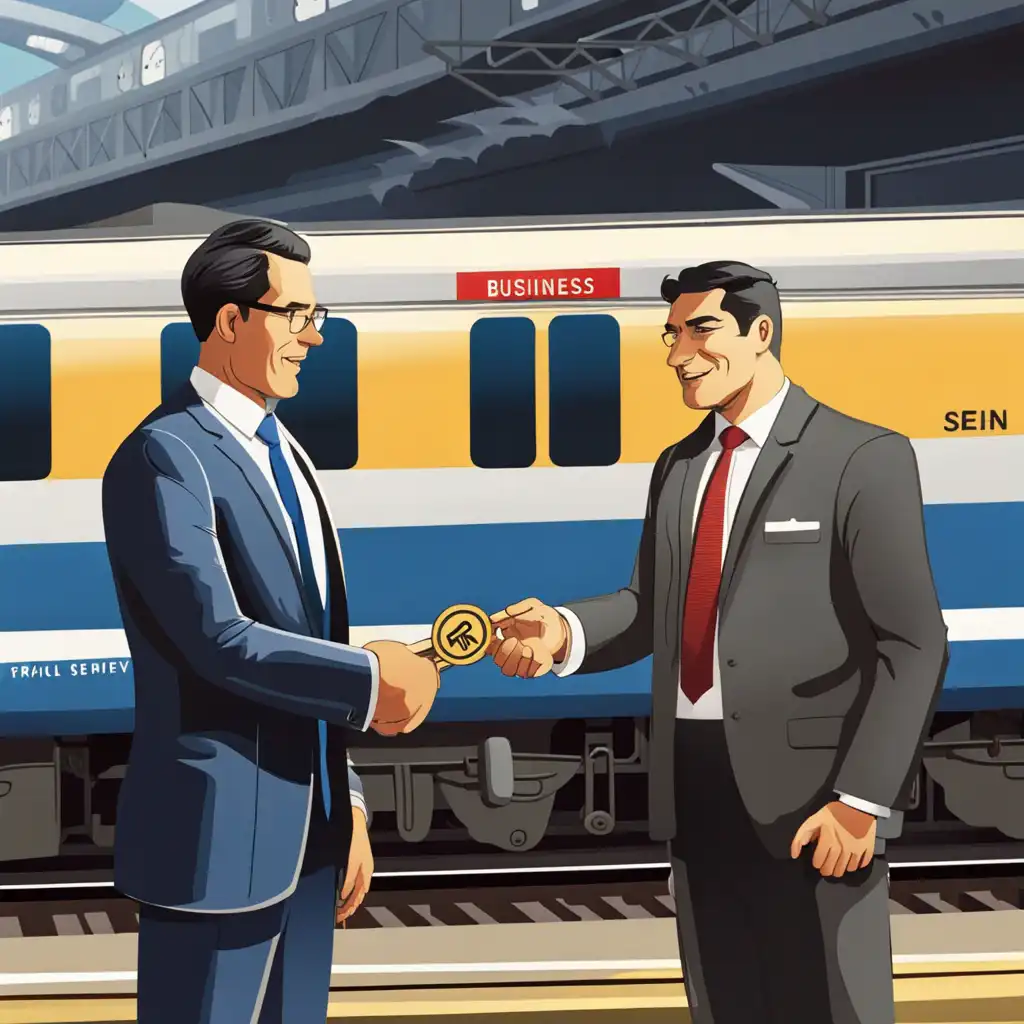
The government granted the company a monopoly to operate the country's rail services.
Audio could not be loaded. Please try again later.
A monopoly means that one company or person has complete control over something, like a product or service. They are the only ones who can offer it and compete against them is very difficult. For example, if there was only one store that sold a popular game, they would have a monopoly on the game because no other store could sell it. It's important to recognize a monopoly because it can sometimes lead to higher prices or less choice for consumers.
Autocracy refers to a type of government where one person has complete control and authority over everything, including laws, decisions, and policies.
Autocracy is a type of government where one person has complete control over everything, while a monopoly is a market situation where one company has complete control over the production and sale of a particular product or service.
Open word: Autocracy →Control refers to having power or authority over something or someone.
It can be applied in various contexts, such as a person controlling their emotions, a company controlling its production processes, or a government controlling its borders.
Monopoly refers to a situation where one company or entity has exclusive control over a particular market or industry. This means that there is no competition, and the monopolistic entity is free to set prices and control supply and demand without fear of competition.
Control refers to having power over something, while monopoly refers to exclusive control over a particular market or industry.
Control is applicable in many contexts, while monopoly is only applicable in the context of market competition.
Open word: Control →Despotism refers to a system of government where a single ruler has complete control and uses their power to oppress the people.
Both despotism and monopoly involve the concentration of power, but they apply to different spheres of society. Despotism relates to political power and governance, while monopoly relates to economic power and commerce.
Open word: Despotism →Dictatorship and monopoly are two different terms that are used in different contexts.
Dictatorship refers to a form of government where a single person or a small group of people have absolute power over a country or a region.
In a dictatorship, the ruler(s) exercise complete control over the government and the people, often suppressing opposition and dissent.
Dictatorship is applicable in the context of politics and government.
Dictatorship is a political term that refers to a form of government, while monopoly is an economic term that refers to a market condition.
Open word: Dictatorship →Dominate means to have control or power over something or someone. It implies that someone or something is more powerful than others and can influence or control them.
For instance, a player who dominates a game is considered the strongest and most skilled compared to other players.
In brief, dominate implies control or power while monopoly suggests exclusive control over a market.
Open word: Dominate →Hegemony refers to a situation when a group or a country has control or domination over others in terms of their culture, economy, politics, or military power.
For example, the United States has hegemony over many countries, as it has a strong influence in their politics, culture and military power.
Hegemony refers to a broader type of control, while monopoly is specific to one market or industry.
Open word: Hegemony →Supremacy refers to a situation where one entity is superior or dominant over others, but not necessarily the only one.
In contrast, a country may have military supremacy, meaning that it has the most powerful military, but there may still be other countries with significant military capabilities.
Monopoly is applicable in the context of competition and market structures, while supremacy is applicable in the context of power and dominance.
Open word: Supremacy →Tyranny refers to a form of government or leadership where one person or group has all the power and uses it oppressively, without consideration for the needs or wishes of others.
This can lead to restrictions on freedom, oppression, and abuse of power. An example of tyranny could be a dictator who rules over a country with an iron fist, using violence and punishment to quell any opposition.
Monopoly relates to business and economics, while tyranny relates to politics and government.
Open word: Tyranny →what's stopping in the industry structured as a series of statewide monopolies that support pay for the large power plants the high-voltage transmission lines when people start to put solar on their roof it upsets that entire system this is really
Watch on YouTube ↗We protect monopolies with copyright.
It's a shared database, and even though it has multiple readers and multiple writers at the same time, it has one single truth. So we can create that using blockchains. We can create a decentralized database that has the same efficiency of a monopoly
Watch on YouTube ↗I don't believe any more that WBC has a monopoly on truth.
where free will self-expression and curiosity are under fire. In Montag’s world mass media has a monopoly on information, erasing almost all ability for independent thought.
Watch on YouTube ↗Jeremy Corbyn and his supporters do not have a monopoly on principle.
the monopoly on broadcast video they would shoot the action with your expensive broadcast cameras own the video and make the money while the person at the front doing the dangerous stuff normally didn't get paid but you
Watch on YouTube ↗The scientific and scholarly community is marked by the belief that the truth is to be found in all; none can claim it as their monopoly.
more and more efficient buildings more and more efficient cars, and so forth. How many of these people are there in an economy like the US? Electric utilities are monopolies, and so they're regulated by utilities commissions. Otherwise they'd jack up the price too high.
Watch on YouTube ↗If you patent a discovery which is unique, say a human gene or even just one particular function of a human gene, then you are actually creating a monopoly, and that's not the purpose of the world of patents.
Our learning can't be limited by the level we reach in an organization or only available to the fortunate few. It's not the responsibility of a single department, and it doesn't just happen when you go on a course. No one has a monopoly on wisdom.
Watch on YouTube ↗I talked about the barriers created by monopolies. I said that it was the role of government to break up these monopolies and that we couldn't do it alone.
that's where most people assume -- but it's between the party of the thoughtful and the party of the jerks. And no side of the political spectrum has a monopoly on either of those qualities. The actual truth about the specific Bush-Kerry incident
Watch on YouTube ↗Public education grants secular worldviews an exclusive monopoly in the classroom.
The original intention behind the patent system was to motivate people to invent by rewarding them with a time-limited monopoly. But today that intention has been distorted beyond recognition. Corporations have teams of lawyers and lobbyists
Watch on YouTube ↗They demanded a monopoly of the coasting trade, in order to get higher freights than they could get in open competition with the carriers of the world.
like deciding in advance what's going to happen, or the profit motive -- the more leverage they'll get. And institutions are going to come under an increasing degree of pressure, and the more rigidly managed and the more they rely on information monopolies the greater the pressure is going to be.
Watch on YouTube ↗My journey is where I'm at right? It's the monopoly board of my life, and I'm making my rounds.
need to actually strengthen it a lot more I think one aspect of it comes from recognizing that each of us whatever you know the sophistication of our mental models and assumptions is never going to have a monopoly on truth we need to recognize that we have to value the
Watch on YouTube ↗Open platforms encourage innovation. Whenever you have a closed platform, a monopoly on commerce, and all these platform rules, it stifles innovation.