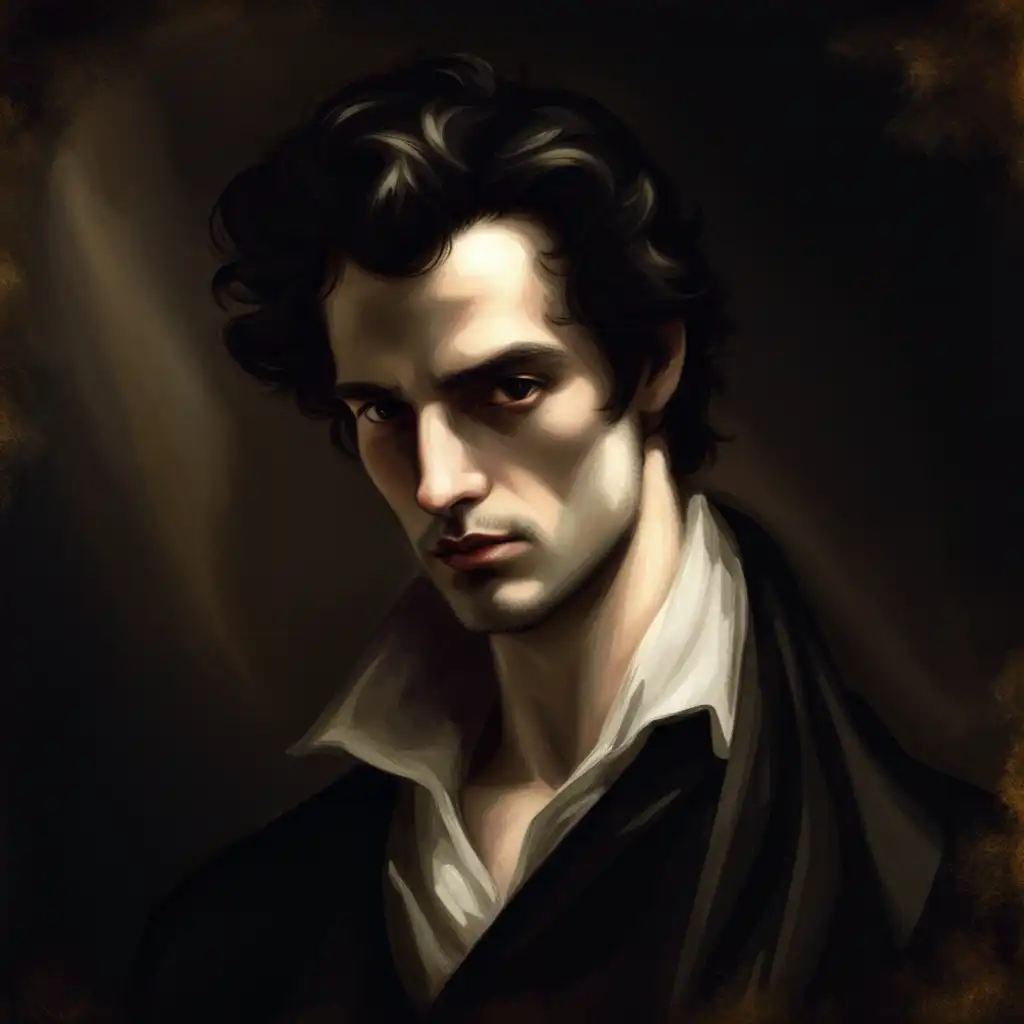
Related to or like the English poet Lord Byron or the characters in his poems. Usually means a man who is moody, mysterious, and attractive in a dark way.
Byronic is an adjective used to describe someone or something that resembles or is characteristic of the writer Lord Byron or his works. It can be used to describe a person's personality or behavior, which is perceived to be moody, passionate, and brooding, like the characters in Lord Byron's literature. It can also refer to a writing style that is marked by a strong emphasis on emotions, imagination, and individualism. A learner can use the word 'byronic' in discussing literature, film, or real-life situations where a person's behavior or style seems to be influenced by Lord Byron's works.
The words brood and byronic are not synonymous and have different meanings.
Brood means to think deeply about something and to be unhappy, worried or angry about it.
It is usually used in situations where someone is dwelling on negative thoughts or feelings. For example, "She sat in her room and brooded over the fight she had with her sister.".
It comes from the poet Lord Byron whose writing often featured such characters. For example, "He was a Byronic figure, always brooding over his lost love and the tragedies of his past.".
Brood is applicable when someone is mulling over negative thoughts or emotions, whereas byronic is applicable when describing a particular type of character - one that is moody, introspective, and often has a troubled past.
Conventional refers to something that is typical or customary within a society or culture.
It is often used to describe things that are traditional or conform to societal norms, such as conventional weddings or hairstyles.
In application, byronic would be used to describe a character or person who stands out from the norm in terms of their personality or behavior, while conventional would be used to describe something that is commonplace or expected within a particular culture or society.
Dark generally refers to something that is sinister, frightening or gloomy.
Byronic is more specifically linked to a particular historical and cultural context, while dark can be more broadly applied to a range of genres and styles.
Enigmatic refers to someone or something that is mysterious and difficult to understand or decipher.
It can describe a person, object, or situation. For example, a painting may be described as enigmatic if its meaning is not immediately clear, or a person may be described as enigmatic if they keep their thoughts and feelings to themselves, making it difficult for others to understand them.
In summary, Byronic describes someone's personality and behavior, while enigmatic describes something that is mysterious or difficult to understand.
Byronic and melancholic are two different words that describe different moods or personalities.
Melancholic describes someone who is experiencing a feeling of sadness or depression. It's more of a general term for a mood, rather than a specific type of character like Byronic.
To summarize: Byronic refers to a particular type of literary character who is dark and brooding, while melancholic describes a general feeling of sadness or depression.
Mysterious refers to something or someone that is difficult to understand or explain, and often has an element of secrecy or intrigue.
Byronic is more specific and refers to a certain type of dark, romantic personality, while mysterious is more general and can be applied to a variety of things or people that are difficult to understand or explain.
Romantic is a broader term that refers to a larger artistic and cultural movement that emerged in the same period.
So, while both byronic and romantic are associated with the same time period and some similar themes, byronic is more specific to literature and the individual struggles against society, while romantic is a larger artistic and cultural movement focused on emotions, imagination, and nature.