
dispersal
noun dispersal
dɪˈspɜːrsl
The act of spreading things over a wide area.
The seeds of plants rely on wind and animal movement for their dispersal.
dispersal
dɪˈspɜːrsl
불러오는 중…
dɪˈspɜːrsl
The act of spreading things over a wide area.
The seeds of plants rely on wind and animal movement for their dispersal.
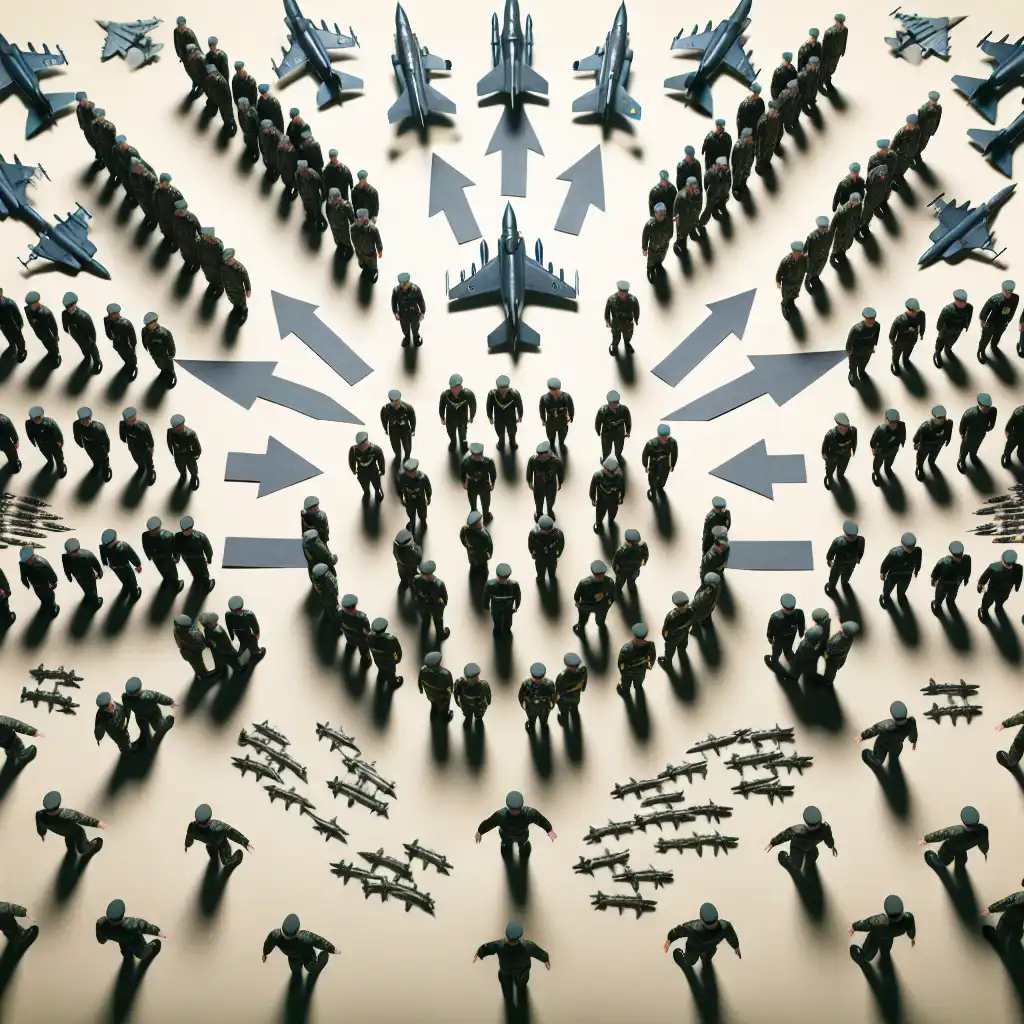
dɪˈspɜːrsl
The action of sending troops or aircrafts from a central point to different places.
The military is prepared for the rapid dispersal of forces.

dɪˈspɜːrsl
The process of becoming less concentrated or less gathered in one place.
The dispersal of smoke depends on the wind direction.
오디오를 불러오지 못했어요. 잠시 후 다시 시도해 주세요.
The word "dispersal" means to spread out or distribute something over an area. It can be used in various contexts, such as the dispersion of seeds by a plant, the dispersal of a group of people, or the dispersal of particles in a fluid. A simple example of dispersal could be throwing a handful of seeds into the wind to allow them to spread out in different directions to grow into new plants. Similarly, when a large group of people leave a place and move to different locations, it is called dispersal of the group. In general, the word dispersal is used to describe the process of distributing or scattering something over different areas.
Allocate means to assign or distribute resources or tasks in a planned manner.
It is usually used in the context of assigning resources like money or time to different projects or tasks. For example, a company may allocate resources to different departments or a teacher may allocate time for different activities in the classroom.
Allocate is used when resources are being planned and distributed in an organized manner, while dispersal is used when things are being spread out over a wide area or population.
단어 열기: Allocate →Circulation refers to the movement or flow of something within a system or a particular area, such as blood circulation in the body or air circulation in a room.
Circulation involves movement or flow within a system, while dispersal involves movement away from a central point.
단어 열기: Circulation →Disburse refers to the act of distributing or giving out money, while dispersal refers to the act of spreading out or scattering something.
Disburse would be applicable in situations like distributing salaries to employees or giving out money to charity, while dispersal would be applicable in situations like the movement of plants or animals to different habitats, or the scattering of seeds by wind or animals.
단어 열기: Disburse →Dispersion refers to the spreading of something out over an area, and it can describe the process of particles or substances spreading out over an area.
Dispersion is a general term that can be applied in many situations.
To summarize, dispersion refers to the spreading of things, while dispersal specifically describes the movement of living things.
단어 열기: Dispersion →Disseminate means to spread information, ideas, or knowledge to a wider audience. This term is often used when talking about the distribution of news, research findings, or educational materials.
Dispersal is typically used when referring to the physical movement of objects or living things, while disseminate is used when referring to the spread of information or ideas.
단어 열기: Disseminate →Dispersal refers to the movement of organisms or things from one location to another, while distribution refers to the pattern or extent of how these organisms or things are spread out in a particular area.
The distribution of those same seeds would refer to how many of them are clustered in one area versus how many are more widely spread out in a given region.
Dispersal is applicable when discussing the movement or migration of animals, people, or things from one place to another, while distribution is applicable when describing the patterns of how these organisms or things are spread out within a particular area or ecosystem.
단어 열기: Distribution →Diversion is used when something is redirected or diverted from its original path or purpose. For example, when a river is diverted to avoid flooding, or when someone diverts attention from a topic.
To simplify it, dispersal means to spread out while diversion means to redirect.
단어 열기: Diversion →Scatter refers to a more random, haphazard spreading out of something. Unlike dispersal, scatter may not be intentional or planned.
For example, leaves scattered across a lawn by the wind are not a result of a deliberate act, but rather a natural process.
단어 열기: Scatter →Dispersal means the process of spreading something out over a wide area. It is commonly used to describe the movement of organisms or objects from one location to another, such as the dispersal of seeds by wind or the dispersal of a population to different regions.
Spread generally means the act of extending or increasing the size or amount of something.
Dispersal is about moving something from one area to another while spread is about growing or increasing the size or amount of something within a particular area.
단어 열기: Spread →This Fungus Turns...
YouTube에서 보기 ↗The dispersal of juniper seeds is effected by the plum and cherry plan of hiring birds at the cost of their board, and thus obtaining the use of a pair of extra good wings.
Why bats don't get sick...
YouTube에서 보기 ↗The 'Arab Spring' is the most spectacular example of the dispersal of power.
What In the World Is a...
YouTube에서 보기 ↗The men are walking. They are fifty feet apart, for dispersal. Their walk is slow, for they are dead weary, as you can tell even when looking at them from behind. Every line and sag of their bodies speaks their inhuman exhaustion.
Jessica Green: Good...
YouTube에서 보기 ↗Unlike in the U.K. or France or America, we've never used water cannon for mass riots dispersal.
Finding Baby Seals on an...
YouTube에서 보기 ↗Living with Urban Lions...
YouTube에서 보기 ↗Cute and Cuddly...
YouTube에서 보기 ↗Safari Live - Day 304 %\PIPE%...
YouTube에서 보기 ↗Safari Live - Day 356 %\PIPE%...
YouTube에서 보기 ↗Safari Live - Day 280 %\PIPE%...
YouTube에서 보기 ↗