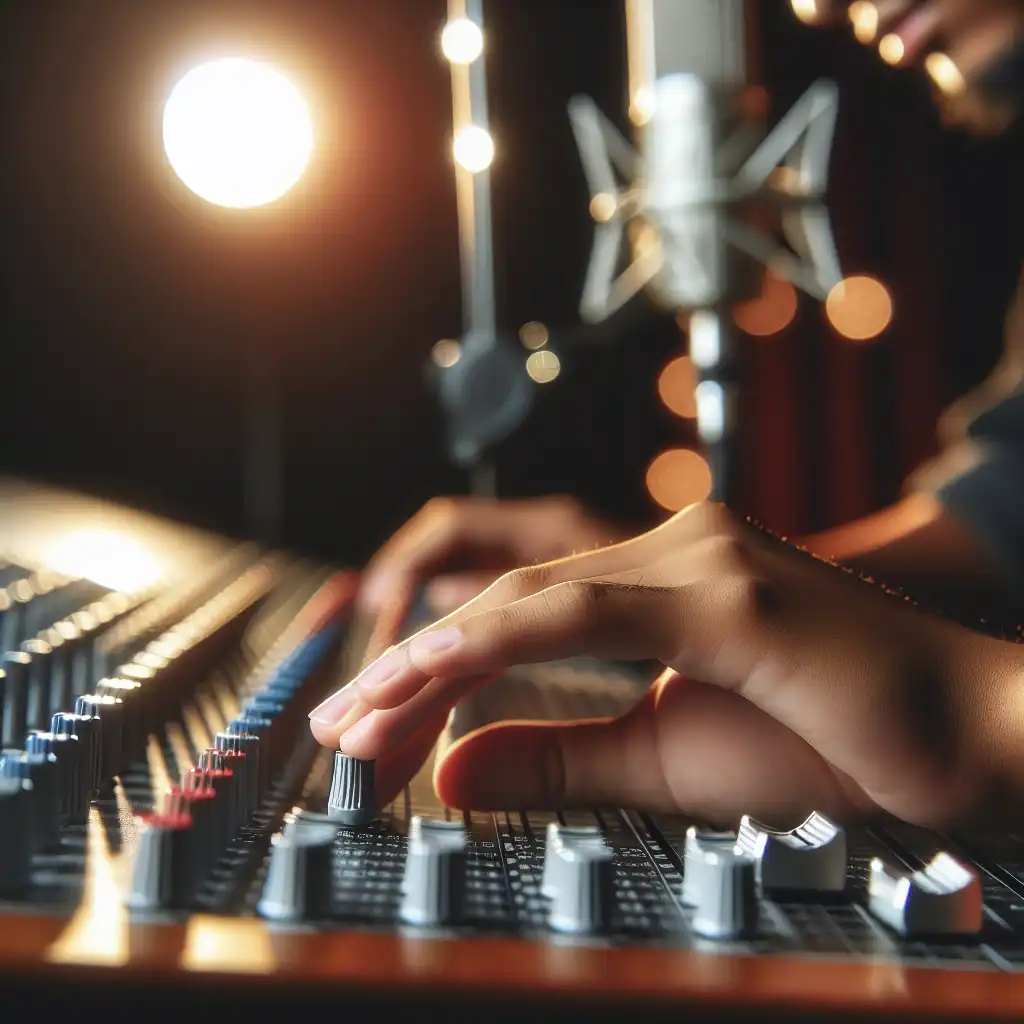
fader
noun fader
ˈfeɪdər
A control on an audio device that is used to change the level of the sound.
The sound engineer adjusted the fader to balance the vocals and instrumental sound.
fader
ˈfeɪdər
Đang tải…
ˈfeɪdər
A control on an audio device that is used to change the level of the sound.
The sound engineer adjusted the fader to balance the vocals and instrumental sound.
ˈfeɪdər
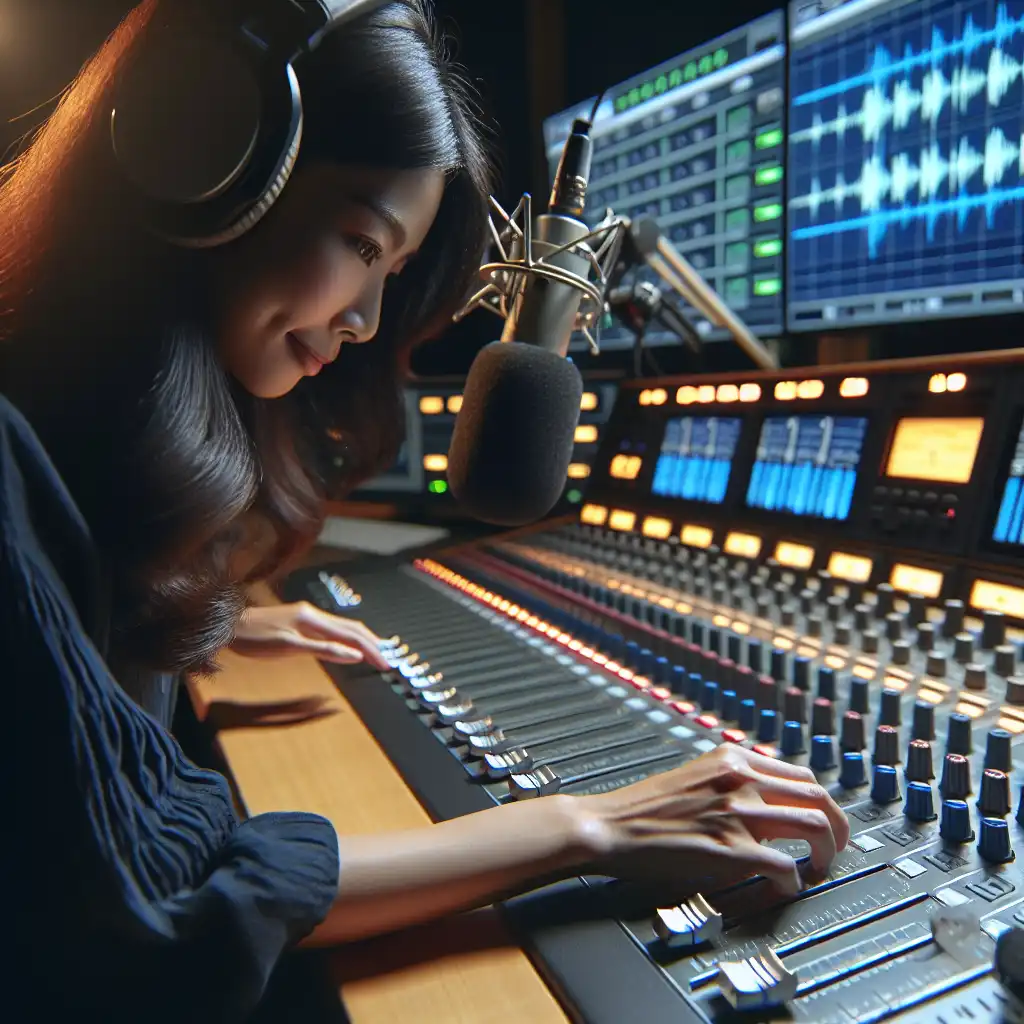
In broadcasting, a fader is used to balance the sound levels of different inputs.
The radio producer moved the fader up to increase the volume of the caller's voice.

ˈfeɪdər
In music, a fader is a device to regulate the loudness of the sound.
The DJ was skillfully playing with the fader during the performance.
Không tải được âm thanh. Vui lòng thử lại sau.
The word 'fader' is usually used in the context of sound or music equipment. A fader is a sliding knob or lever that controls the volume of a specific audio channel. You can find faders on mixing consoles, audio interfaces, and other audio equipment. To adjust the volume of a sound, you can slide the fader up or down to make it louder or quieter. It is essential for audio engineers or musicians who need precise and controlled sound, and it can be used in music studios, live concerts, or even in personal recording setups.
The words dad and fader mean the same thing, which is a male parent.
However, dad is a more commonly used word in everyday language in English-speaking countries like the United States, Canada, and the United Kingdom.
Mở từ: Dad →Daddy is a casual and affectionate term for one's father, and is mostly used by children or in a loving relationship between a father and child.
Mở từ: Daddy →Father refers to a male parent, while the word fader is not a common English word and it has no meaning assigned to it.
If someone uses the word fader, they might be pronouncing father incorrectly or it could be a misspelling. Father is the correct and appropriate word to use when referring to a male parent.
Mở từ: Father →The words fader and papa both mean 'father', but they belong to different languages. Fader is a Scandinavian word that is used in countries like Denmark, Norway, and Sweden.
Papa is a word from the romance language family, like French and Italian, and is commonly used in countries like Spain and Italy.
Mở từ: Papa →Parent refers to someone who gives birth and raises a child. This can refer to biological parents or adoptive parents.
Parents have legal and emotional responsibilities to care for their child.
Fader is not a commonly used word in English. It could refer to a person who fades out of someone's life or disappears, but it is not a synonym for parent and would not typically be used in that context.
Mở từ: Parent →Patriarch, on the other hand, typically refers to a male leader or authority figure in a family, society, or religious organization.
In summary, while both words can refer to male individuals, fader is more commonly used to refer to one's biological father or someone who started something, while patriarch is used to refer to a respected male leader or authority figure.
Mở từ: Patriarch →Fader and pop are two different words with distinct meanings.
Pop means a sudden, sharp, explosive sound. It is applicable to describe sounds that are loud and sudden, such as the sound of bursting bubbles or cracking knuckles.
A fader is a control knob used to adjust volume or brightness, while pop refers to a sudden, sharp sound.
Mở từ: Pop →Both fader and sire refer to a male parent, but fader is an old-fashioned and formal term for "father" that's not used much anymore, while sire is a more formal and respectful term that's often used in the context of animal breeding to refer to a male parent (especially a horse or dog).
If you're talking about your own dad, you would say "father" or "dad", but if you're talking about a male animal parent (or referring to the father of a horse or dog you're breeding), you might say sire.
Mở từ: Sire →Safari Live - Day 133 %\PIPE%...
Xem trên YouTube ↗I knew absolutely nothing about recording. I had this four-track recorder, and I'd plug my electric guitar right into it, which sounded real bad. I moved any fader that made a drastic change in sound. I thought that was cool - that it was communicating something. I didn't have the skills to do anything subtle. It was just like screaming.