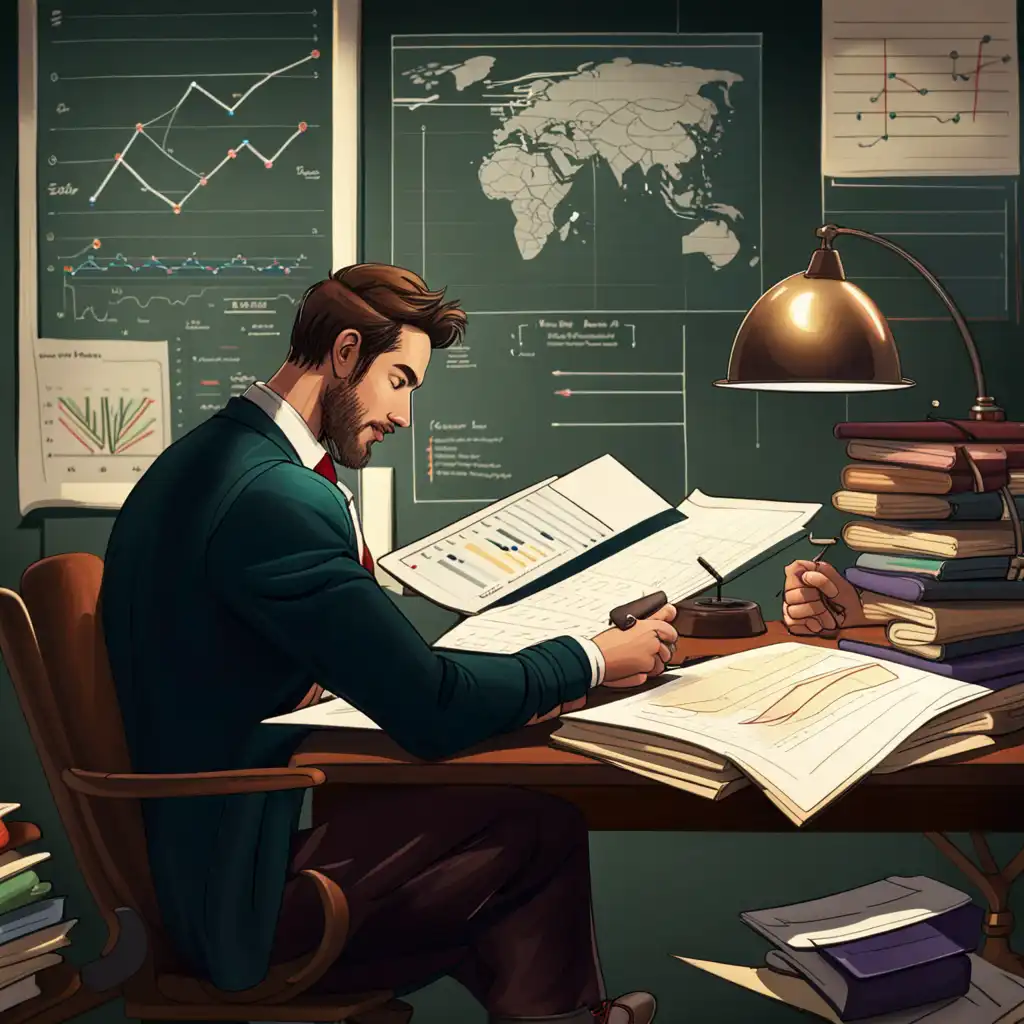
economist
noun economist
ɪˈkɑːnəmɪst
A person who studies or has expertise in the science of economics.
Adam Smith, a famous economist, wrote about the 'invisible hand' of the market.
economist
ɪˈkɑːnəmɪst
読み込み中…
ɪˈkɑːnəmɪst
A person who studies or has expertise in the science of economics.
Adam Smith, a famous economist, wrote about the 'invisible hand' of the market.
ɪˈkɑːnəmɪst
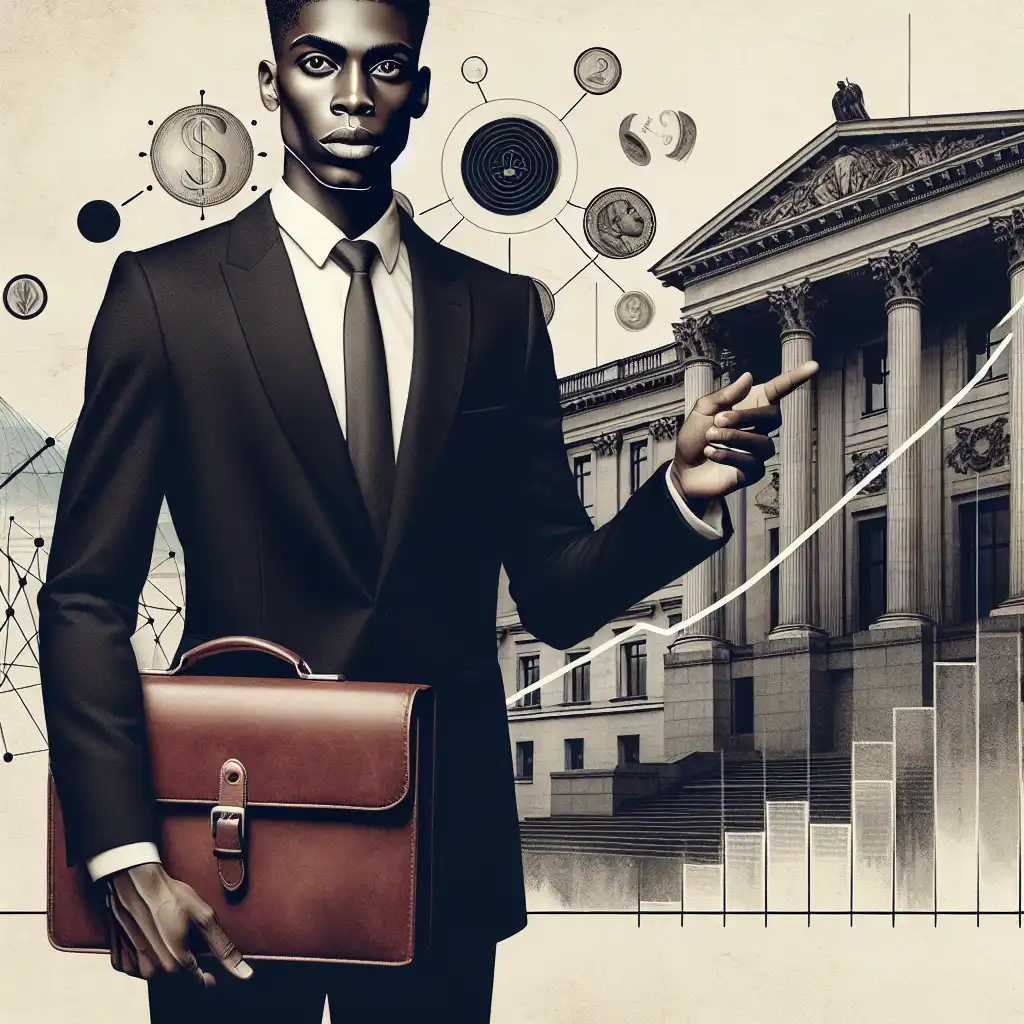
A person who is an advisor in economic policy.
The government's leading economist suggested a new fiscal strategy.
ɪˈkɑːnəmɪst
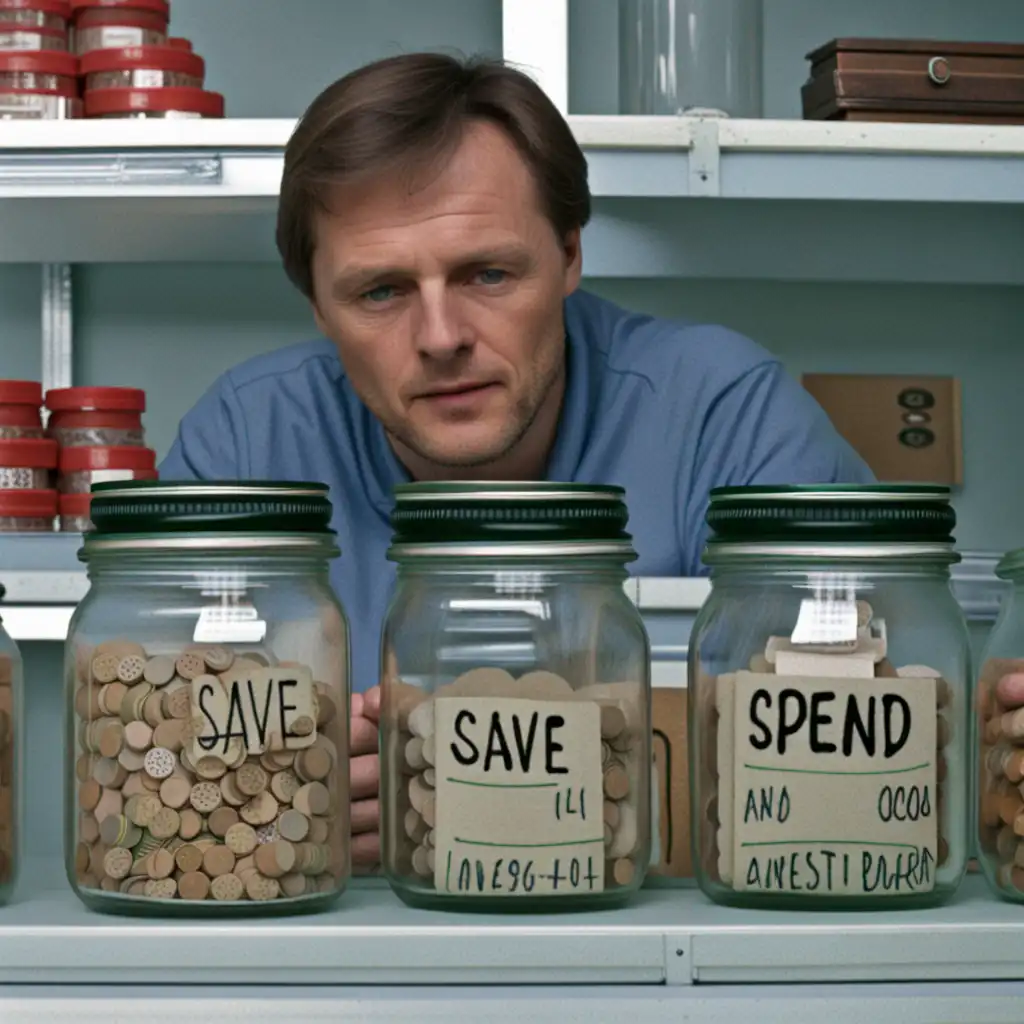
Someone who efficiently manages resources to avoid waste.
Peter wasn't rich, but a good economist, always knowing how to save and invest wisely.
音声を読み込めませんでした。しばらくしてからもう一度お試しください。
An economist is someone who studies the economy, which is the system of buying and selling goods and services in a country or region. Economists look at things like prices, employment, and government policies that affect the economy. The word economist can be used in various contexts, such as in a news article discussing economic growth, in a classroom learning about different professions, or in a job description for someone who analyzes financial data.
and a decrease in consumer spending would reduce business profits, leading to more unemployment and a further decrease in spending, causing the economy to keep shrinking. So most economists believe that while too much of either is dangerous, a small consistent amount of inflation is necessary to encourage economic growth.
YouTube で見る ↗If economists could manage to get themselves thought of as humble, competent people on a level with dentists, that would be splendid.
on innovation which is innovation for end users, visible innovation. Instead innovation if you remember some of you may have read the famous economist Schumpeter, he said "Innovation is novelty
YouTube で見る ↗If all the economists were laid end to end, they'd never reach a conclusion.
question to you though I think a lot of people don't think there's a lot of logic to what you just said but you're an economist if carbon is a long term cost to the world what we don't I a lot of people don't understand why even get behind a carbon tax that was revenue neutral that scent that scent that
YouTube で見る ↗The economy, unemployment, the future... Politicians, economists, and journalists are constantly debating these key issues for our country but rarely come to an answer. But behind all this, there is a fairly simple truth: no matter what anybody says, jobs are hard to come by.
as it turns out lampard came in with a philosophy that owed a lot to biology you've probably heard of survival of the fittest we live in a competitive world all life has to compete over resources food space promotions the best survive and reproduce a lot of economists apply this to the
YouTube で見る ↗People today don't become economists to make the world a better place.
until the drawing indicates you've lost. Or to put it another way for the dollar investment, you can have a much better feeling than flushing the money down the toilet which you cannot have a good feeling from. Now economists tend to -- -- economists tend to view the world
YouTube で見る ↗For economist the real world is often a special case.
that help keep our civilization running. So what should we do? This is where economists disagree. Most economists think that new ideas will be able to fix most of these problems. They argue that, in the same way that exponentially increasing resource and energy use
YouTube で見る ↗It became clear I wanted to be a development economist. I mean, I said I wanted to work on the economics of poor countries. And I'd actually say that I don't think that was so much about narrowing the gap as about increasing their incomes, which means economic growth, which is really my prime interest.
And the results surprised top economists and the researchers running the experiment. But to understand what these groups were expecting, we need to spend a little time defining honesty. We typically think of honesty in terms of actively telling the truth
YouTube で見る ↗Intellectual-property rules are clearly necessary to spur innovation: if every invention could be stolen, or every new drug immediately copied, few people would invest in innovation. But too much protection can strangle competition and can limit what economists call 'incremental innovation' - innovations that build, in some way, on others.
decided that it would sell the rights to third generation mobile phones by working out what those rights were worth now it worked out they were worth two billion pounds just in time the set of economists got there and said why not try an auction it'll reveal the value it
YouTube で見る ↗I can observe the game theory is applied very much in economics. Generally, it would be wise to get into the mathematics as much as seems reasonable because the economists who use more mathematics are somehow more respected than those who use less. That's the trend.
Economists call this demoralizing situation the welfare trap— one of the many different poverty traps affecting millions of people around the world. Poverty traps are economic and environmental circumstances that reinforce themselves perpetuating poverty for generations.
YouTube で見る ↗We will not overcome world poverty unless we manage climate change successfully. I've spent my life as a development economist, and it's crystal clear that we succeed or fail on winning the battle against world poverty and managing climate change together. If we fail on one, we fail on the other.
Different model right? Do it for fun. No one gets paid a cent or a euro or a yen. Do it because you like to do it. Just 10 years ago, if you had gone to an economist anywhere,
YouTube で見る ↗I don't know of a single economist who disagrees that when you raise the minimum wage, you kill jobs for the poor.