foundry
noun foundry
ˈfaʊndri
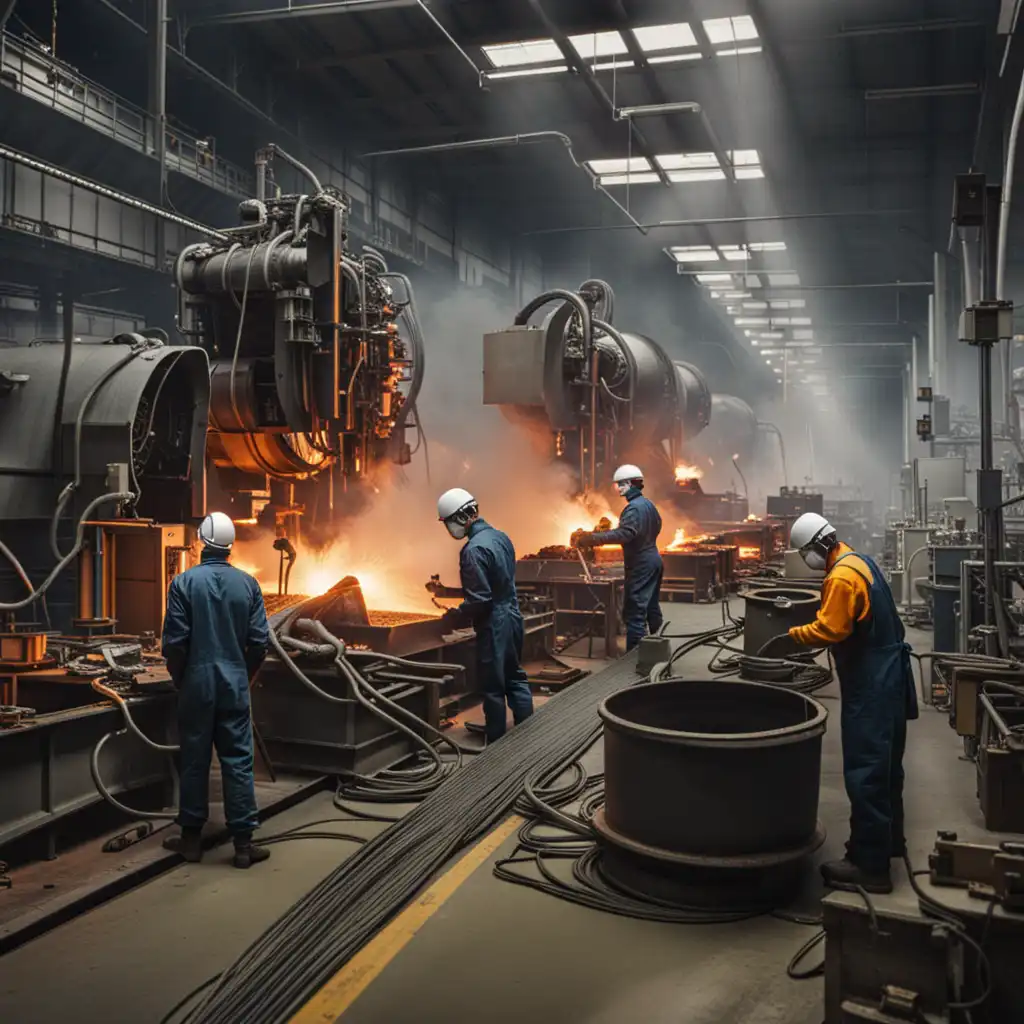
A factory where metals are melted and shaped into different objects
They make car parts at the foundry.
foundry
ˈfaʊndri
Loading…
ˈfaʊndri
A factory where metals are melted and shaped into different objects
They make car parts at the foundry.
ˈfaʊndri
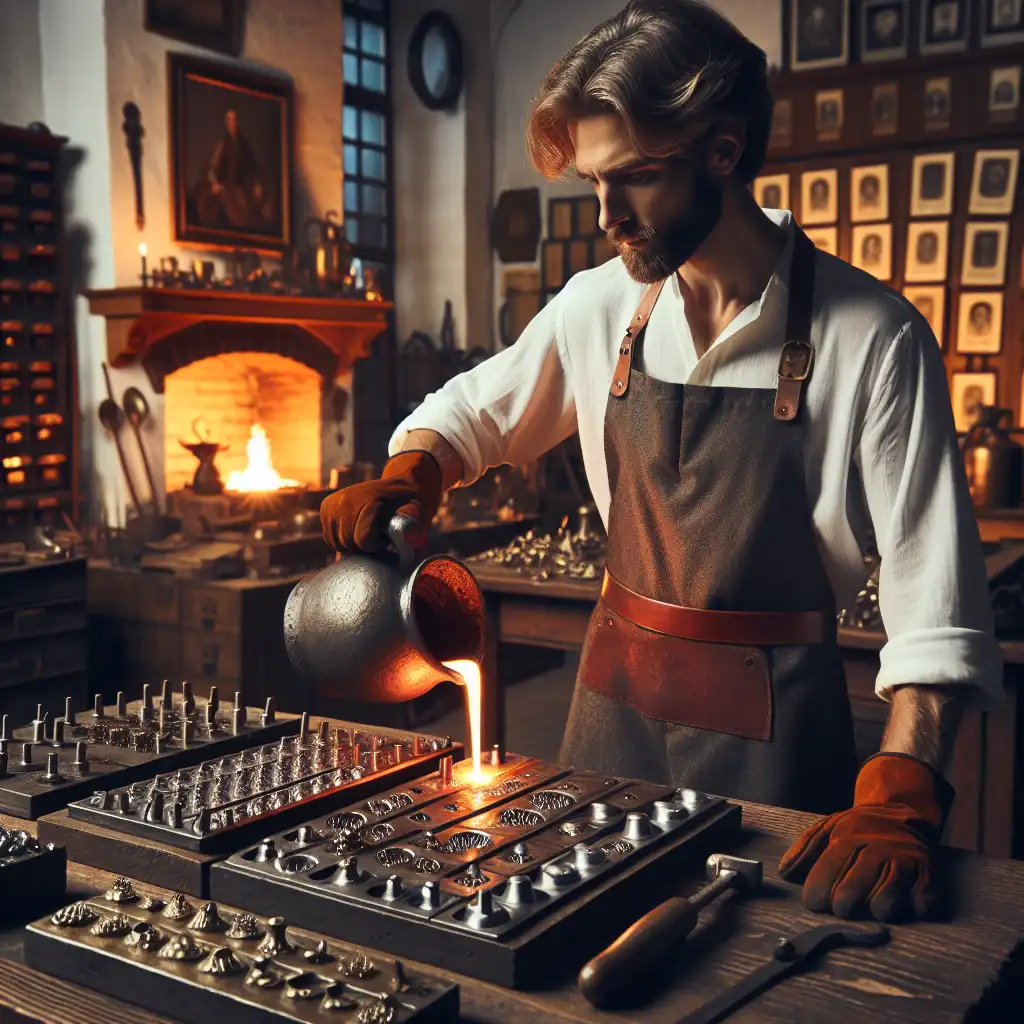
The skill or activity of making things out of metal in a foundry
He works in foundry designing and manufacturing metal parts.
Audio could not be loaded. Please try again later.
A foundry is a place where metal is melted and poured into molds to create various objects. It is a factory where skilled workers use machinery and equipment to shape and cast metal according to specific designs. Foundries are used to make things like engine parts, machinery, and tools. You might encounter the word 'foundry' in discussions of engineering, manufacturing, or construction.
Forge is a verb which means to shape metal by hammering or heating it.
A forge is a place where metal is heated and shaped.
A forge is where metal is shaped through heating and hammering, whereas a foundry is where metals are melted and poured into molds to make products.
A forge is mostly used for shaping and creating objects, while a foundry is mostly used for melting and casting objects.
Open word: Forge →A furnace is a device that is used to heat something to a high temperature.
A foundry is a place where metal is melted into different shapes and objects, and a furnace is a heating device used for various purposes including melting metal in a foundry.
Open word: Furnace →A smelter is a facility that focuses on extracting metal from raw materials (such as ores or concentrates) by heating them to high temperatures.
Smelters are typically used to produce alloys like copper, lead, and zinc.
The main difference is that foundries are responsible for casting molten metal into specific shapes, while smelters are responsible for extracting metal from raw materials.
Open word: Smelter →Adam Savage: My...
Watch on YouTube ↗We have women working in the foundries, stripped to the waist, if you please, because of the heat.
Training Critical...
Watch on YouTube ↗My dad was dean of fine arts at the university. I was casting bronzes in the school foundry. I was using the university as a playground.
I worked in a chicken factory, in a steel foundry, I worked on the bins for a year or so. It started as a summer job, but I stayed on because I liked it very much. I liked it that it made you very fit, doing all the lifting and that, so I could wear short-sleeved t-shirts, which I'd never been able to do before!
I do everything. Of course, I have 50 people who work for me to do the drudgery of mold making and all the foundry. This is an enormous task. But every stroke in these sculptures is from my hands.
My dad, Winston, didn't say much. He was a very reluctant man. He came home from working at the foundry every day and then he'd go to the bookies, watch cricket on TV or go to the pub. He was like a Victorian dad, really. He didn't have much to do with us kids.
Time passed by. I had furnished steam hammers to the principal foundries in England. I had sent them abroad, even to Russia. At length it became known to the Lords of the Admiralty that a new power in forging had been introduced.
They were two very religious people. My father was a foundry worker and was a daily Mass attender, as was my mother.
In New York, working at the foundry, I was making these little figures. I desperately would like to make big figures, but I just can't do it; my hands don't do it. We were talking about making bronze plinths, and then we made one, a square one. I wrote on it, then I put a little figure on top, and it just looked really good. It worked.
Surely these women won't lose any more of their beauty and charm by putting a ballot in a ballot box once a year than they are likely to lose standing in foundries or laundries all year round. There is no harder contest than the contest for bread, let me tell you that.