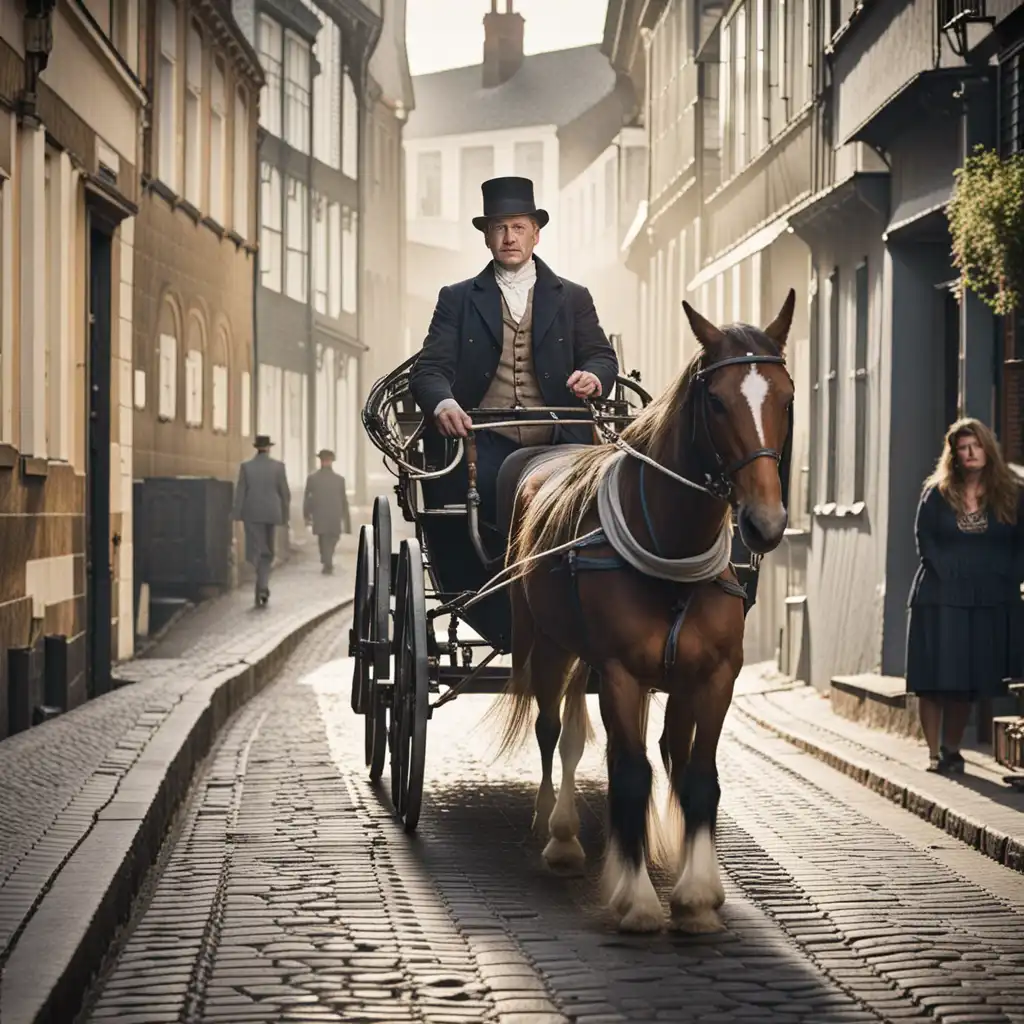
coachman
noun coachman
ˈkəʊtʃmən
A man who drives a coach or carriage, a type of vehicle pulled by horses.
The coachman guided the horses smoothly through the narrow city streets.
coachman
ˈkəʊtʃmən
読み込み中…
ˈkəʊtʃmən
A man who drives a coach or carriage, a type of vehicle pulled by horses.
The coachman guided the horses smoothly through the narrow city streets.
音声を読み込めませんでした。しばらくしてからもう一度お試しください。
A coachman is a person who drives a horse-drawn carriage called a coach. They were popular in the past but are now mostly used for tourist rides or special occasions. Using the word coachman may be useful when talking about historical events or describing a scene in a book or movie that takes place in the past. It is not a commonly used word nowadays.
A chauffeur is someone who is hired to drive a private car, usually professionally and as a means of transportation. They are typically employed by individuals or companies to drive executives, celebrities, or individuals with disabilities.
Today, the term coachman is largely obsolete, as horse-drawn carriages are no longer a common mode of transportation. Chauffeurs are still employed today, but typically in the context of driving private cars for individuals or companies.
単語を開く: Chauffeur →Driver is a broader term that can refer to anyone who operates any type of vehicle, including cars, buses, trucks, and boats.
Coachman is a more specific term used for someone who drives a horse-drawn carriage, while driver is a more general term used for someone who operates any type of vehicle.
単語を開く: Driver →A groom is a person who takes care of or manages horses.
A groom is responsible for taking care of horses. This includes feeding, grooming, and exercising the horses, as well as cleaning their stables or living quarters.
A coachman is responsible for driving carriages, while a groom cares for horses.
単語を開く: Groom →A coachman is a person who drives a horse-drawn carriage or coach, typically for transport of people. In contrast, a horseman is a skilled rider who works with horses, typically for activities such as ranching, racing, or horseback riding.
A coachman is applicable in situations where a horse-drawn carriage is being used for transportation, while a horseman is applicable in situations where a horse is being ridden or worked with in other activities.
単語を開く: Horseman →A stable is a building or facility where horses are kept and cared for. This includes feeding, grooming, and providing shelter for the horses.
Stables are used in modern-day horse husbandry and can be found on farms, ranches, and equestrian centers.
A coachman is a person who drives a carriage or coach while a stable is a place where horses are kept and cared for. Coachmen are associated with historical or fantasy settings, while stables are used in modern-day horse husbandry.
単語を開く: Stable →A coachman is someone who drives a horse-drawn carriage or coach, typically for a private individual or a dignitary. Teamster refers to someone who drives a team of horses, mules, or oxen to transport goods and freight.
In other words, a coachman drives a carriage for people, while a teamster drives a team of animals to move things such as goods and supplies.
Coachmen were more common in the past when people used carriages for transportation, while teamsters are still needed today for moving heavy loads on farms or construction sites.
単語を開く: Teamster →The History of the...
YouTube で見る ↗A statesman, we are told, should follow public opinion. Doubtless, as a coachman follows his horses; having firm hold on the reins and guiding them.
My great-grandmother was born in London, the daughter of a Brixton coachman, and became the most famous singer in Australia. Her name was Marie Carandini, Madame Carandini.