logarithm
noun logarithm
ˈlɔːɡərɪðəm
A mathematical operation that is the reverse of exponentiation.
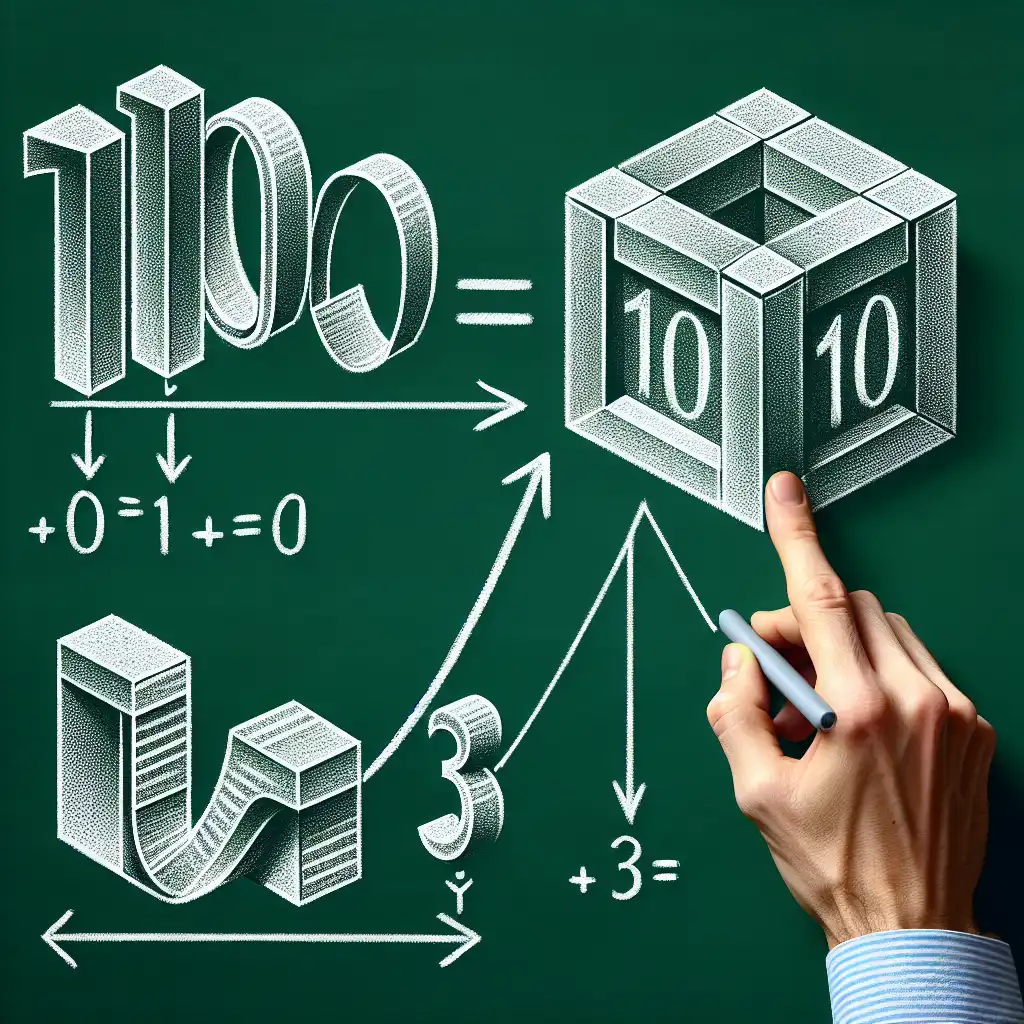
The base-10 logarithm of 1000 is 3, because 10 to the power of 3 equals 1000.
logarithm
ˈlɔːɡərɪðəm
加载中…
ˈlɔːɡərɪðəm
A mathematical operation that is the reverse of exponentiation.
The base-10 logarithm of 1000 is 3, because 10 to the power of 3 equals 1000.
音频无法加载,请稍后再试。
A logarithm is a mathematical concept that helps you to solve really big or small numbers easily. It's like a shortcut to do some math problems that would be really difficult to solve otherwise. For example, if you want to find out how many times a number needs to be multiplied by itself to get another number, you can use a logarithm. Logarithms are used in many fields, such as science, engineering, and finance, to simplify complex calculations.
Log is a shortened form of the word "logarithm."
A logarithm is a mathematical function that measures the exponential growth of a quantity over time. When we say log, we usually mean "base-10 logarithm," which is a way to express a number as a power of 10.
For example, the number 1,000 can be expressed as 10³, which means that the logarithm of 1,000 to base 10 is 3.
In practical terms, logarithms are used to simplify calculations and express very large or very small numbers in a more manageable way.
They are often used in scientific calculations, financial modeling, and data analysis. The term log is more commonly used in everyday language, while logarithm is more often used in technical or academic contexts.
打开单词: Log →Logarithms Explained -...
在 YouTube 上观看 ↗Let's teach for mastery...
在 YouTube 上观看 ↗