malarkey
noun malarkey
məˈlɑːrki
False or silly statements or ideas
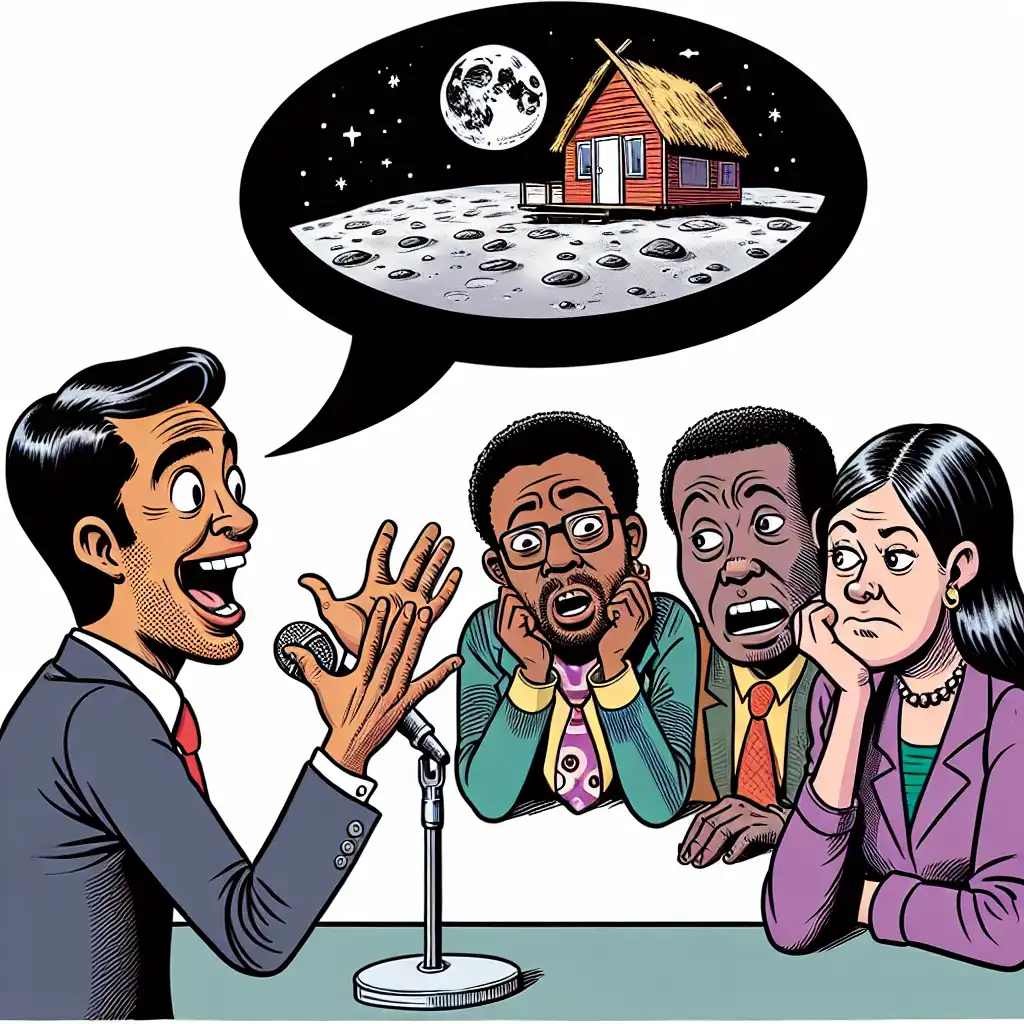
I've had enough of his fanciful malarkey about us relocating to the moon.
malarkey
məˈlɑːrki
Đang tải…
məˈlɑːrki
False or silly statements or ideas
I've had enough of his fanciful malarkey about us relocating to the moon.
Không tải được âm thanh. Vui lòng thử lại sau.
Malarkey is a word that means nonsense or something that is not true. It is often used to describe stories or ideas that are silly or unbelievable. For example, if someone tells you that they can fly without any help, you might say that it's malarkey. You can use this word in casual conversation with your friends or family when you think someone is making up a story or trying to fool you. Just be careful not to use it in a formal or professional setting, as it is considered a slang word.
Both balderdash and malarkey mean nonsense or foolish talk, but balderdash is a more formal term and describes something that is considered absurd or ridiculous.
Both words are used in similar situations, but balderdash would be more appropriate in a formal setting, while malarkey would be more appropriate in a casual setting.
Mở từ: Balderdash →Both words, bunk and malarkey, mean something that is untrue or nonsense.
However, bunk is a straightforward term used to describe something that is false, usually in a serious context, while malarkey is a more lighthearted and informal expression that can be used to refer to deceitful or nonsensical talk.
For example, a politician's argument can be referred to as bunk if it is not based on facts, while a friend's tall tale can be called malarkey if it is clearly untrue or exaggerated.
Mở từ: Bunk →Both words, claptrap and malarkey, mean meaningless or insincere talk or ideas.
However, claptrap typically refers to empty, exaggerated, or pretentious language that's meant to impress or deceive people, while malarkey generally refers to silly or foolish talk that's meant to entertain or distract people.
Claptrap can describe a speech that is long-winded and full of pompous language or a marketing campaign that promises a lot but delivers very little, while malarkey can describe a joke that is corny or a story that is clearly untrue.
Mở từ: Claptrap →Both words gibberish and malarkey refer to speech or writing that is meaningless or nonsensical.
However, gibberish is typically used to describe speech or writing that is difficult to understand because it is incomprehensible or unintelligible, while malarkey refers to speech or writing that is intentionally misleading or dishonest.
For example, if someone is speaking in a foreign language that you don't understand, you might say that it sounds like gibberish to you.
Gibberish suggests that something is incomprehensible or difficult to understand, while malarkey suggests that something is intentionally deceptive or dishonest.
Mở từ: Gibberish →Both hogwash and malarkey refer to something that is nonsense or untrue.
However, hogwash is typically used to describe something that is considered to be untrue or illogical based on facts, while malarkey is more subjective and refers to something that is perceived as untrue or exaggerated.
For example, if someone says that the moon is made of cheese, you might say "that's hogwash", because it is clearly untrue based on scientific evidence.
Mở từ: Hogwash →Malarkey and nonsense are similar words that mean a statement or action that is without sense, truth, or worth.
However, malarkey often implies that the statement or action is exaggerated, ridiculous, or intended to deceive or mislead, while nonsense simply means something that is foolish or illogical.
If someone tells a joke that doesn't make any sense, you might simply say "That's nonsense."
Both words can be used in a variety of situations, but malarkey is often used in more casual or informal contexts, while nonsense can be used in formal or informal settings.
Mở từ: Nonsense →Malarkey and twaddle are both words that describe nonsense or foolish talk, but they have slightly different meanings and contexts in which they are used.
Twaddle, on the other hand, implies that the talk is silly, trivial, or foolish, and lacks any meaning or substance.
It is often used to dismiss something as unworthy of attention or consideration. For example, if someone is rambling on about something irrelevant, you might say, "That's just twaddle, get to the point!".
Malarkey is used to call out empty or misleading talk, while twaddle dismisses something as trivial or foolish.
Mở từ: Twaddle →Frank Drake’s Cosmic...
Xem trên YouTube ↗Without question, the single most important attribute of a successful entrepreneur is integrity. And that's not some philosophical or theoretical malarkey; it's hard-nosed fact.
I don't miss my pin-up days. I'm far too old for that malarkey.
I think cursing is a bunch of malarkey.
I don't want my kids going through what I went through - police stopping you, searching you and all that malarkey.
Nobody makes bouillabaisse from scratch. It's all a bunch of malarkey. Even the restaurants buy a commercial-grade product. I had a very famous chef tell me that.
I think cookery shows have become so sophisticated, and everyone's so marvellous at it, but there are people like me who aren't into the cooking malarkey, who still don't know how to boil an egg for three minutes.
You know, everybody knows some of what politicians say is malarkey, and having somebody there to call them on it is good. I'd be happy to do that any time and any place.