Mimicry refers to the act of imitating or copying someone or something in order to look, sound or behave like them. This word is commonly used when talking about animals that can mimic other animals or their surroundings for protection, like chameleons that can blend in with their environment. It can also be used to describe a human imitating another person's speech or mannerisms. In general, mimicry means copying something else in order to make it seem like it is yours.
Copy means to make an exact replica of something, to duplicate it as close to the original as possible.
It can be used in various contexts, such as copying a document, painting, or design. It implies no intention of deception, and it is usually done with permission.
Copy refers to making an exact replica, while mimicry refers to imitating for the purpose of deception or entertainment.
Emulate means to try to imitate or be like someone or something admired or respected. It is applicable when you want to learn from someone and aspire to be like them.
In simpler terms, emulate means to try to be like someone you admire, while mimicry means to imitate someone for fun or entertainment.
Imitation means copying something, but not necessarily copying every detail. For example, an artist who tries to create a painting that looks like a photograph is imitating a photograph.
Imitation is applicable when someone wants to create something similar to another thing but with some variations, while mimicry is useful when someone wants to closely reproduce another thing to make it seem like the original.
Impersonate means to pretend to be someone else and act like them.
It is used when someone tries to copy or replicate the behavior, style, and personality of someone else. For example, an actor impersonates the character they are playing in a movie.
Impersonate is when someone pretends to be someone else whereas mimicry is when someone copies or imitates the actions or behavior of someone else, often for entertainment.
Parody is a type of satire or humor that imitates or mocks a particular work or genre.
Parodies can be found in literature, music, film and television.
A parody may exaggerate the features or style of the work being imitated for comedic effect, but it is not meant to be taken seriously.
Mimicry is the act of imitating someone or something for entertainment or admiration, while parody is a humorous imitation or critique of a work or genre.
Replicate refers to making a copy of something or reproducing it. In science or engineering, for example, replicating an experiment means redoing it exactly the same way to ensure accuracy and transparency.
In the context of technology, replicating data means creating a backup or copy of it to ensure it isn't lost.
Mimicry is about imitating something, while replication is about making an exact copy of something. Mimicry is used more in the context of nature and human behavior, while replication is often used more in science and technology.
Simulation refers to the creation of an artificial environment or situation that mimics real-life conditions. This can be anything from a flight simulator that pilots use for training, to a computer game that simulates driving a car.
Simulation is used to practice skills, test theories, and simulate scenarios that may be too dangerous or expensive to do in real life.
Mimicry is about copying something real, while simulation is about creating something artificial that imitates reality.
Mimicry is applicable in nature, social situations, and entertainment, while simulation is applicable in technology, education, and research.
in a person nearby that has observed the act. Once this reflex is triggered it must run its course. Have you ever tried to stop a yawn once it has begun? Basically impossible! Another physiological hypothesis is known as non-conscious mimicry,
this power of mimicry allows the crested horn shark to infiltrate port jackson shark territory searching for eggs to steal though they look really similar the crested horn shark is actually one of the most common predators of port jackson shark eggs but like i said
it's not a slavish mimicry; it's taking the design principles, the genius of the natural world and learning something from it. Now in a group with so many IT people I do have to mention what I'm not going to talk about and that is that your field
look there are stars can you find the eyes in this picture those are the eyes critics of a plan which studies claim that the animals are not creating true language that it is merely mimicry or
Jamie Foxx does a good rendition of me. It's a real gift, mimicry of that kind, the tonal thing. It's sort of like having a talent for playing an instrument.
one of sort of hit-and-miss mimicry made much much more difficult by by the fact that I'm basically half deaf so I want to show you what happens okay so in visit to this I'm in a supermarket
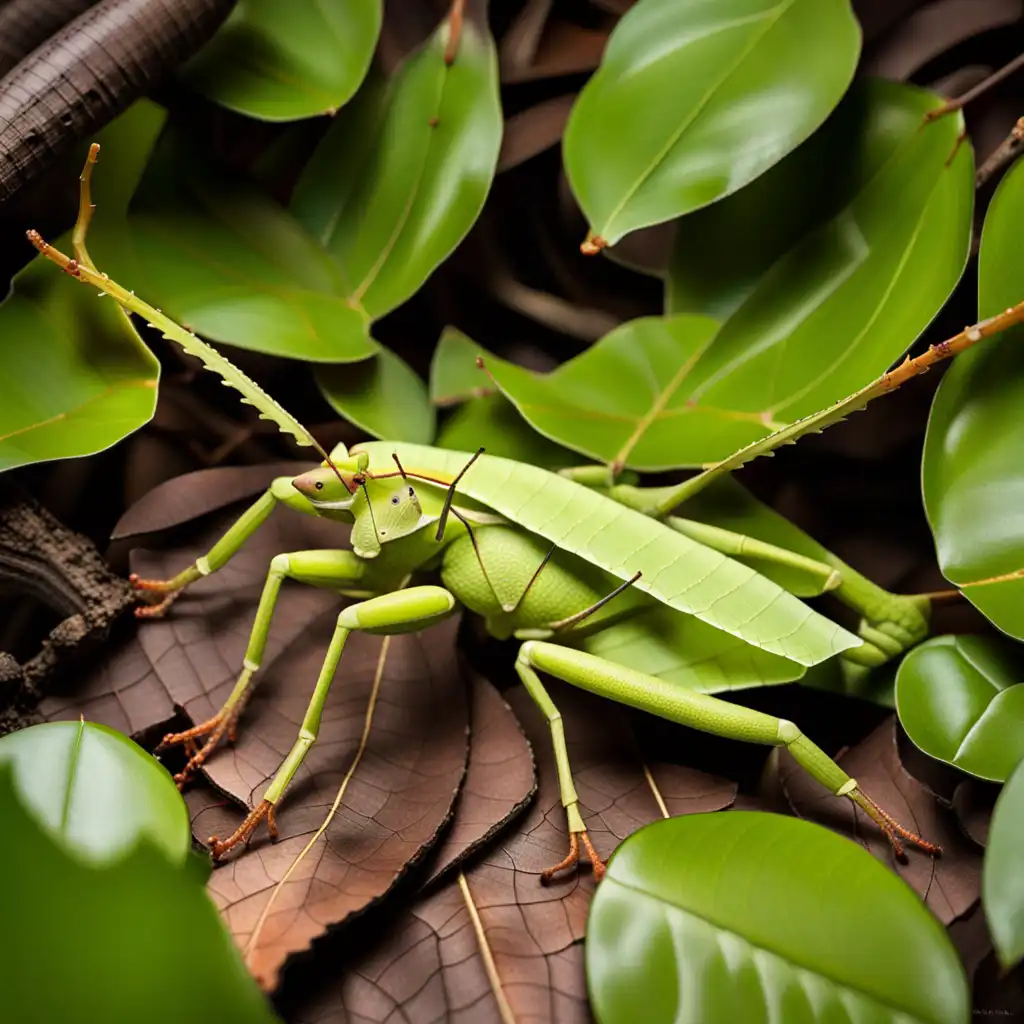
The leaf-tailed gecko and the octopus fool viewers by blending into the surfaces on which they rest. Other animals use mimicry to protect themselves. Harmless scarlet kingsnakes have evolved red yellow and black patterns
mother cheetah sees danger she lets out a deep growl I tried to do the same the Cubs responded by crouching still prepared for a sudden - to safety I was so relieved to see that my mimicry worked with taki and sambal it meant
Adopting mannerisms is called mimicry. That is not a good way to do things. You don't start to imitate somebody, the way he walks and talks, that is a very irrelevant element of acting.
Yeah I think it looks a bit like a porcupine. It does yeah. But there's no kind of it's not happened by chance. That has it? It's done that on purpose. It's evolved to look like that because often animals which are seemingly harmless will evolve to look like animals which are seemingly not so harmless and it's example of Batesian mimicry. So they're mimicking animals that
and have individualized contact calls that help them stand out. Yellow-naped Amazon parrots on the other hand, forage in smaller groups that learn and share highly similar contact calls. This need for sophisticated mimicry may partially explain why yellow-naped Amazons