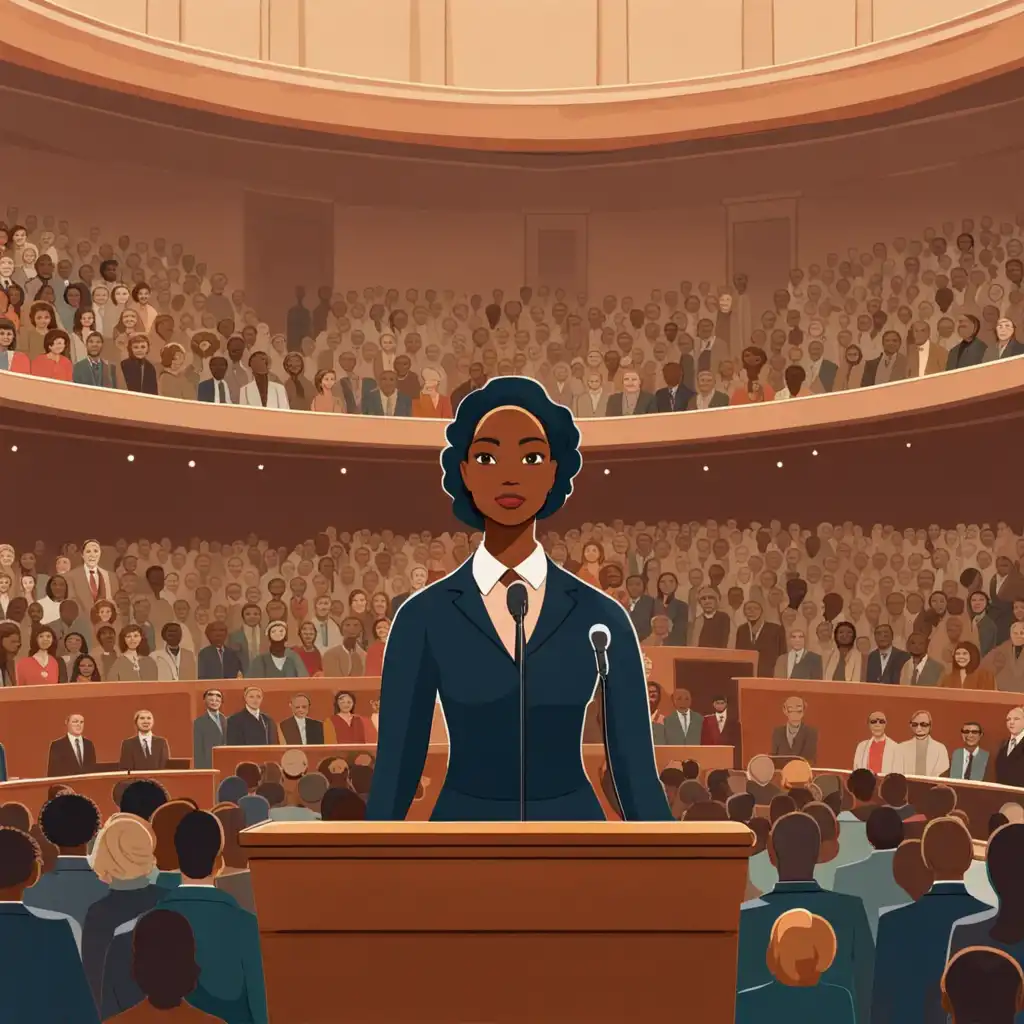
tenet
noun tenet
ˈtenɪt
A principle or belief that people use to guide their actions or decisions.
One of the basic tenets of democracy is the freedom of speech.
tenet
ˈtenɪt
Chargement…
ˈtenɪt
A principle or belief that people use to guide their actions or decisions.
One of the basic tenets of democracy is the freedom of speech.
Impossible de charger l’audio. Réessayez plus tard.
The word 'tenet' means a principle or belief that is held to be true by a certain group or organization. It is often used in discussions about beliefs or values, such as in politics, religion, or philosophy. For example, the tenet of democracy is that everyone has a right to vote and be heard. It can also be used in everyday conversation to refer to someone's personal beliefs or values.
A belief is something that you accept as true or real without needing evidence or proof. For example, somebody might say that they believe in ghosts or in a particular religion.
A tenet is a principle or belief that is held to be true by a group or organization.
A belief is a personal idea or opinion, while a tenet is a broader principle that applies to a larger group or system of thought.
Ouvrir le mot: Belief →Conviction generally refers to a strong belief or opinion that someone has formed based on their personal experiences or values.
It can describe a belief that someone strongly holds, often to the point where they would be willing to defend it. For example, someone might have a conviction that all people deserve to be treated with respect and dignity.
Conviction refers to a strong personal belief while tenet refers to a fundamental belief or principle that is central to a particular system of thought or belief.
Ouvrir le mot: Conviction →A creed is a statement of belief or principles that a group or organization follows.
In simpler terms, a creed is a statement of beliefs that a group follows, while a tenet is a fundamental belief that is essential to a particular belief system.
For example, the Nicene Creed is a statement of faith used by Christians, while the Five Pillars of Islam are fundamental tenets of the Islamic faith.
Ouvrir le mot: Creed →A doctrine is a set of beliefs or principles that are taught by a particular religion, political party, or other organization.
It is a formal and authoritative statement of what an organization believes and teaches. For example, the doctrine of Christianity includes beliefs such as the existence of God, the divinity of Jesus Christ, and salvation through faith in Jesus.
A doctrine is a formal statement of beliefs taught by an organization while a tenet is a general principle or belief held to be true by a group or individual.
Doctrines are more specific and authoritative while tenets are more general and flexible.
Ouvrir le mot: Doctrine →Dogma and tenet are both beliefs or principles, but they have slightly different meanings.
Dogma refers to a set of religious or political beliefs that are considered to be unquestionable and authoritative.
For example, a religious group might have a dogma about the divinity of a certain figure, and any deviation from that dogma might be seen as heresy.
Dogma implies a strict adherence to a specific set of beliefs or principles that are considered to be absolute and unchanging, while tenet refers to a more general principle or belief that is widely accepted but subject to ongoing questioning and refinement.
Ouvrir le mot: Dogma →Ideology is a system of ideas, beliefs, or values that form the basis of a political or economic system. It governs the way people think, act and make decisions.
Ideology is applicable in areas such as politics and economics.
Ideology is more political and relates to a broad set of beliefs that support a particular system or organization.
Ouvrir le mot: Ideology →Philosophy refers to a set of beliefs and ideas about the nature of the world, human experience, and morality. It involves questioning and reflecting on different aspects of life and existence.
It can also be described as a fundamental aspect of a particular philosophy or system of beliefs.
Philosophy is a broader term that encompasses a wide range of ideas and beliefs, while tenet is more specific and refers to a particular principle or belief within a philosophy or belief system.
Philosophy is applicable in fields like ethics, metaphysics, and epistemology, while tenets are applicable in specific areas of beliefs such as religion, politics, and philosophy.
Ouvrir le mot: Philosophy →Principle refers to a fundamental truth, rule or value that guides a person's behavior or decision-making. For example, the principle of honesty means always telling the truth, even if it is difficult.
Both principle and tenet are applicable in different contexts. Principles are more commonly used in a general sense to guide moral or ethical behavior, whereas tenets are more specific beliefs that are commonly held within a particular group or religion.
In summary, principles and tenets are related but different. Principles are broad guidelines for behavior that are applicable in many situations, while tenets are specific religious or ideological beliefs that define a particular group or faith.
Ouvrir le mot: Principle →What really matters at...
Voir sur YouTube ↗It has become an accepted tenet that kids will rarely listen to their parents but seldom fail to imitate them. Communicating the message has never been a good substitute for 'showing up' and embodying the message.
On being a woman and a...
Voir sur YouTube ↗It's a basic tenet you learn at drama school. If you're playing someone evil, you can't make an objective moral judgment. You've got to get inside the character and empathize as much as possible.
Killer whale society %\PIPE%...
Voir sur YouTube ↗I think it's a very central tenet to it yes, it is. I can't bear it, I can't bear inequality, I can't bear bad behaviour to other people. I cannot bear it that people are mean to people who can't help what they are.
Safari Live - Day 150 %\PIPE%...
Voir sur YouTube ↗Hinduism's basic tenet is that many roads exist by which men have pursued and still pursue their quest for the truth and that none has universal validity.
How to Raise Successful...
Voir sur YouTube ↗Our constitutionally-based criminal justice system places a high value on protecting the innocent. Among its central tenets is the idea that it is better to let a guilty person go free than to convict someone without evidence beyond a reasonable doubt.
How to design gender...
Voir sur YouTube ↗After lengthy consideration, my views have evolved sufficiently to support marriage equality legislation. This position doesn't require any religious denomination to alter any of its tenets; it simply forbids government from discrimination regarding who can marry whom.
Luvvie Ajayi Jones: How...
Voir sur YouTube ↗I hope that I've been able to treat people with the respect they've shown me. That's basically the tenet you try to live by. I haven't been successful at it all my life, but that's what I strive for.
Ryan Lobo: Photographing...
Voir sur YouTube ↗What makes America's election system unique is the fact that even when elections are close, we find a resolution, which leads to the peaceful transition of power that remains one of the most important tenets of our democracy.
How great leaders...
Voir sur YouTube ↗We have a responsibility to give people opportunities to do what they can do. It's a fundamental tenet of democratic society. Libertarians who believe in a completely minimalist state, and don't feel we have that responsibility, are harming humanity.
Why should you read Kurt...
Voir sur YouTube ↗The main tenet of design thinking is empathy for the people you're trying to design for. Leadership is exactly the same thing - building empathy for the people that you're entrusted to help.