miscast
verb miscast
ˌmɪsˈkæst
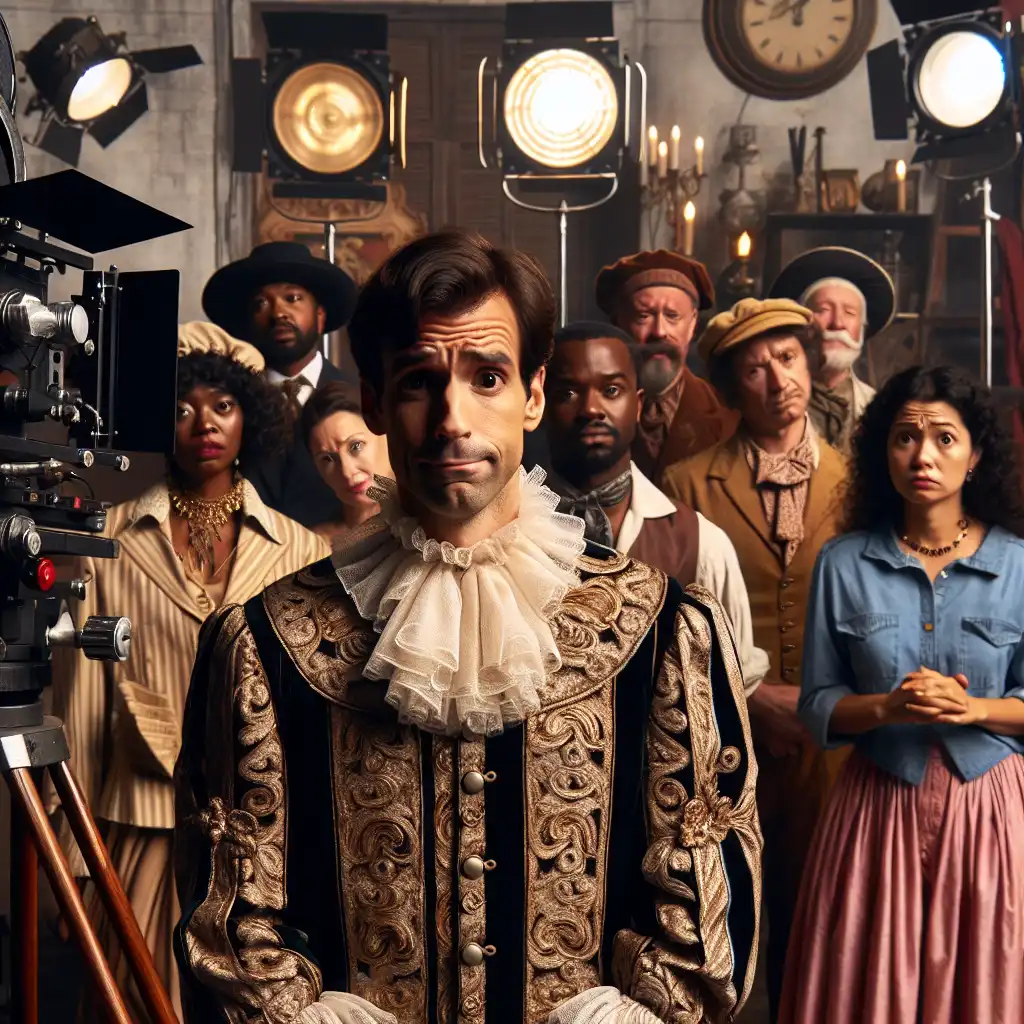
To wrongly choose someone for a role in a movie, play or similar.
He was miscast as the romantic lead in the movie.
miscast
ˌmɪsˈkæst
読み込み中…
ˌmɪsˈkæst
To wrongly choose someone for a role in a movie, play or similar.
He was miscast as the romantic lead in the movie.
音声を読み込めませんでした。しばらくしてからもう一度お試しください。
The word 'miscast' is used to describe a situation when a person or thing has been chosen or assigned an inappropriate role or function. For example, if an actor is given a role in a movie that doesn't suit their skills or personality, they are said to be miscast in that role. Similarly, if a person is assigned a task that they are not capable of performing well, they are also said to be miscast. It is important to use this word carefully as it can be seen as criticism towards the person or thing being referred to.
The word ‘misapply’ means to use something in the wrong way or for the wrong purpose. For instance, if you use a hammer to fix your phone, it’s a misapplication.
To summarize, misapply is used when something is used in a wrong way, while miscast is used when someone is chosen for a role that is not appropriate for them.
単語を開く: Misapply →Misinterpret is to understand or explain something wrongly, often because it is not clear, or because of a miscommunication or misunderstanding.
For example, if someone says something that can be understood in more than one way, and someone understands it in a way that wasn't intended, then it is misinterpreted.
Miscast is applicable when someone is given a role or task that they are not suitable for, while misinterpret is applicable when someone misunderstands or takes something the wrong way.
単語を開く: Misinterpret →Misjudge means to wrongly form an opinion or make a decision about someone or something. This can refer to anything from making a wrong assumption about a person's character to making a bad decision about a business deal.
For example, if someone misjudges another person based on their appearance or background, they might miss out on a valuable friendship or business partnership.
Miscast refers to wrongly assigning someone to a specific role, while misjudge refers to making a wrong decision or judgement about a person or situation.
単語を開く: Misjudge →Misplace means to put something in the wrong place, or to lose something temporarily. It's often used when you can't find something that you know you had but can't remember where you put it.
Miscast is used for assigning people to the wrong roles, while misplace is used for putting things in the wrong place.
単語を開く: Misplace →Misrepresent, on the other hand, means to give a false or misleading account of something or someone. It's used more generally to refer to situations where someone is presenting information in a dishonest or inaccurate way.
So, for example, you might say a movie was miscast because the lead actor didn't fit the role. Or, you might say a news article misrepresents the facts of a story.
単語を開く: Misrepresent →Writing is my therapy. In addition to my real therapy. God knows where I'd be without it. I'd probably still be at my last job, working in HR at a religious organization. I was horribly miscast.
It's no fun to be miscast. The times I've done parts that I don't feel, in retrospect, I was great for - it's a very bad feeling.
I was miserable in West Side Story. They really miscast me. I came from the Midwest; what they really needed was a guy that was street smart. The first time I saw the movie, I had to walk out. I looked like the biggest fruit that ever walked on to film. My character was so weak.
Last Man on Earth'... Vincent Price is one of my favorite actors; I think he was miscast.
My first job had me miscast as a bubbly shopgirl; I was pathologically shy and, thus, tended to replace human speech with excessive head gestures. It was like being waited on by Harpo Marx.
Perhaps it's time to stop analyzing Sarah Palin as a politician. Maybe, in her own muddled way, she is at last owning up to the fact that she has been miscast. You don't need politics anymore once you've discovered that the alchemy of celebrity has turned you into a 24-carat phenomenon.
I felt Guru Duttji was miscast in 'Sahib Bibi Aur Ghulam;' he looked older than the role. Shashi Kapoor had an innocent face; he would have looked young and vulnerable.