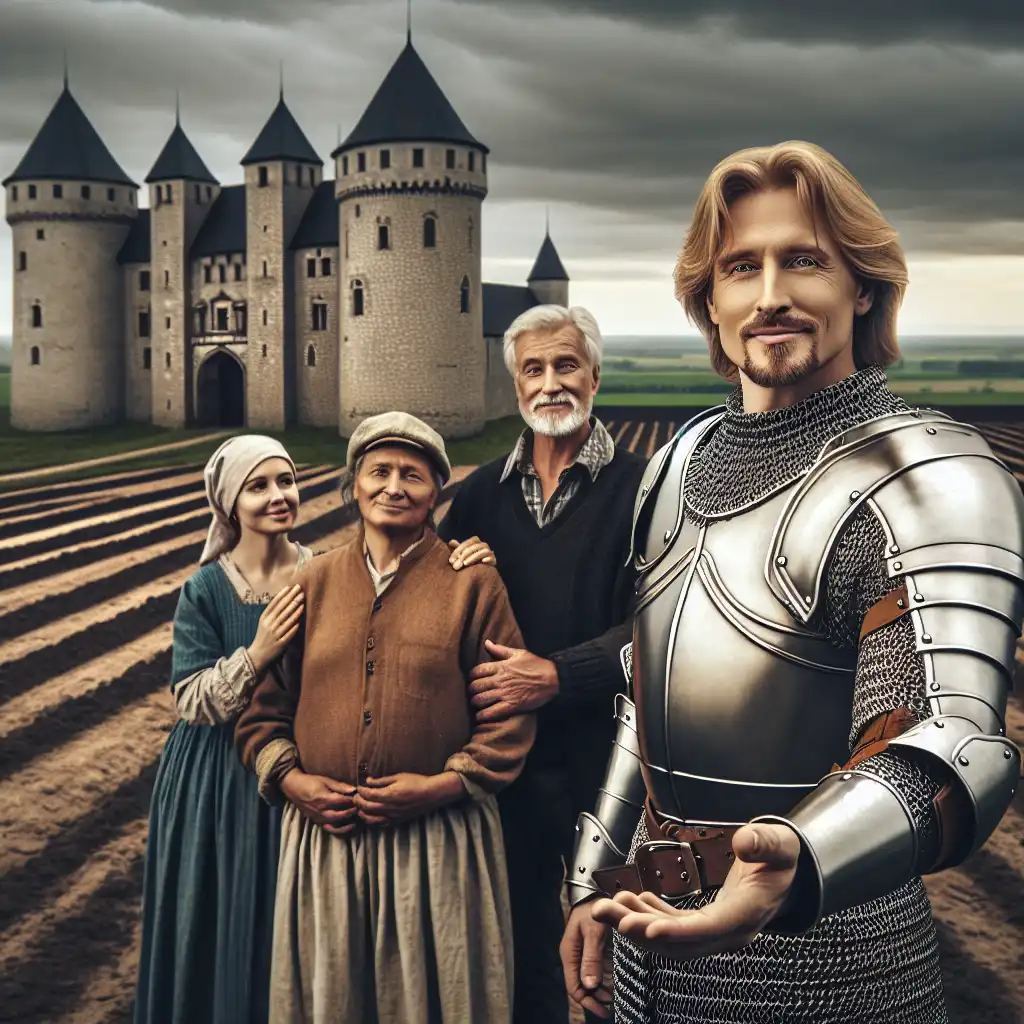
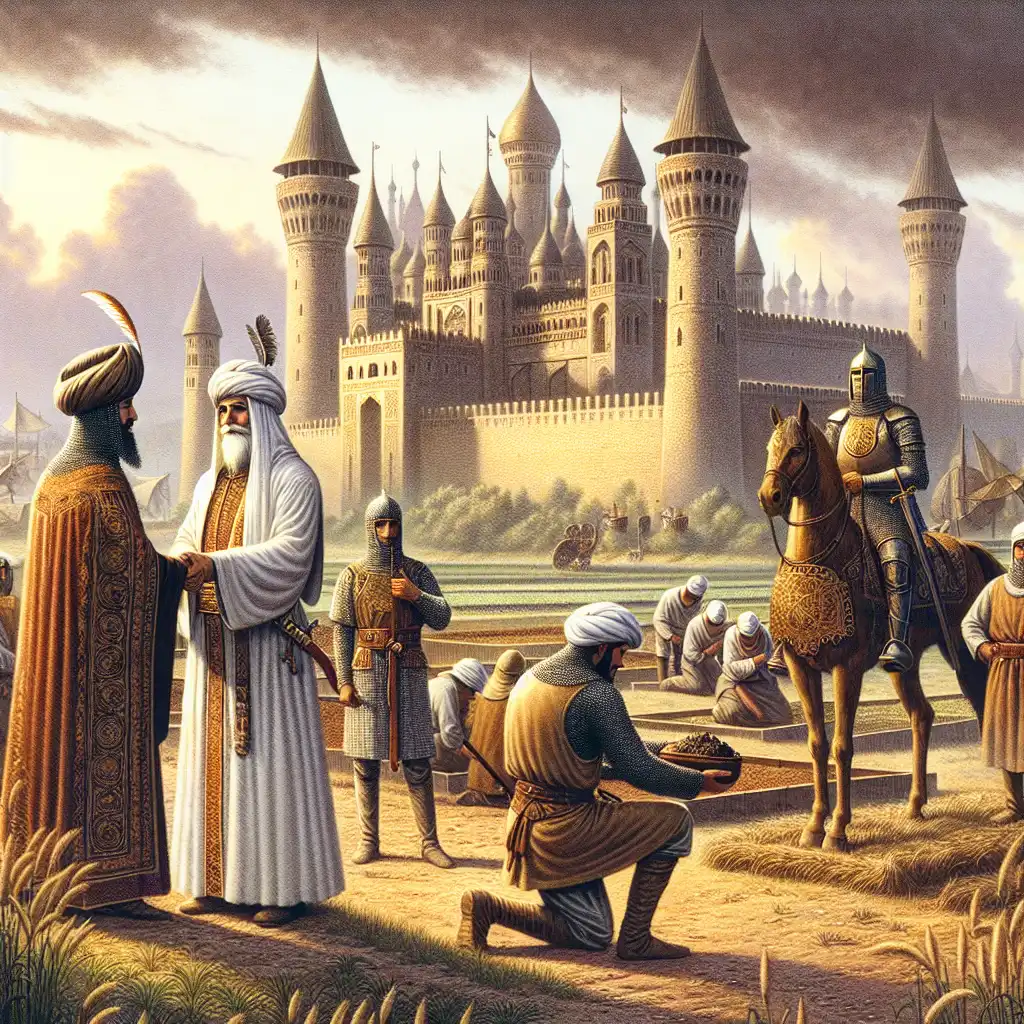
A social system that existed in Europe during the Middle Ages, where people worked and fought for nobles who gave them protection and the use of land in return.
The lord had complete power over the land and people under feudalism.
A system in which people (called vassals) were given land and protection by people of higher rank (called lords), and worked and fought for them in return. This system was widely used in the medieval period.
The vassals pledged their allegiance to the lords under feudalism.
Feudalism is a way of organizing society that was popular in medieval Europe. In this system, powerful nobles called lords owned large areas of land and allowed people to live and work on it in exchange for their loyalty and military service. These people were called peasants or serfs and were bound to the land. Feudalism also involved a social hierarchy where people had different roles and levels of power based on their birth and wealth. Today, we use the term feudalism to describe similar systems of social and political organization in other parts of the world and throughout history.
Aristocracy refers to a social class of people who hold a high rank and are often wealthy and powerful. In many cases, they have lineage or ancestry that connects them to wealth and power.
The term aristocracy can be applied to any society or culture that has a class of people who are considered elite or privileged.
Aristocracy refers to a social class defined by wealth and power, while feudalism refers to a political and social system that existed in Europe during the medieval period.
While both terms refer to structures of power and privilege, aristocracy is a more general term that applies to many different societies, while feudalism refers specifically to a time and place in history.
Dominion refers to a country or territory that is controlled by a single ruler or government.
It can also refer to the power or authority that a ruler has over a particular area. Dominions are usually established through conquest, treaty or colonization.
Dominion refers to the rule of a single authority over a territory, while feudalism is a system of organization where power and resources are distributed in a hierarchical manner.
Dominion is more applicable in contemporary politics and international relations, while feudalism was a social, economic and political order of Medieval Europe.
Feudalism and lordship are related concepts but they refer to different aspects of medieval society.
Lordship refers to the social status and privileges of a lord. In medieval society, a lord was someone who held significant wealth and power, often through ownership of land and other resources.
Feudalism refers to a specific political and social system, while lordship refers to the social status and authority of a lord within that system.
Serfdom is a condition where a person is bound to the land they work on, and must perform labor or pay tribute to the lord in exchange for protection and the right to farm the land.
Serfdom specifically describes the status of peasants who are tied to the land they farm.
In simpler terms, feudalism describes the power structure between landowners and rulers, while serfdom describes the conditions of the people who work on the land.
We need wealthy dogs off the seats of power. They're taking us back to feudalism and I really don't want that. But I'm very far from being a socialist.
The danger in media concentration comes not from the concentration, but instead from the feudalism that this concentration, tied to the change in copyright, produces.
Competition, by itself, always leads to cheating by the powerful, who try to establish pyramids of power, like feudalism. Yet, competition is the great creative force! So how do we save it from its own contradictions? By cooperation! By cooperating with each other, via politics, to make rules and prevent cheating, so that competition can thrive!
Ever since the end of Medieval feudalism, and the writings of John Locke, we have understood the importance of being able to buy and sell one's own property, including books and watches, both for reasons of economics and liberty.
In the last quarter of the eighteenth century bourgeois Europe needed to emancipate itself from that combination of feudalism and commercial capitalism which we know as mercantilism.