belay
verb belay
bɪˈleɪ
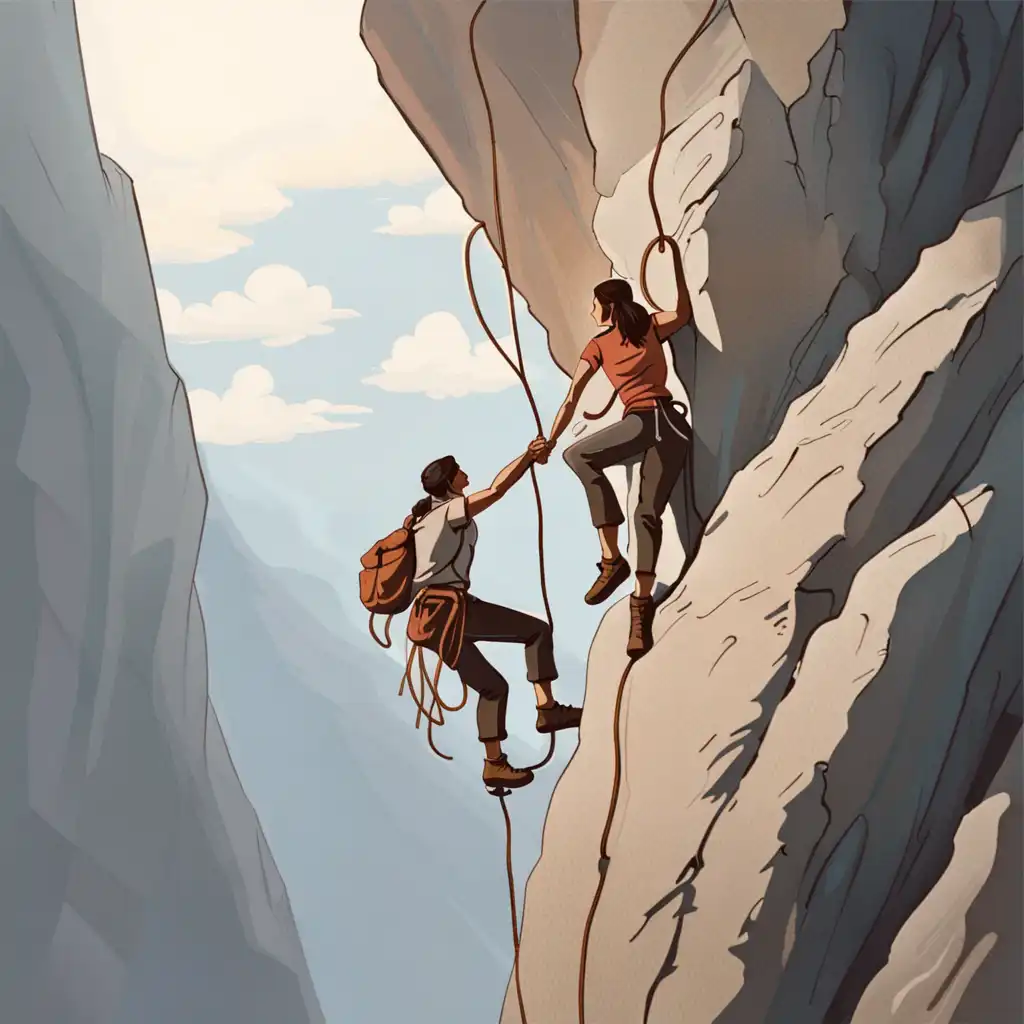
To secure a person by attaching a rope to them, especially when they are climbing.
He belayed his climbing partner from the ground.
belay
bɪˈleɪ
Đang tải…
bɪˈleɪ
To secure a person by attaching a rope to them, especially when they are climbing.
He belayed his climbing partner from the ground.

bɪˈleɪ
To stop or abandon something.
Belay that order, we have new instructions.
Không tải được âm thanh. Vui lòng thử lại sau.
The word 'belay' is often used in the context of rock climbing or sailing. In rock climbing, it means to secure a rope with a device or knot to stop someone from falling. In sailing, it means to tie a rope around a post or cleat to keep the boat in place. So, if you hear someone say "belay that rope," they are saying to secure the rope in place.
An anchor is a heavy object, like a rock or a metal weight, that is used to keep a boat or other object from drifting away.
So, while an anchor is used to keep something from moving, belay is used to keep someone safe while moving. Anchors are typically used on boats, while belay is used in rock climbing.
Mở từ: Anchor →Belay and fasten both refer to securing something, but they are used in different contexts.
Fasten is a more general term and can refer to securing anything, such as a seatbelt in a car or a button on a shirt.
Essentially, belay is a more specific term than fasten and refers to the act of securing something in a particular situation, while fasten is a broader term that can apply to many different situations.
Mở từ: Fasten →Belay and grip are two different words with different meanings.
Grip refers to the strength and control you have in your hands when holding onto an object. For example, if you're holding onto a rock while climbing, your grip is the strength and control you have in your fingers and hands to keep you from slipping.
Grip is important in many physical activities, including rock climbing, weightlifting, and gymnastics.
Belay is a technique used to secure a rope while grip is the strength and control you have in your hands when holding onto objects.
Mở từ: Grip →It is used when the climber is ascending or descending, and involves using a device to hold the rope in place so that if the climber falls, they will not fall far.
Hold is often used in rock climbing to refer to a place where the climber can grab onto to support their weight or pull themselves up.
It is used when the climber is ascending, and can include handholds and footholds.
Belay is a technique used to protect the climber from falling, while hold refers to the actual physical features of the rock itself that can be used to climb up.
Mở từ: Hold →Belay and moor are two terms used in different contexts.
Moor is used in boating. It refers to fastening a boat or ship to a dock or pier using ropes or cables. It is like tying your bike to a post or fence to keep it from moving.
Belay is used in climbing to secure yourself with ropes, while moor is used in boating to secure a boat or ship to a dock or pier.
Mở từ: Moor →Belay and restrain are both verbs that mean to stop or prevent someone or something from moving.
Restrain is a more general term that can be used in various other situations, such as in law enforcement, where it means to physically prevent someone from moving or acting freely.
For instance, if a suspect is resisting arrest, the police officer may restrain them by placing them in handcuffs or using other methods to restrict their movements.
So, while both words share the idea of stopping something from moving, belay is more specific to a certain context of securing a rope while restrain can be used in many other different contexts.
Mở từ: Restrain →Secure generally means to make something safe or stable.
It can be used in any situation where safety or stability is important, such as securing a door or securing a load in a truck.
So while belay is specific to rock climbing and refers to securing a climber, secure is a broader term that can be applied to many different situations.
Mở từ: Secure →Both belay and tie off are terms used in climbing and boating.
Tie off refers to tying a knot in a rope to secure it in place, typically on a fixed point. This is used when anchoring a boat to a dock, securing a rope to a cleat or post, or when securing a rope for hoisting or pulling.
Belay is used when controlling the safety of a climber or rappeller by managing rope tension, while tie off refers to securing a rope in place for other purposes such as docking a boat or anchoring a rope.
Mở từ: Tie off →the wall and now I can take him off belay and so I yell okay you're off belay and I take my rope out of the belay device and I wait for about five minutes and I hear this blood-curdling
Xem trên YouTube ↗this is my family tattoo in belay and mama motor this mount is our favorite place to sit it gives us a great view
Xem trên YouTube ↗